
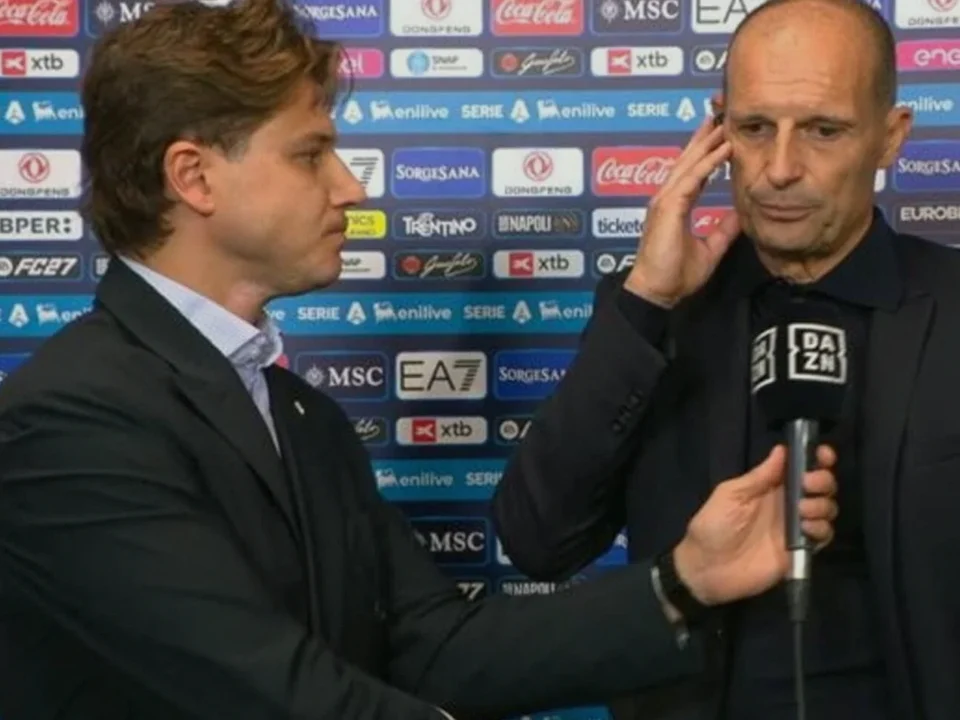
Napoli’s draw with Roma left Massimiliano Allegri looking beyond the point itself and towards the familiar burden of a season that can change in a few late minutes. His side had built a 2-0 advantage, later moved 3-2 ahead, and still finished level after Roma’s equaliser, leaving the coach furious at the final phase as well as at his own dismissal from the touchline.
A match that slipped away
- Napoli appeared to be in control after taking a two-goal lead, although Allegri remained animated on the bench rather than treating the match as settled.
- Roma, described by Allegri as a strong opponent, found a route back into the contest.
- Napoli restored their advantage at 3-2 and also had an opportunity to make it 3-0 earlier in the evening.
- Roma scored again to complete a 3-3 draw, a result that Allegri felt cost Napoli another two points.
- Allegri was sent off during the match, adding to his anger at full time.
The Napoli coach insisted there was much to respect in the performance despite the frustration of the outcome. He said his players had competed well against a major opponent, including in their defensive work, and argued that the group could climb the table if it maintained the same attitude.
“It was a good match and we played our game,” Allegri said. “I am disappointed by the result against a great team. I am pleased with the performance, but angry about the rest.”
He placed particular weight on the missed chance to stretch the scoreline to 3-0, while accepting that the third Roma goal was beyond what Napoli could have prevented in that moment.
Allegri’s anger over the dismissal
Allegri’s temper remained close to the surface in his post-match interviews. He complained that he is punished whenever he leaves his technical area, contrasting his treatment with that of others who enter the pitch without similar consequences.
He later responded sarcastically when asked why he had been dismissed, saying that he had been sent off because he had stayed quiet. Expecting a fine, he added that Napoli would “do some charity again this time”.
The coach also acknowledged that he was not in the right state to offer a fully detached analysis. After ending one television interview abruptly, he said that even after 25 years in the game he could make a mistake on one occasion, because he was not clear-headed that evening.
There was more irony when he discussed his conduct on the bench. Allegri promised that he would remain seated and not stand up again.
More attacking intent, but a demand for balance
Allegri joked that Napoli are now committed to attacking football, saying he wants to play “all out attack” and could use four forwards whenever possible. Behind the humour, however, his assessment was rooted in the need for his side to turn their encouraging passages into results.
The draw with Roma followed a defeat in Venice, where Napoli had dropped three points. Allegri saw the latest setback as another missed opportunity, but not as a reason to abandon the path his team have taken.
“From now on, if I can, I will even use four attackers,” he said, before returning to the point that Napoli’s spirit and collective work must remain the foundation for their recovery in the standings.
Patience with De Bruyne and Hojlund
Allegri also addressed the management of Kevin De Bruyne, making clear that the midfielder cannot be expected to play every match. He pointed to Stanislav Lobotka and Billy Gilmour as options within the squad, while stressing that the collective mentality matters more than any individual selection.
On Rasmus Hojlund, the coach took a reassuring view after a demanding evening for the striker. Hojlund had three favourable situations: a first-half header, an opening with his feet and another significant chance. Allegri felt the forward worked hard for the team in a difficult match and said the goals would come if he remained calm.
For Napoli, the Roma draw was therefore neither a simple collapse nor a result to celebrate. It was a reminder that a side capable of creating enough to win still has to defend its advantage when the afternoon turns against it—and that Allegri, for all his experience, feels every lost point in a championship table.