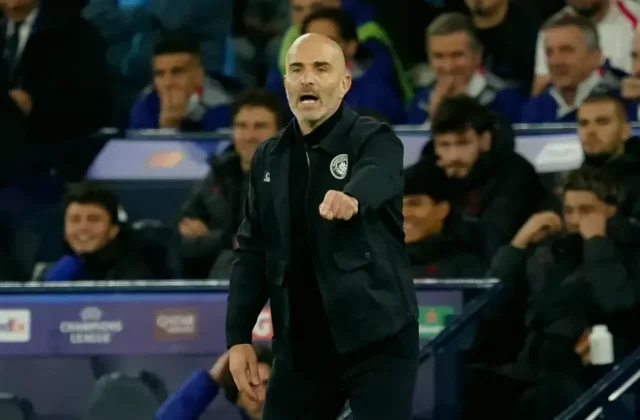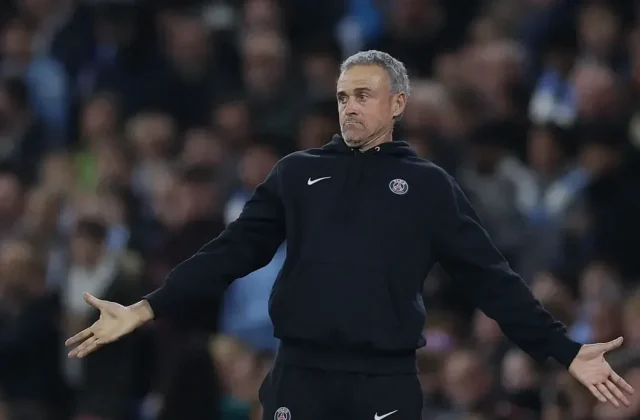

AC Milan’s first defeat of the season, a 2-0 loss to Benfica in Thursday’s cup tie, has placed Ruben Amorim’s early work under sharper scrutiny. The coach has arrived with a clear commitment to proactive football, but the performance exposed problems that cannot simply be filed under the heading of a project still taking shape.
Amorim has made no secret of his conviction. “If I fail, I will fail in a big way,” he said, defending the ambition behind his approach. Yet his assessment after the Benfica defeat also carried an important qualification: part of the squad, he admitted, is not suited to the football he wants to play.
That is a difficult balance for Milan to manage. Amorim had previously praised the club’s transfer work in emphatic terms, while the squad has been reinforced across the pitch. The board is standing behind its new coach, but the question now is whether the group can absorb his demands quickly enough to avoid a season in which every setback becomes an argument about fit.
A team following instructions, but needing more freedom
Amorim has stressed that his players listen to him on the training ground. For a coach attempting to establish a new culture, that willingness matters. On matchdays, however, Milan can sometimes look overly tied to the script prepared at Milanello.
Even the more imaginative players appear concerned first with carrying out the instructions from the bench, rather than taking the individual initiative that can alter an unsettled match. Milan need organisation, particularly in the early stages of a new era, but they also need players prepared to produce something beyond the plan.
The issue is linked to a shortage of authority within the side. Milan’s great teams under Arrigo Sacchi and Fabio Capello were collective machines, but they also possessed leading figures capable of deciding decisive moments: Franco Baresi, Marco van Basten and Roberto Donadoni among them. Amorim is working with a less accomplished group, though he too appears to have recognised that the squad lacks commanding personalities.
Benfica exposed defensive lapses
The most alarming aspect of the 2-0 defeat was not Milan’s willingness to press or play on the front foot, but the lack of care once Benfica had possession. Aggression without concentration can quickly become disorder.
Benfica’s second goal offered the clearest illustration. Five Milan players were beaten inside their own penalty area, a sequence that underlined the defensive blackouts troubling the new coach. Such mistakes are especially costly when they arrive before the interval, because Milan have too often required a reaction rather than setting the tone from kick-off.
Combacks may be memorable, but they cannot become a regular operating method. Amorim’s repeated half-time changes also suggest that he has not always found the right starting eleven. Experimentation is natural in the opening phase of a job; persistent corrections after 45 minutes are a sign that Milan must become more reliable from the outset.
Ramos must offer more at centre-forward
Gonçalo Ramos remains another unresolved part of the picture. As Milan’s established starting striker, he has yet to provide the goals expected of a number nine. More concerningly, he has not created enough shooting opportunities for himself.
His struggle is not solely a player issue. Amorim must find a way to bring Ramos into the game more consistently, while the forward must respond with greater presence in the penalty area. Milan cannot build a coherent attacking identity if their central striker is detached from the chances the side creates.
The coach is trying to involve the entire squad, an understandable approach after a change of direction, but Milan risk losing definition if too many solutions are pursued at once. The club can protect Amorim and urge patience, but the team must soon become easier to recognise.
There is no need for Amorim to abandon his principles or turn Milan into an unnatural, purely pragmatic side. But before the grander version of his football can emerge, he must produce a Milan that is more stable, more alert and more readable. He still has time to shape the season, though the early evidence says that time cannot be spent on the same mistakes.