From Dubai to Barcelona, Andrés Iniesta is letting two new chapters run alongside each other. The former Spain and Barcelona midfielder, now 42, is balancing family life with his wife and five children, his first coaching post at Gulf United, and a return to the Catalan city for the opening of an interactive exhibition devoted to his career.
Iniesta will unveil Iniesta Experience: The Inner Game at Barcelona’s IMAX venue, a project designed to bring visitors back through the defining moments of a football life that travelled from Fuentealbilla to Camp Nou, from World Cup glory to the latter stages of a long playing career in the Emirates. He ended his playing days at Emirates Club two years ago.
The exhibition has been assembled with the team around him, people who have known the details of his life and career closely. Its aim is not simply to display trophies or images, but to make the emotional and sporting landmarks of that journey accessible in an interactive form. Iniesta described it as a particularly meaningful undertaking and hopes supporters can relive those moments through it.
A coach’s first steps in the Emirates
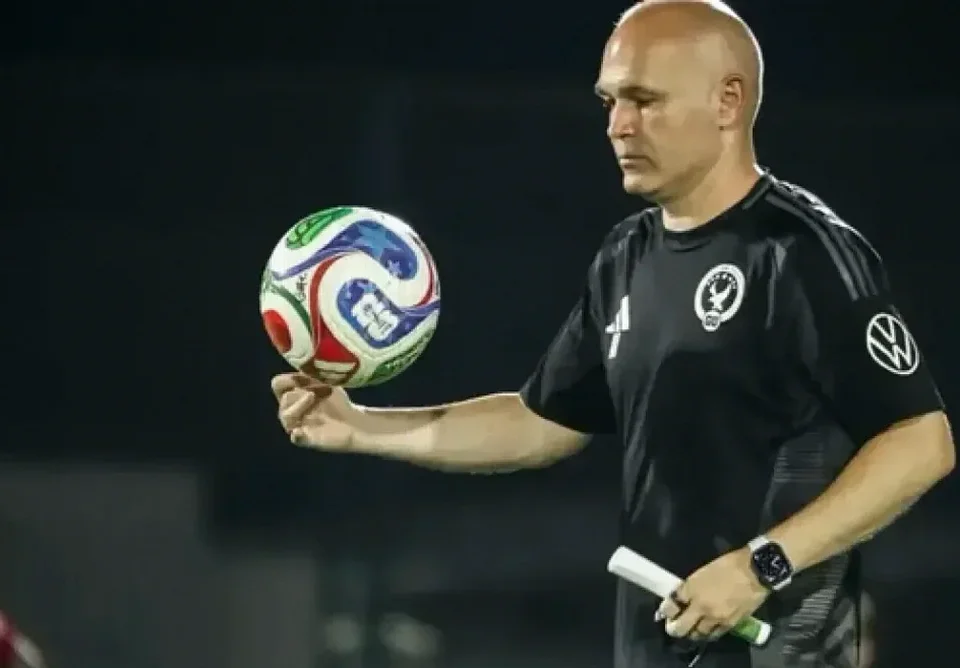
His attention, though, is increasingly fixed on the training ground. At Gulf United, competing in the UAE second tier, Iniesta has found himself drawn to all parts of coaching: work with his staff, conversations in the dressing room, planning a week, assessing mistakes and preparing again for the next opponent.
He is still completing his qualifications. In mid-October he is due to begin the final Pro Licence stage, having already obtained the A Licence required to enter it. Within a year, he expects to hold the credentials needed to work wherever his coaching path takes him.
There is no single tactical template detached from the players available, he believes. His teams should seek control of matches, but the decisive factor is the players’ reading of changing situations. A shape that works at kick-off, or for ten minutes of a match, can quickly become unsuitable. At Gulf United, the starting structures have included 3-4-3 and 5-2-3, with the back line capable of shifting during a game depending on the opposition and the movement of his own side.
Barcelona remains an emotional reference point rather than a declared destination. Iniesta said it would naturally be special to coach the club that shaped him if his managerial career continues, but he is not treating it as a fixed target. As a player, reaching Barcelona’s first team and succeeding there had been a clear obsession. Coaching was never mapped out in the same way, and he is content to let time determine what follows.
That journey is being watched alongside familiar former teammates taking their own routes. Xavi began in Qatar before winning La Liga with Barcelona and moving on to the Netherlands national team, while Sergio Busquets has begun practical work with Barcelona Atlètic.
Barcelona’s midfield and Spain’s continuing identity
From the Gulf, Iniesta still makes time for Barcelona and Spain whenever they are on television. He sees in both sides a familiar appeal: gifted players, shared understanding and a style that places value on the ball. He regards Spain’s present team as uniquely compelling on the international stage, with an identity that continues the influence of Barcelona’s great sides and the 2010 World Cup generation.
That continuity was particularly vivid at the World Cup final in New Jersey, where Iniesta watched from the stands alongside Xavi, Iker Casillas, Carles Puyol, Sergio Ramos and David Villa. Spain, he felt, deserved the goal they eventually found, though the tension remained because a final can turn suddenly when a team fails to make its superiority count. Sixteen years after Spain’s previous triumph, seeing a new generation deliver the prize was, he said, deeply moving.
He believes many of today’s players have grown up watching the teams and matches that formed that earlier era. Barcelona’s academy contingent, blended with players from other clubs, has helped preserve an approach that Spanish football can recognise and take pride in.
Iniesta also sees an exceptional challenge for Lamine Yamal. What the 19-year-old has already achieved is not normal, he said, precisely because so few players can reach such a level so early. Yamal’s ambition and ease under pressure stand out, but the greater test is the one Barcelona faces every season: not what has already been won, but the need to win again.
Rodri’s arrival, in Iniesta’s view, strengthens Barcelona’s hopes of winning the Champions League. A player of Rodri’s calibre raises the level of a side through his influence, game intelligence and importance to the collective.
Asked which current players most resemble the qualities he would value in a midfielder, Iniesta declined to name one successor. Instead, he pointed towards Barcelona’s group: Pedri, Fermín López, Dani Olmo and Gavi. For a coach beginning his work thousands of kilometres from Catalonia, that is the kind of footballer he wants around him: technically strong, intelligent and equipped to understand the game beyond a fixed system.