Milan’s summer of 2026 was expensive, unevenly paced and still incomplete in certain areas, but it has already altered the shape of the season. More than €150 million was spent net of sales, with early arrivals followed by a long pause and then another push. Six matches into the campaign under Amorim, the first verdict is not simply about the new signings: it is also about the players who returned from loan and found a different place waiting for them at Milanello.
Amorim gives returning players a new route
The change in the dugout has been decisive for several members of the squad. Players who appeared likely to leave have instead been retained, assigned clear roles and, in some cases, brought back into the centre of the project.
- Francesco Camarda returned after his loan spell at Lecce and was kept as Gonçalo’s deputy. Milan did not recruit another central forward beyond Ramos, a decision that underlined the club’s faith in the young striker. He has made two substitute appearances for eight minutes in total, but is expected to receive more opportunities after the international break.
- Samu Chukwueze might not have remained at Milan without Amorim’s arrival, following an unremarkable loan at Fulham. Rather than using him as an attacking midfielder, the coach has deployed the Nigerian as a wing-back. There have been occasional defensive gaps, but Amorim believes his ability on the ball outweighs the risks, saying he prefers players who can manage possession. Chukwueze has started five of six matches, playing 476 minutes with an average rating of 6.08.
- Yunus Musah returned from Atalanta and has also been handed a revived role. Amorim has used the United States international as a central midfielder alongside the deeper playmaker, where he supplies balance and late running. He has featured in all six games, starting four, for 419 minutes and an average rating of 6.16.
- Filippo Terracciano came back from Cremonese at a point when a departure still seemed plausible. His versatility changed the calculation: he can operate in a back three, at full-back or in midfield. Tomori’s uncertain summer situation also mattered, and Terracciano has been identified as Gila’s alternative. He has played twice, including one start, for 47 minutes and carries an average rating of 5.
Early leaders and a breakthrough from the margins
The more established arrivals have quickly taken responsibility, while one younger player has provided the unexpected lift of the opening weeks.
Mario has made perhaps the strongest all-round start among Milan’s additions. The Spanish central defender has given Amorim a player able to build from the back, step forward and move beyond the opposition’s first line of pressure. His influence has not been limited to possession: he has been viewed as a vocal leader and an example for the group. Mario has played six times, starting five, totalling 476 minutes with a 6.16 average rating.
Alpha has been the revelation. A year ago he was playing in Serie B with Catanzaro; Milan bought him in January but allowed him to remain in Calabria on loan. An injury then disrupted much of that spell, yet he has recovered well. Milan and Amorim considered his future closely during the summer before deciding to keep him, and the choice has been rewarded by important goals, technical quality and a notably mature attitude. He has made five appearances, four from the start, across 288 minutes, with an average rating of 6.2.
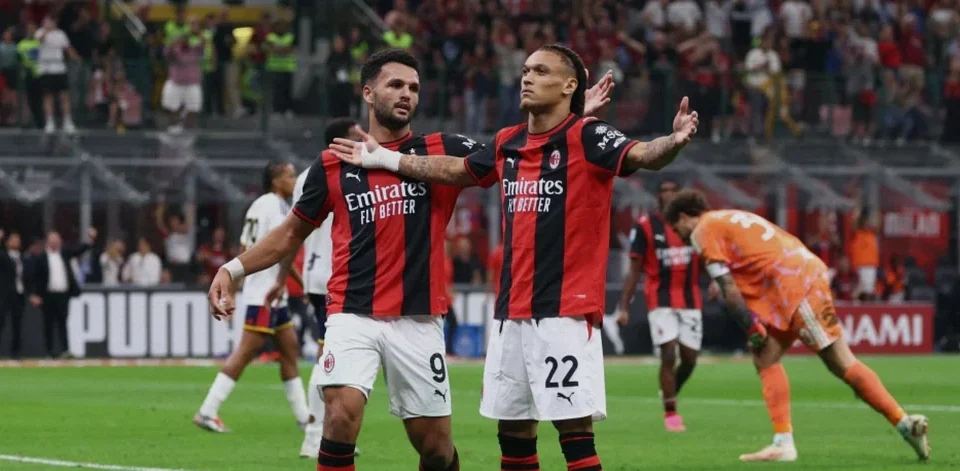
Another player who has seized a shorter run of minutes is the unnamed wide attacker described as Milan’s man of the moment. Three goals in his last two league outings have supplied much-needed energy to the side and supporters. He has not yet secured a permanent starting place because Amorim has particular balances to maintain on the flanks, but his ability to play on either wing or behind the striker makes him a valuable option. The requirement is defensive discipline when Milan do not have the ball. His record stands at four appearances, one start, 160 minutes and an average rating of 6.5.
Gonçalo’s adaptation and the cases still waiting
Gonçalo’s first month tells the story of a major investment being judged before the side around him has fully settled. His return of one goal and one assist in six appearances does not yet match the fee, the highest Milan have paid for a single player in the club’s long history. Yet there are elements that explain why the club remain convinced by the signing.
- He has started all six matches and accumulated 535 minutes, with an average rating of 5.83.
- His work for the team has stood out: he can bring others into play, link departments and press with intensity.
- Rabiot’s goal against Lecce was cited as an example of his useful hold-up contribution.
- In league action, his 57.3 kilometres make him Milan’s leading runner so far.
- That generosity can pull him too far from goal, and his finishing still needs to improve when opportunities arrive.
The expectation is that his output will rise as the players become more comfortable with Amorim’s ideas. For now, Milan see a forward with qualities that have been missing at Milanello for some time, rather than a transfer whose value can be settled after six games.
Omari is at an earlier stage of his integration. The English player arrived from Nottingham Forest on loan with an option to buy worth more than €40 million. His touch and vision have been encouraging, and Amorim sees him as a right-sided attacking midfielder, but the financial terms leave little room for an ordinary campaign. To earn a long-term stay, he will need to do far more than merely contribute. He has two appearances, one start, 58 minutes and an average rating of 5.25.
Others are still waiting for their opening. The midfielder retained alongside Camarda has been formally placed in the first-team group, but faces much heavier competition in central areas. He has not yet played, despite the club’s belief in his ability.
Diawara has also remained unused. The French central defender arrived aware that he would begin low in the hierarchy. He operates on the left side of central defence, where Pavlovic is an established starter, while Bartesaghi can also cover the left-sided role in a back three. A demanding sequence after the international break may finally create room in Amorim’s rotations, but for the moment Diawara’s appearances, starts and minutes all remain at zero.
A squad still taking shape
Milan’s opening chapter has therefore been defined by two parallel realities. The club have spent heavily and found immediate contributions from Mario, Chukwueze, Musah and Alpha, while Gonçalo’s broader work offers encouragement despite modest numbers in front of goal. At the same time, Camarda, Diawara and other retained players remain part of a longer contest for relevance.
The next stretch of fixtures will test whether Amorim’s selections were short-term solutions or the foundation of a new Milan. The summer did not provide every player the squad might have required, but it has already created fresh hierarchies — and, for several players returning to Milanello, a second chance to shape the championship.