Silvio Baldini’s remarks at the Italy Under-21 gathering have reopened a familiar question in Italian football: not whether the country produces talented youngsters, but whether clubs are prepared to trust them when the step to senior football arrives.
Key takeaways
- Baldini backed Massimiliano Alvini’s Frosinone while stressing that he held no grievance against Como.
- The interim Italy coach argued that Italian players should receive more meaningful opportunities at club level.
- Italy’s youth sides continue to compete successfully in international tournaments, yet many prospects face doubts over their readiness for Serie A.
- The Lega Pro’s “Zola Reform”, supported under president Matteo Marani, has sought to reward clubs that give domestic youngsters more playing time.
- Baldini fielded his entire group of young players in matches against Greece and Luxembourg.
- Gianluigi Donnarumma’s debut at 16 under Sinisa Mihajlovic remains an example of a coach acting decisively on a young player’s ability.
Frosinone as a point of principle
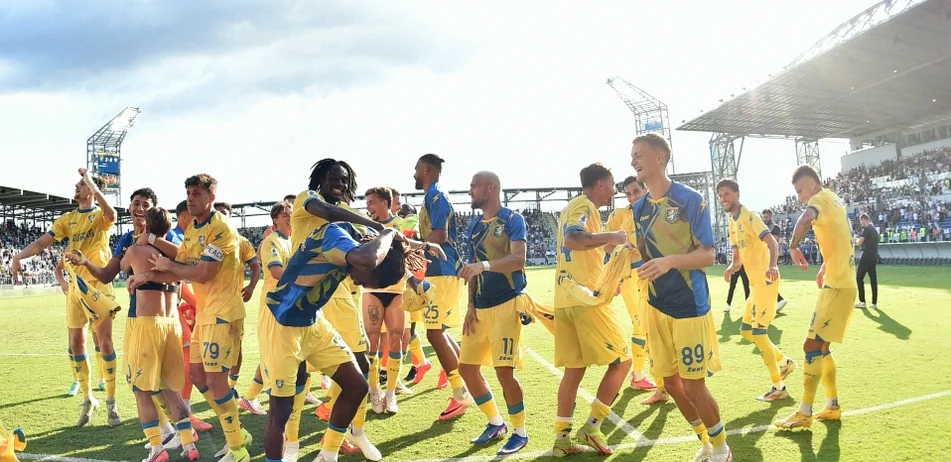
“I have nothing against Como, but I was supporting Alvini, because Frosinone represents our football best,” Baldini said. It was a brief line, but one that carried beyond the result or the individual clubs involved.
His point was not a rejection of alternative models or of clubs that have chosen a different route before adjusting their approach. Rather, Baldini placed the emphasis on an Italian issue that remains unresolved: the path from academy football to a credible first-team chance.
The shortage, in his view, is not found among children and teenagers entering the game. Italian academies work with players through the ages of 16 and 17, and young Italians frequently earn recognition in international youth competitions. The break comes later, when a player is judged against the demands of Serie A and too often considered insufficiently experienced, prepared or mature.
That judgement contains an obvious contradiction. A footballer cannot acquire senior experience without being selected, yet the fear of making a mistake can push clubs towards supposedly safer choices. Elsewhere, the calculation is often simpler: if a player is good enough, age is not a barrier to a debut.
For Baldini, this should not be framed as an act of reckless bravery. Trusting a capable player ought to be part of a club’s responsibility, both towards its own development work and towards the wider health of the national game. Italy’s three World Cup failures have made the discussion more urgent, but the issue also concerns the everyday courage of coaches and directors on a Sunday afternoon.
From youth reform to senior responsibility
The principle has already been taken into the institutional debate. Lega Pro, under Matteo Marani, has promoted the so-called “Zola Reform”, a programme designed to offer concrete incentives to clubs that increase the minutes given to Italian youngsters. In a system that often resists change, rewarding the use of young players has been presented as a substantial shift in priorities.
Baldini has attempted to apply the same belief during his spell as interim Italy coach. Against Greece and Luxembourg, he gave every member of his young squad playing time, placing them alongside Gianluigi Donnarumma as the lone established senior figure.
Donnarumma’s own rise offers the clearest illustration of the argument. His talent was evident, but his first-team opportunity arrived because Mihajlovic selected him for AC Milan at the age of 16 despite the scrutiny and risk attached to such a decision. Ability alone does not create a career; somebody must decide that the moment has arrived.
Baldini indicated that, had his national-team appointment been extended, he would have continued with the same group of players. It was a commitment to continuity rather than a search for instant reassurance.
Amid discussions about VAR, stadium redevelopment and club accounts, the debate around Italian football’s future can become crowded with technical language and institutional promises. Baldini’s message is more direct: academies matter, but they are incomplete if their best players are never allowed to test themselves at the highest level.
Roberto Baggio made a comparable appeal around two decades ago, arguing for young players to be taught control, individual technique and the confidence to attempt a dribble. The details of football have changed, but the central demand remains: Italy must not only develop its young talent, but also believe in it when the decisive opportunity appears.