Barcelona and Real Madrid left the Camp Nou level at 1-1 in a Clásico played under the pressure of a European week, with Kylian Mbappé putting the visitors ahead before Raphinha, Barcelona’s captain, restored parity. For both sides, the draw carries into their Champions League schedules: Barcelona had already suffered a first defeat of the season against Paris Saint-Germain, while Madrid arrived after using their Leipzig fixture to rehearse a more creative midfield shape.
A Clásico shaped by Europe and the title race
Barcelona began the tenth LaLiga round six points clear of Real Madrid, with Atlético Madrid having already won against Deportivo. The home side had scored 39 league goals in nine games, their best opening attacking return since Sevilla reached 42 in 1940-41, while Madrid knew defeat would leave a significant early gap.
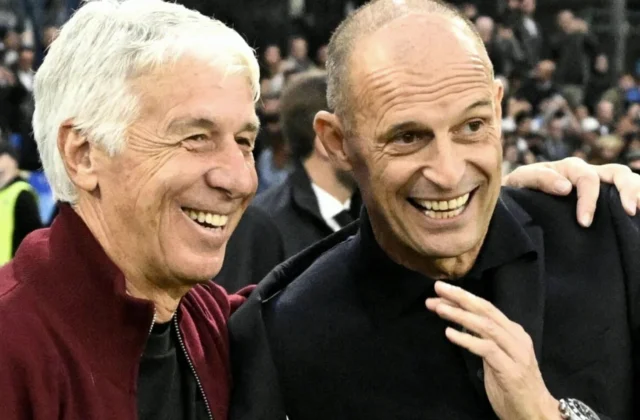
Hansi Flick’s side fielded their youngest home Clásico XI in the league since 2006, at an average age of 24 years and 340 days. Rodri and Pau Cubarsí were intended to anchor Barcelona’s circulation, although Madrid’s press pushed Rodri higher than usual and crowded his passing lanes through Jude Bellingham, Bernardo Silva and Aurélien Tchouaméni.
José Mourinho’s selection reflected the work done against Leipzig in midweek. Federico Valverde started at right-back, Bernardo joined Tchouaméni in midfield and Arda Güler operated with licence to dictate the game. Andriy Lunin made his first appearance of the season in place of the ill Thibaut Courtois, returning for his first league outing since May.
Madrid were also without Vinícius Júnior, serving the second match of a four-game suspension. Barcelona were without Jules Koundé, while Raphinha started through the middle after his injury and Anthony Gordon was selected on the left ahead of Karim Adeyemi.
Madrid strike before Barcelona respond
- Barcelona had the first possession, but Madrid quickly made their intention clear: press high, regain the ball early and use the width provided by Cucurella and Diomande on the left, plus Valverde and Güler on the right.
- Güler tested Joan García from the edge of the area, while Gordon twice called Lunin into action. The Ukrainian goalkeeper also had to deal with pressure from Raphinha when coming outside his box.
- Barcelona lost Xavi Espart before the half-hour after the defender felt a muscular problem. Alejandro Balde came on at left-back and João Cancelo moved across to the right.
- Madrid repeatedly targeted the left channel through Diomande. Before the interval, their attacks had gone down that side 46.7 per cent of the time, exposing the limited defensive support in front of Cancelo.
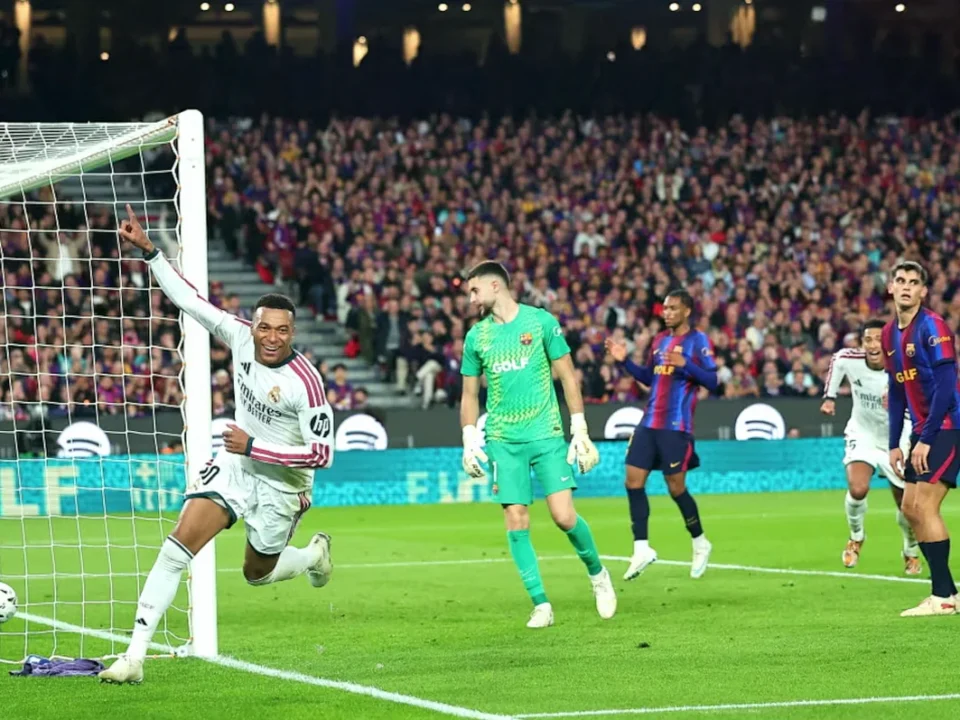
- Mbappé opened the scoring shortly before the break. Bernardo sent Cucurella into space, the full-back fed Diomande’s inside run and Gerard Martín’s attempted clearance fell back towards the same flank. Mbappé reacted to the loose ball and finished at the near post.
- Barcelona could have answered immediately, but Lamine Yamal missed from close range after receiving the ball unmarked on the right of the six-yard area. Diomande then went close to a second for Madrid, driving a low effort into the side netting after Güler’s cross-field pass.
- The second half began without substitutions. Mbappé was booked for stepping on Cubarsí after a Barcelona turnover, while Madrid continued to create transition opportunities through Bellingham and their wide runners.
- Cancelo later caught Diomande’s calf with his studs in a challenge which was not reviewed by VAR. Diomande had been carrying a knock after repeated contact from the Portuguese defender.
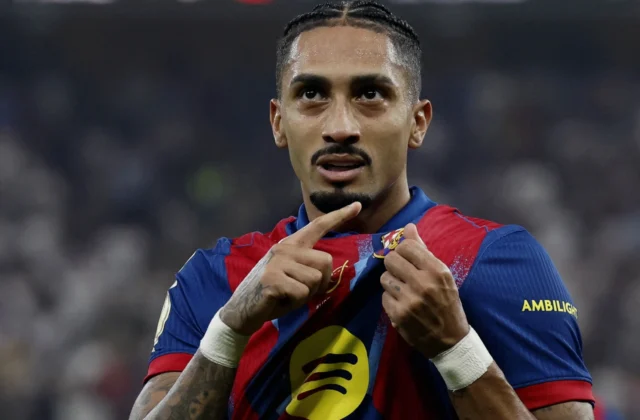
- Barcelona eventually found their equaliser through Raphinha. The captain’s goal brought the score back to 1-1 and changed the emotional temperature inside the Camp Nou after Madrid had looked increasingly comfortable after half-time.
Mbappé’s mark and Madrid’s structure
Mbappé’s goal was his tenth in ten league rounds and his 13th against Barcelona in all competitions. It also took him to 99 goals in 116 appearances for Real Madrid, one short of a century. Cristiano Ronaldo reached 100 Madrid goals in his 105th game, also on 2 November during his third season at the club.
The French forward has now scored seven times against Barcelona for Madrid, matching Real Sociedad as the opponent he has scored against most often since joining the club. Only Cristiano Ronaldo and Karim Benzema have scored more against Barcelona in the 21st century.
Madrid’s opener was also a full-team move: every one of Mourinho’s players touched the ball during the sequence before Mbappé finished. Their shape gave particular prominence to the flanks, where Cucurella and Diomande combined on the left and Valverde and Güler worked from the right. Tchouaméni led their recovery figures with seven, followed by Güler with six and Diomande with four.
Konaté and Huijsen stood up well to Barcelona’s aerial deliveries, although Huijsen had earlier shown uncertainty in possession. Lunin, making a demanding return in the Camp Nou, made important saves from Gordon and Rodri.
What it means for the European week
Barcelona’s response prevented a second successive blank first half from becoming the dominant theme of their week. They had also failed to score before the interval against PSG, and Flick’s side entered this match having lost in Paris for the first time this season.
Madrid, meanwhile, showed the value of the Leipzig rehearsal. Güler and Bernardo had started together in that Champions League match, with the Turkish midfielder dropping into deeper areas and the Portuguese operating wider and nearer the opposition box. At the Camp Nou, the pair again helped Madrid escape pressure and play with more control than a conservative midfield selection would have offered.
The point does not settle the domestic contest, but it leaves both clubs with the same immediate requirement in Europe: turn an intense Clásico night into momentum rather than fatigue. Barcelona must recover their attacking flow after Paris, while Madrid take forward evidence that their reshaped midfield can compete for the ball as well as threaten on the break.