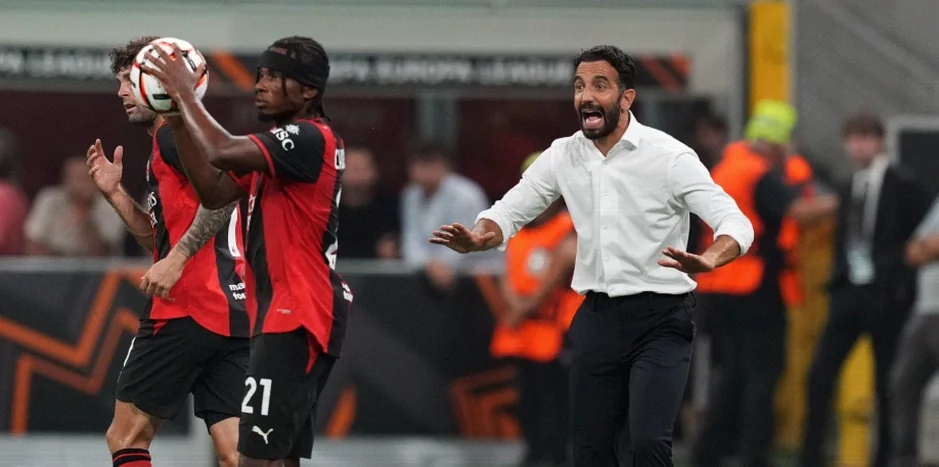
Milan’s early season has brought a familiar warning into sharper focus: Ruben Amorim’s side cannot build its campaign around open, attacking football unless it begins to control matches at both ends of the pitch.
Milan’s attacking ambition is leaving too much behind
Amorim’s idea has been evident since his arrival. Given the choice, his Milan would rather win 4-3 than protect a 1-0. The Portuguese coach wants his team to play on the front foot, with intensity, pressure and collective aggression.
So far, however, those ingredients have appeared only against Torino and, to a lesser extent, Venezia. When Milan cannot impose themselves in possession or create a serious attacking threat, their adventurous approach becomes a liability rather than a strength.
The side has neither found a convincing attacking identity nor developed the defensive security needed to survive difficult spells. The spaces left for opponents have been far too generous, with Milan repeatedly allowing runs, passes and shooting opportunities that a more compact team would deny.
That contrast may lead some supporters to look back at last season under Massimiliano Allegri. His Milan were rarely dazzling in attack, and the final month was disastrous, but the team generally offered greater defensive reliability. At present, Amorim’s group are not producing enough going forward to compensate for their frailty without the ball.
Benfica exposed familiar defensive faults
The match against Benfica laid bare problems that had already emerged in earlier outings. Milan’s concession record is now six goals in their first five games of the season, with Venezia the only opponent they have kept out.
For a coach who accepts the risks of an attacking game, conceding goals is not automatically a crisis. It becomes one when the team are failing to score often enough themselves.
Benfica’s first goal was particularly damaging because it came from a sequence Milan should have handled. Kaminski burst down the left, moving between Samuel Chukwueze and Filippo Terracciano before coming inside. His pass found Lukebakio, who carried the ball across the field with Bartesaghi unable to apply meaningful pressure.
Jashari did not close him down, either, allowing Lukebakio the time to pick out the corner.
The second Benfica goal was another example of a defensive line failing to react to movement around it. El Karouani had the opportunity to assess Kaminski’s position and send a low ball into the area. Kaminski only had to finish, while Milan’s defenders remained static. Mario Gila and Koni De Winter were especially exposed as Benfica’s runners moved around them.
Individual errors are becoming a collective problem
Milan’s issue is not confined to one player or one moment. Individual lapses are being added to failures of organisation, and those in turn point to a wider weakness in the defensive phase.
Amorim’s project is built on courage and attacking intent, but the first chapter of the season suggests that Milan must find greater discipline without abandoning their identity. If the team cannot dominate opponents as intended, it must at least stop making their route to goal so straightforward.
SEO Title: Milan’s Defensive Problems Deepen Under Ruben Amorim
SEO Description: Milan have conceded six goals in five matches as Benfica exposed the defensive gaps troubling Ruben Amorim’s side at the start of the Serie A season.