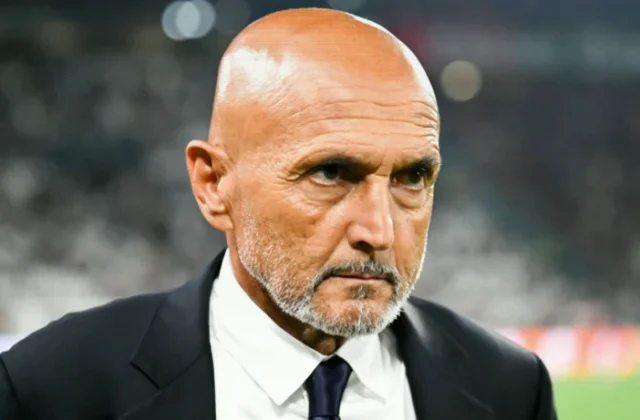
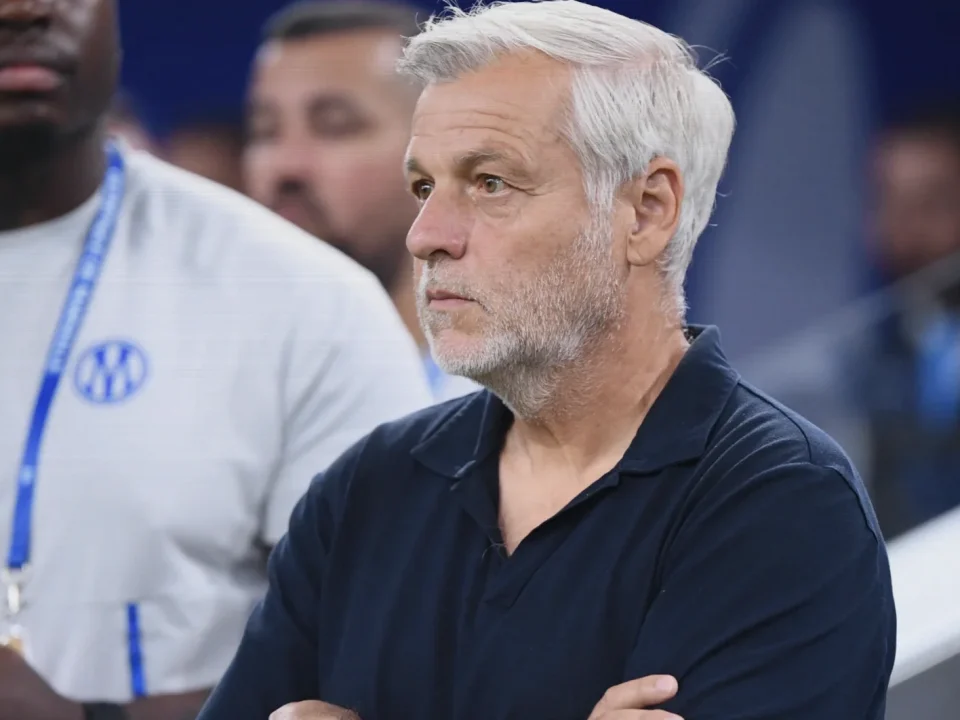
Marseille’s season has reached the point where every missed chance and every lapse appears to carry extra weight. Sitting 17th in Ligue 1, OM head coach Bruno Genesio has identified a mental dimension behind the club’s struggles, with the recent match against Paris Saint-Germain offering a sharp illustration of the problem.
Genesio identifies concentration and composure concerns
Genesio has said his side need to improve mentally, pointing to moments of lost focus, difficulty resetting after major emotional moments, a lack of maturity and insufficient ruthlessness in key situations.
His assessment is not limited to one type of error. Marseille have at times looked unable to recover immediately when a match moves away from the scenario they expected. A setback, a missed opportunity or a moment of excitement can alter the team’s decision-making within seconds.
Genesio has also insisted that Marseille must remain ambitious and win matches. Yet the pressure attached to that obligation can become part of the issue. At a club where defeats quickly become crises and individual poor form can dominate the conversation, players can be affected very differently by the atmosphere around them.
Some thrive on that intensity. Others can become more hesitant, forcing decisions rather than playing with clarity. The challenge is not simply to find supposedly fearless players, but to help the existing squad perform consistently in one of French football’s most demanding environments.
The PSG equaliser exposed the need to reset
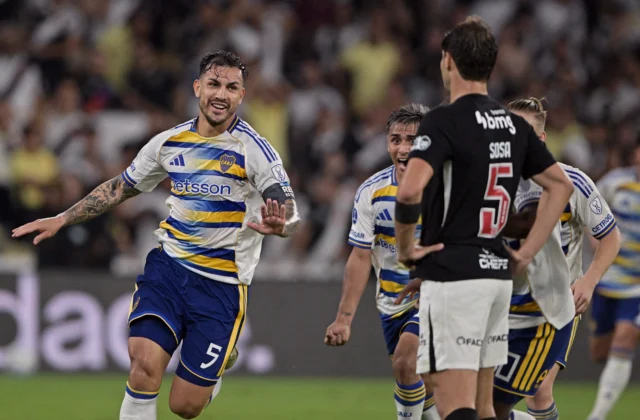
- Marseille equalised against PSG, producing the kind of emotional surge expected in a major fixture.
- The goal brought satisfaction and confirmation that OM’s approach was working.
- But that positive emotion risked becoming over-excitement, briefly taking players away from their immediate responsibilities.
- Genesio’s concern is that Marseille must be able to return instantly to positioning, direct opponents, tactical instructions and the next phase of play.
The aim is not to remove emotion from football. Celebration, anger and belief are part of elite sport. The key is controlling their intensity and knowing when to move back into the next action.
Concentration over 90 minutes is not about remaining frozen in a permanent state of focus. It is the ability to switch off briefly, then reconnect rapidly when the game demands it. For Marseille, that recovery time appears to be a decisive area for work.
Confidence cannot wait for the next goal
Finishing is another major issue. Technical analysis can explain a single missed chance, but when several players struggle in front of goal, confidence and calmness can become equally important factors.
The common belief that confidence returns only after a win, a good display or a goal can create a dangerous cycle. An attacker waiting for his next goal to feel secure becomes dependent on an outcome he cannot entirely control. When the next clear chance arrives, it can then carry far more psychological weight than it should.
Several Marseille opportunities against PSG were viewed through that lens. The issue was not presented as purely technical: greater serenity at the decisive moment might have made the difference.
Neal Maupay was highlighted as an example. The forward was considered technically capable of converting the opportunities that fell to him against PSG, with the view that more confidence before the game could have changed the result of one or two of those chances.
The proposed solution is to reverse the usual logic: build confidence before the result arrives, rather than waiting for a result to provide it. Elite champions are not confident only because they have won repeatedly; their ability to retain belief during difficult spells is also part of what allows them to win.
Second chances and young players could help OM
There are reasons for Marseille to believe their current difficulties can still become useful experience. Players who have already endured failure at the club now have another opportunity, and that previous disappointment can produce either anxiety or freedom.
Amine Harit was identified as a potentially important case. A second chance can feel like a final opportunity and become an additional burden. It can also remove some of the fear, allowing a player to perform with greater liberty and detachment.
A restricted squad is usually seen as a sporting concern, but it may also open the door for younger players. Those arriving with much to gain and relatively little to lose can bring a different relationship with pressure. Youthful freedom is not a solution by itself, but it can affect the mood of a group carrying heavy expectations.
The restart offers time, but no easy route
- The international break gives Marseille time to address concentration, confidence and emotional control.
- Their fixtures after the pause are seen as more favourable than a meeting with PSG, including games against Troyes and Angers.
- However, treating those matches as automatic wins could recreate the same pressure that has harmed OM’s performances.
- Marseille must approach the restart with ambition and high standards, but without allowing the obligation to win to overwhelm their football.
The theoretical difference between squads does not decide a match on its own. Physical, technical and tactical quality matter, but a team’s state of mind on a given day can prove just as important.
Genesio’s task is therefore not to reduce Marseille’s intensity. The club needs passion, ambition and edge. It needs to ensure that those qualities do not turn against the players asked to deliver results. For OM, the next step is to combine the accelerator with a steady hand on the wheel.