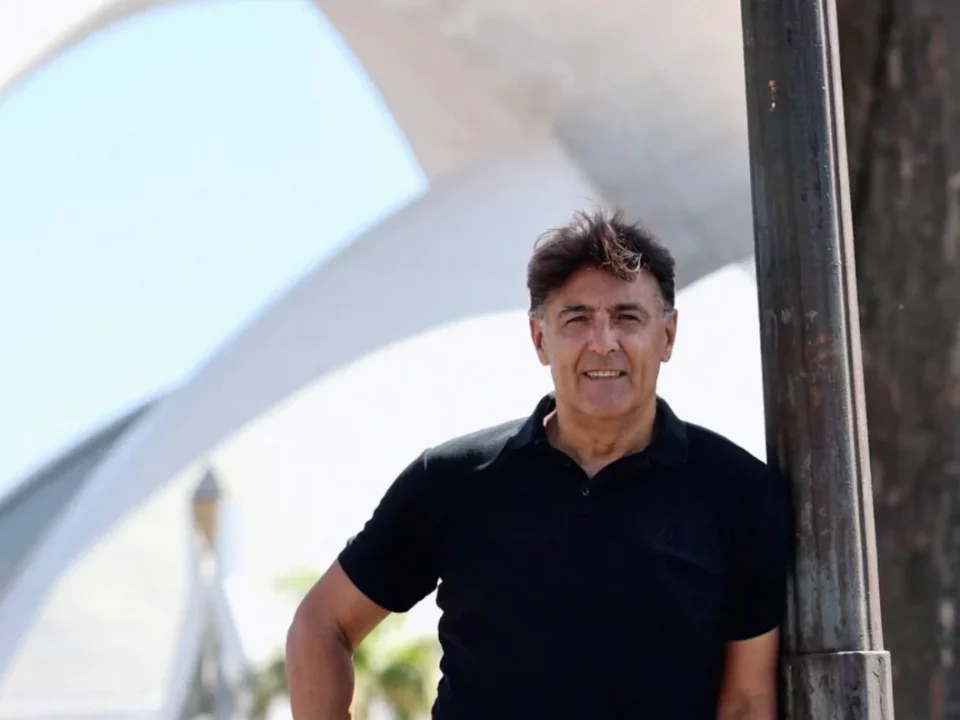
Roma’s high-intensity approach under Gian Piero Gasperini will make any meeting with Real Madrid a demanding European occasion, former defender César Gómez del Rey believes. The Spaniard, whose career began in Madrid’s academy and ended during four difficult years in the Italian capital, says beating Madrid carries a significance that stays with a club and its supporters.
| Career marker | Figure |
|---|---|
| Age when Gómez del Rey joined Real Madrid | 15 |
| Age of his Castilla debut in the second tier | 17 |
| Roma spell | 4 years |
| Roma-Lazio derby defeat in which he featured | 1-3 |
| League matches in which Tenerife kept Ronaldo scoreless against Gómez del Rey | 2 |
| Real Madrid’s former European Cup wait cited by Gómez del Rey | 32 years |
Gasperini, in Gómez del Rey’s view, has turned Roma into a competitive side that plays well and presses with real aggression. Roma had been top of the table until recently, and he expects them to push Madrid hard. He also argues that Dean Huijsen needs patience while adapting to the scrutiny that comes with playing at the Bernabéu, despite his obvious ability and potential. Gómez del Rey believes José Mourinho is ideally placed to help the young defender develop, describing him as a brave elite coach who understands both Real Madrid and the demands of its support.
A Madrid education and a Roman ending
Now based in Tenerife, where he organises events including international children’s football tournaments, Gómez del Rey remains closely connected to the game. His playing route formed a circle of sorts: he entered professional football through Real Madrid and concluded his career at Roma.
He arrived at Madrid after a trial and a social tournament, progressing from Juvenil C through seven years in the youth ranks and Castilla. Vicente del Bosque, Toni Grande, José Antonio García Remón, Juanito, Carlos Santillana and Isidro were among the academy figures who shaped his understanding of the club.
His early position was up front. José Luis Pérez Caminero was initially his strike partner before both men eventually became central defenders, including later spells at Valladolid. Toni Grande first moved Gómez del Rey into midfield, while Del Bosque placed him at centre-back in his final youth season, a role he retained for the rest of his career.
He accepts that reaching Madrid’s senior side was never straightforward, regardless of the era. In his assessment, being a fine footballer is one thing; meeting the full demands of Real Madrid is another. He recalls Jorge Valdano explaining how even carrying the ball from midfield towards goal at the Bernabéu could feel intimidating amid the noise from the stands.
Gómez del Rey also noted that the old limit of three foreign players and the example set by the Quinta del Buitre could create the impression that academy graduates found the route easier in previous decades. Yet he stressed that Madrid’s modern global recruitment pool has changed the equation, while expectations have intensified: during the period when the club went 32 years without the European Cup, league titles and two UEFA Cups were important achievements; now failure to win the Champions League is often treated as a crisis.
Tenerife, Ronaldo and the move to Italy
At Tenerife, Gómez del Rey became one of the leading central defenders in Spanish football during the 1990s. He is still widely remembered for his marking of Ronaldo Nazário, keeping the Brazilian scoreless in each of their two league meetings. He takes pride in that record, although he insists the attention was principally a measure of the opponent: Ronaldo, he says, was an extraordinary force and among the finest players many have ever seen.
His move to Roma came after he had renewed with Tenerife for four more years at the age of 29. He completed the first season of that deal before Roma made their move. At the time, Italian football was the dominant league, filled with the era’s biggest names, and Spanish players were still unusual there. Gómez del Rey believes that he and Iván Helguera were roughly the tenth and eleventh Spaniards to make the switch to Italy.
The pair found themselves a small Spanish presence in Rome, but Gómez del Rey says the club, staff, players and people around Trigoria treated them superbly throughout his four-year stay.
Zeman’s demands and Totti’s rise
Zdeněk Zeman’s preparation was a sharp adjustment. Gómez del Rey recalls a month-long training camp in Austria featuring three sessions a day, far beyond the nine- or 10-day pre-seasons he had known in Spain. The workload was so severe that he and Helguera were photographed holding on while walking downstairs because their legs were shaking. He says players could not fully adapt to that rhythm until October, by which point winning a place had become even harder.
His limited opportunities included a Lazio derby at the Olimpico, when Roma were without both regular centre-backs and the two newcomers came into the team. Gómez del Rey had already missed time after suffering a blow to his side in a collision with Júlio Sérgio against Lecce. Roma lost the derby 3-1, and he was singled out in a city where that match can dominate discussion for weeks, making recovery from the setback particularly difficult.
He also witnessed Francesco Totti’s emergence into Roma’s central figure. Totti had spent three or four years moving between the first team and Primavera, but Gómez del Rey feels Zeman drew out the forward’s best qualities and accelerated his rise. He and Helguera regularly wondered why Madrid had not tried to sign him.
Gómez del Rey says Totti’s loyalty was never in doubt. Later interest from Florentino Pérez did not tempt him away from Roma, while Totti made clear that, within Italy, Roma was the only club he would represent. Madrid was the sole alternative he might have considered abroad. Gómez del Rey has no doubt that a player of Totti’s quality would have succeeded at the Bernabéu, just as Ronaldo succeeded in Italy despite the doubts voiced before his arrival.
Three years without playing
The end of Gómez del Rey’s playing career was defined by an unusual contractual impasse. In his second season, Zeman told him during pre-season that he was not part of the manager’s plans. When Spanish clubs reached agreements to take him back, Roma president Franco Sensi would not permit a return to La Liga.
Turkey and, through sporting director Fabrizio Lucchesi, an option in China were presented instead. At a time when few players were moving to China, Gómez del Rey declined them. He says Sensi informed him that refusing those routes meant he would remain under contract for the full four years.
He continued to report every day at Trigoria, train and fulfil his professional obligations, despite spending the final three years effectively unable to play. He does not describe himself as frustrated, however. Roma treated him well, he says, and it remains the Italian club closest to him.
That perspective informs his view of the challenge facing Madrid. “Beating Real Madrid is the biggest thing in football,” he said, recalling Tenerife’s title-defining victories over the Spanish giants. “When you beat Madrid, it stays forever.”