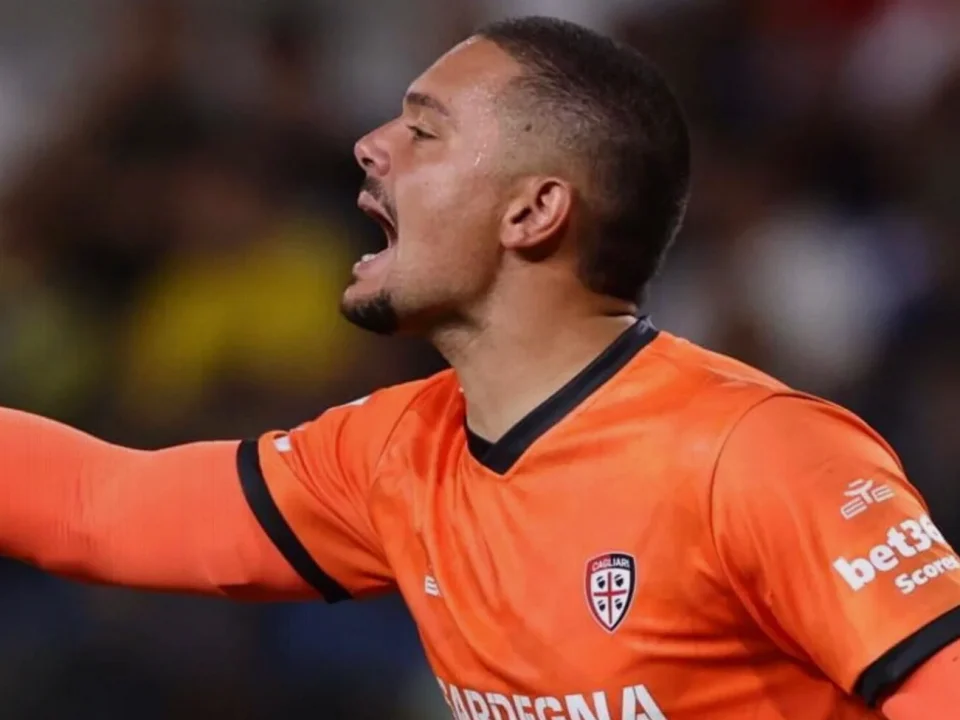
Elia Caprile’s form has given Cagliari an early-season defensive foundation, but the goalkeeper’s view of the club’s position is deliberately restrained: survival remains the target before any wider ambition is considered.
The decision
At 25, Caprile has become one of the central figures in Cagliari’s strong start. He finished last season with 122 saves, the second-highest total among Serie A goalkeepers, and now leads the division with a 90.5 per cent save rate and an average of 3.8 saves per match. Cagliari also possess Serie A’s best defensive record.
The numbers, however, are not what drive him. Caprile says they are merely an incentive to improve. “Every morning I want to become a better goalkeeper, but also a better person and a better father,” he said.
His preparation is shaped by a habit of expecting trouble even when Cagliari are in possession. When his team-mates attack, he imagines the ball being lost and prepares for the danger that may follow. A mental coach helped him understand the need to remain mentally connected to every phase of a match.
Caprile explained that he shouts instructions not simply to correct colleagues, but to keep himself involved. He believes psychological work is still too often overlooked in Italy, contrasting it with his experience of English football, where clubs have psychologists within their staff.
The isolation of the goalkeeper’s role is familiar to him. Different kit, gloves and a distinct position can leave a player alone when a match turns against him. Caprile said the people around a goalkeeper matter particularly in difficult periods, naming his family, fellow keepers Sherri and Radunovic, and coaches Bucci and Berretta as the group that keeps him balanced.
His time under Marcelo Bielsa at Leeds also remains influential. Bielsa repeatedly reminded his players that football lasts 90 minutes, while family, rest, personal problems and ordinary life continue beyond the final whistle. Before a game against Chelsea, the Argentine coach told the squad about a miner who found strength underground by thinking of his family.
Caprile sees a similar insistence on attitude in Fabio Pisacane. Cagliari’s coach, he said, is attentive to the human side of management: studying, demanding and supporting players in equal measure. Caprile feels Pisacane understands the pressures facing a generation constantly exposed through social media, with trust at the centre of his work.
Pisacane also encourages curiosity among the squad. At Christmas, he gave the players a copy of Pressure: Learning from Penalties to Handle Life’s Biggest Challenges.
Caprile’s own life changed with the birth of his son Edoardo. He described fatherhood as something that has enriched and reordered his days, giving greater value to the hours away from football that might once have been spent on less meaningful distractions.
He remains open about his room for development. Cagliari describe him as a modern goalkeeper, combining physical presence, technique, sharp reflexes, command of high and low balls, and confidence with his feet. Caprile agrees with that assessment but rejects any suggestion that he is complete.
He recalled working with Stefano Sorrentino at Chievo, where the veteran, then 38 and with 600 Serie A appearances behind him, still said he had not become a finished goalkeeper. For Caprile, that remains the standard of self-criticism.
His career has already included disappointment and success elsewhere. As Bari goalkeeper, he was denied promotion to Serie A by Cagliari, with Leonardo Pavoletti scoring in the final. He remembers Bari warmly, but feels Cagliari’s identity is distinctive: proud, geographically separate from the mainland and fiercely attached to its roots.
He also counts Napoli’s latest Scudetto among his achievements after making four appearances in that campaign. Winning in his father’s city mattered deeply, although he wanted a more prominent role and Antonio Conte could not offer that guarantee. Caprile accepted the situation and joined Cagliari in January 2025.
On Italy, he avoids making a personal case. The new national-team coach has chosen other options, he said, and Caprile instead wished Marco Pessina well, noting that he can learn from three strong goalkeepers, including Gianluigi Donnarumma, whom Caprile considers among the world’s best. Buffon, his childhood reference point, has offered him two pieces of advice—one personal and one football-related—which Caprile has promised to keep private.
Sunday’s picture
Cagliari briefly stood alone at the top of the table on Saturday at 18:00, before Roma-Inter. The moment carried special weight for a club and an island whose supporters travel considerable distances to follow the team, but Caprile insists it must not alter the season’s priorities.
After the win in Udine, Pisacane reminded the players that football can improve people’s lives. Caprile felt Cagliari had given their public happiness that day. Yet the message inside the club is clear: secure safety as early as possible, then consider what else may be possible.
The last Cagliari side to begin so strongly belonged to the era of Gigi Riva and went on to win the Scudetto. Caprile understands why supporters may think of Europe, but says they deserve above all the team’s complete commitment to avoiding complacency.
Three victories from the first three away matches represent an unprecedented sequence in Cagliari’s history. Caprile does not see it as chance. He believes it reflects the group’s desire to impose its own football and, when that is not possible, to defend with total effort rather than concede.
He also pointed to the attacking resources available to Cagliari, naming Maldini, Romano, Winks, Fazzini, Mendy, Fadera and Massolin. Romano has particularly impressed him, both for his ability and his clarity about what he wants to become.
The squad’s balance, in Caprile’s view, comes from its blend of youth and experience. Captain Alessandro Deiola understands the responsibility of representing his hometown club, while Yerry Mina provides leadership and Harry Winks brings the experience of a Champions League final with Tottenham.
Caprile believes Cagliari can take encouragement from recent Italian success stories such as Sassuolo, Atalanta and Como. Their common thread, he said, was planning and long-term faith in a coach, including during difficult moments—something he feels Cagliari showed last season.
There is also a warning in the recent past. Cremonese made a similarly promising start a year ago before being relegated, and Caprile says that is precisely why Cagliari must remain alert.
For him, the best outcome in May would not be defined by individual statistics or even a place in the standings. It would be the preservation of the group’s spirit. Cagliari’s principal strength, he said, is that the players are currently well together—and that unity is worth protecting through the long months ahead.