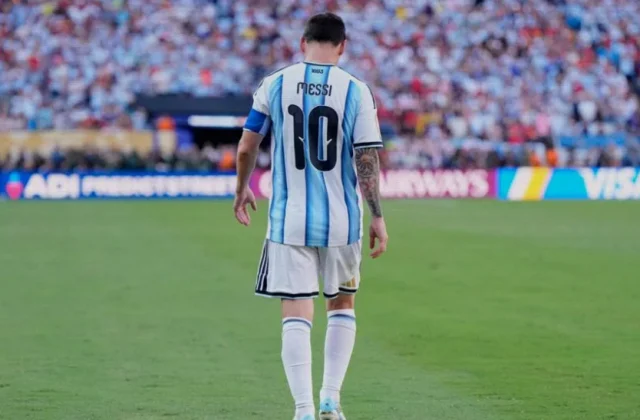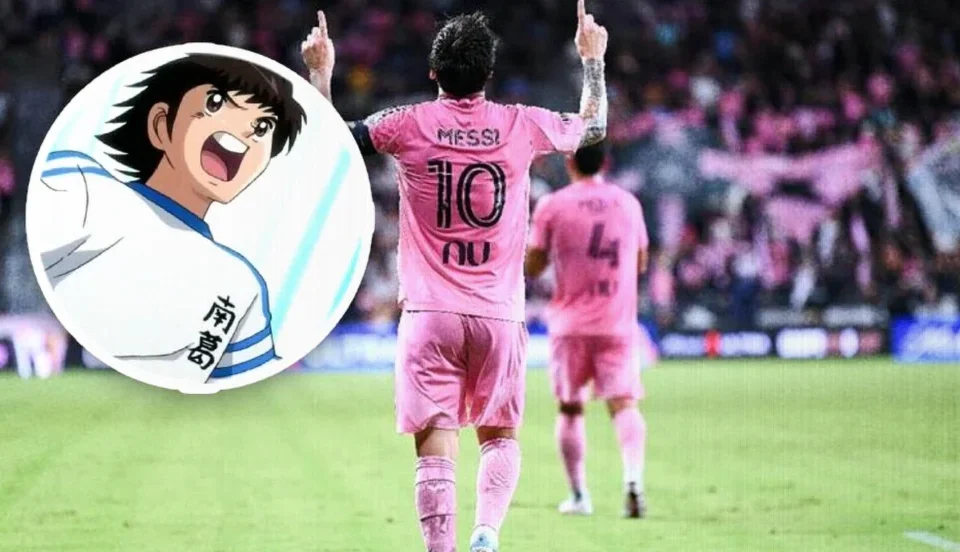
In Málaga, where the San Diego Comic-Con brought manga and popular culture into the same Mediterranean setting, Yōichi Takahashi returned to the footballing roots of Captain Tsubasa. The Japanese artist, whose series is widely known in Mexico as Supercampeones, spoke of the real players who helped shape its characters—and of Lionel Messi as the closest living reflection of its central figure, Oliver Atom.
Takahashi said Messi is the player who most resembles Oliver, the gifted young footballer at the heart of the story. The comparison reaches beyond technique: it is also about imagination, control of a match and the sense that a difficult moment can be solved with the ball at his feet.
Oliver was not designed from one single model. Takahashi drew on the careers and qualities of Brazil’s Zico and Argentina’s Diego Maradona when building the character, but believes Messi has come nearest to embodying the finished version seen by readers and viewers over the years.
Among current Spanish players, he named Barcelona midfielder Pedri as the nearest equivalent. Pedri’s ability to connect moves, carry possession and identify technical answers in crowded spaces was presented as especially close to the spirit of Oliver’s game.
Football, Japan and the path to Captain Tsubasa
The 1978 World Cup in Argentina was one of the events that stirred Takahashi’s wish to create a football manga. Captain Tsubasa emerged from that fascination, with a story built around children trying to reach their ambitions through the game.
The series has long travelled beyond Japan, adapting its identity as it crossed languages and continents. In Mexico, Oliver Atom, Mark Lenders, the Derrick twins and goalkeeper Ed Warner became familiar names for a generation that encountered Takahashi’s world through Supercampeones.
For Mark Lenders, Takahashi said there was no particular footballer behind the character at first. In later years, however, Cristiano Ronaldo became the player he felt most closely resembled the powerful forward.
Not every element came from football. The spectacular move associated with the Derrick twins, often called the “Infernal Catapult”, was inspired by motions Takahashi had watched in Japanese wrestling. Ed Warner’s dramatic saves also borrowed from martial arts, especially the use of walls to generate a leap or change direction. Takahashi transferred that physical idea into the goalmouth, giving his goalkeeper the acrobatic interventions that became part of the series’ visual language.
From the Argentina of 1978 to Messi’s career and Pedri’s Barcelona, the references show how Captain Tsubasa has remained connected to football’s changing map. Its exaggerated flights and impossible saves may belong to animation, but its creator still looks to the game’s finest players for the qualities that make its characters feel possible.