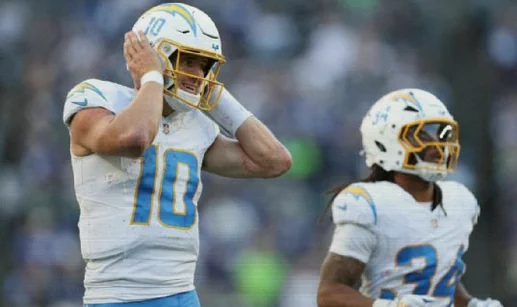
The Los Angeles Chargers’ 0-4 start has been compounded by major uncertainty along the offensive line, with Rashawn Slater listed as doubtful, Joe Alt and Trevor Penning questionable, and center Tyler Biadasz on injured reserve. The protection issues have left Justin Herbert under constant pressure and helped turn what was expected to be a rebound season into an early crisis.
What changed for the franchise
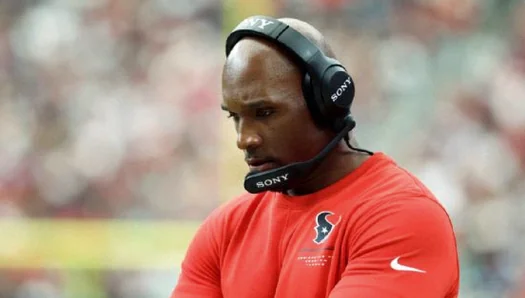
Houston’s defense has joined the problem
The Texans are also 0-4, matching their record against the spread, but their slide has not followed the expected script. Houston entered the season needing its offense to better support a defense that allowed only 17 points per game last year. Instead, the club is giving up 27 points per game while the offense has struggled to finish drives.
C.J. Stroud has kept Houston competitive statistically, posting 1,141 passing yards, five touchdown throws and no interceptions. The Texans have run nearly as many yards as their opponents, own a favorable turnover differential and have lost two games by four points or fewer. Their biggest offensive issue has come inside the 20-yard line: Houston ranks in the league’s upper half in red-zone opportunities but sits among the bottom 10 in touchdowns.
The ground game has provided little relief. David Montgomery is averaging 2.7 yards per rush despite the organization’s offseason effort to strengthen the rushing attack. Houston may need to increase Woody Marks’ workload or alter its blocking approach rather than continue forcing an unproductive formula.
On defense, the pass rush is still creating pressure, but the secondary has not converted that pressure into enough stops and has allowed too many big plays. The Texans opened at 18-1 in Super Bowl pricing and have drifted to 45-1. Their preseason regular-season projection of 9.5 wins has fallen to 7.5, with seven victories now a key benchmark for a meaningful recovery.
Chargers need to protect Herbert and simplify
Los Angeles had been viewed as a potential step-back team after last season’s 11 wins, which were helped by a favorable schedule and success in close finishes. Still, the current four-game skid has exposed problems beyond ordinary regression.
Herbert has been asked to create too much behind an unsettled front. The quarterback has committed turnovers and has not generated the explosive plays expected from Mike McDaniel’s offense. A healthier line would help, but the Chargers can also ease the burden by building more around Omarion Hampton and Keaton Mitchell, incorporating additional motion and getting the ball out faster.
The defense has declined following Jesse Minter’s departure as coordinator. It did create five takeaways against Buffalo, yet Los Angeles still lost that game, underscoring how little margin the club currently has. The Chargers entered Week 1 at 17-1 to win the Super Bowl and now sit at 100-1, while their against-the-spread record is 0-3-1.
Los Angeles may be better than its record, but its remaining schedule leaves limited time for an extended correction. The immediate task is to establish an offensive identity that does not depend on Herbert rescuing every possession.
San Francisco’s fast start still needs a bigger test
The 49ers are 4-0 and have already put themselves ahead of the pace required to clear their preseason total of 9.5 wins. Kyle Shanahan has maintained an efficient attack despite injuries, while Brock Purdy has played at a high level. New receiving options have contributed, and San Francisco has found more than one answer in the running game.
Notably, the 49ers have not needed an unusual run of takeaways or favorable kicking results to reach 4-0. That provides a stronger foundation than a record built purely on breaks.
However, the opening month has not fully tested San Francisco’s weaknesses. The season opener against the Rams was played overseas, Miami has struggled badly, Arizona remains in a rebuilding phase, and Denver brought a quality defense without a consistently threatening offense. The 49ers handled the schedule in convincing fashion, but they have yet to face an elite quarterback capable of attacking their modest pass rush and vulnerable secondary.
San Francisco’s Super Bowl price has moved from 14-1 before the season to +850. The shorter number reflects the perfect record, though the club’s championship case will be clearer after it faces more dangerous passing offenses.
Rams face little room for regular-season error
The Rams remain among the Super Bowl favorites because Sean McVay has Matthew Stafford healthy and a roster with the talent to beat any opponent in the postseason. Their 2-2 record, though, makes their regular-season path considerably tighter.
Los Angeles would need to finish 9-4 over its final 13 games to surpass 10.5 wins. That is a difficult standard with a demanding schedule, Stafford showing some turnover volatility and Myles Garrett on injured reserve.
The Rams’ preseason win total was 11.5 before falling to 10.5, removing the potential cushion of an 11-win finish. They can still be a playoff-caliber team, contend for a championship and finish 10-7. Their ceiling remains high; their regular-season margin for error does not.