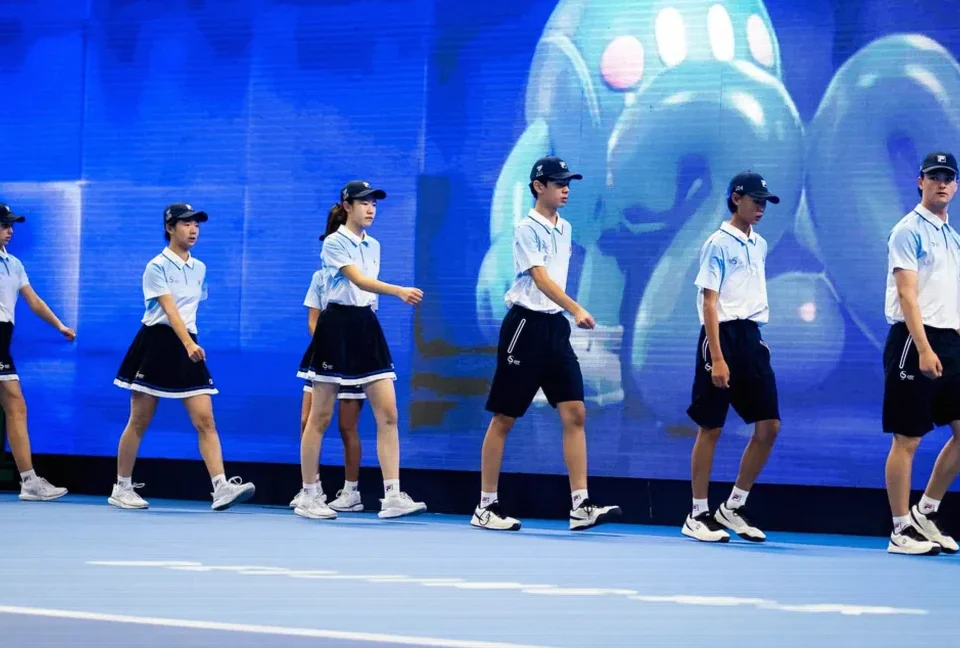
BEIJING — Before the China Open’s players take the court, a 236-strong ball-kid team has already completed months of selection, training and international exchange. The group includes 228 youngsters from China, plus four each from Australia and France, with the overseas places created through partnerships with Tennis Australia and Roland Garros.
Trials began in August with 250 candidates, followed by an assessment period to settle the final roster. Their work unfolds at close range during one of the season’s busiest hard-court events, with each assignment placing them beside the sport’s leading players and in front of Beijing’s demanding crowds.
Quick facts
- 236 ball kids are working at the China Open: 228 from China, four from Australia and four from France.
- The selection process started with 250 candidates in August.
- China Open and Roland Garros exchange leading ball kids between Beijing and Paris.
- A similar exchange links the Beijing event with the Australian Open in Melbourne.
- On-court shifts last about 45 minutes, following daily technical preparation.
Chloe Rong, the tournament’s Senior Manager of Competition Services, said the priority is not only precision on court but also ensuring the group enjoys its time in China. “When they are happy and having fun, that is the important part of our job,” she said.
For Zhang, the route into the program began with a WeChat post. She applied immediately and arrived in Beijing with previous major-event experience, having worked at Roland Garros in 2025, where she said she made friends from around the world.
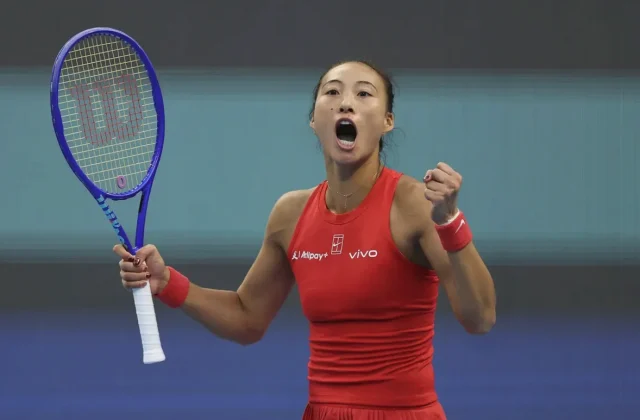
Her favourite player is Zheng Qinwen, who has reached the fourth round in Beijing. Zhang has followed Zheng’s return from an elbow injury during the 2026 season, including the Chinese player’s US Open quarterfinal run after coming through qualifying.
“I am very happy to see her back on court after being out for quite a long time,” Zhang said of Zheng. “It is great that she has returned to the China Open and is playing well.”
Mackenzie’s path began at the 2022 Australian Open, where watching the ball kids convinced him to apply. He missed out in the first stage for the 2023 event, took a year away from the process, then earned a place for the 2025 Australian Open and worked the men’s singles final.
That experience helped secure his selection for Beijing alongside three Australian teammates. The visiting Australians and French representatives wear their national flags on their caps, while the reciprocal programs allow China Open ball kids to travel to Melbourne and Paris.
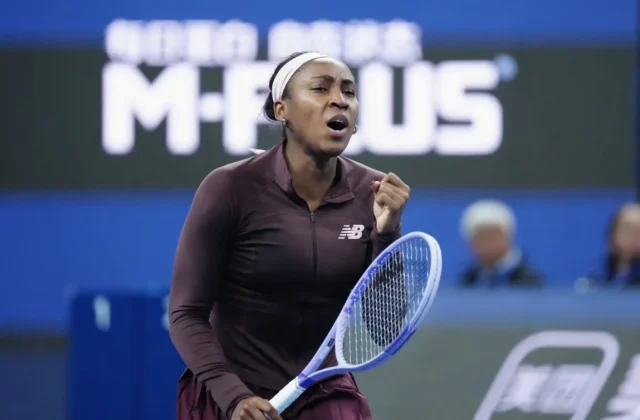
Mackenzie worked during one of Coco Gauff’s matches on her run to the Australian Open semifinals this year. In Beijing, he has also been on court with another favourite, Alex de Minaur.
“Being that close changes everything,” Mackenzie said. “You can hear the conversations and see how players approach points. It is nothing like watching from the stands.”
Off court, the Australian contingent has visited the Great Wall and Universal Studios. On it, Mackenzie said Beijing’s crowd creates a particularly intense atmosphere when a major point turns a match.
“After a huge point, the noise is incredible,” he said. “Everyone has a job to do under pressure, and the adrenaline is exciting.”
Having now passed the age limit for the Australian Open program, Mackenzie sees the Beijing assignment as a fitting closing chapter to his ball-kid career. He said he was grateful for another opportunity to work alongside the players.
Li is in his fourth China Open as a ball kid and has also travelled to Melbourne through the Tennis Australia exchange. He said each tournament has distinct procedures and standards, but the international program has created an opportunity for participants to learn from one another.
“There are differences in technique, and that helps everyone improve,” Li said. “We can also become friends and talk with each other.”
His favourite moments come during the best rallies, particularly when he is called upon to deliver a ball to a server. Each 45-minute court session, Li said, remains a chance to absorb the match from its closest vantage point.
France’s Yapi earned his Beijing place after working at Roland Garros in May and June. Participation at the Paris major was required for the French selection, and his performance there secured a first trip to China.
Yapi said the size of the Beijing complex and the support from supervisors and fellow ball kids had made him feel at ease. “The organisation is very good, and we are well looked after,” he said.
The preparation is as detailed as the match work itself. Before daily shifts, the ball kids complete a brief warm-up and rehearse rolls between centre court and the baseline, aiming to keep the flow of play uninterrupted.
“We work on the rolling technique away from the court so everything is right,” Yapi said. “The balls need to travel low, quickly and accurately.”