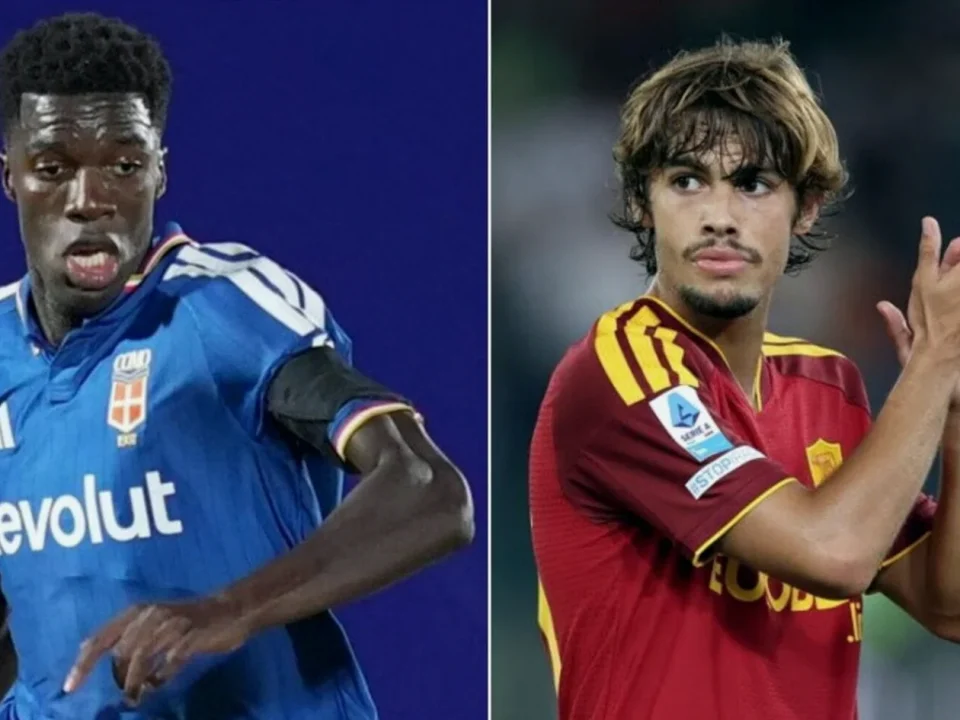
Como and Roma arrive at the Sinigaglia with more than three points at stake. Their meeting also brings together two of Serie A’s clearest long-term projects: ambitious ownership, younger squads and coaches asked to turn potential into a durable competitive level.
The decision
The Hartono family in Como and the Friedkin ownership in Rome have taken a similar view of expenditure. Both have the financial strength to chase immediate solutions, but their recruitment has been directed towards players who can grow in value as well as improve the team.
Como have invested around €400 million in players aged 24 or below on their climb from Serie D to the Champions League. Roma’s equivalent spending is close to €250 million. The Roman club have become particularly strict on the age profile of arrivals after the Dovbyk operation, with the striker now at Bologna and regarded as a difficult cost on the balance sheet rather than an asset likely to appreciate. Roma are no longer signing players beyond that 24-year threshold.
Como, run by the Swarso group, have broadly maintained the same philosophy throughout their rise through the divisions. It is a strategy that has remained in place despite the resources available to both clubs. The Hartonos’ combined wealth is estimated at $38.5 billion, while the Friedkins are valued at $11.4 billion. Both figures sit above the $6.4 billion attributed to the Saputo family, the next wealthiest ownership group in Serie A.
That approach has placed a particular responsibility on Cesc Fabregas and Gian Piero Gasperini. Fabregas, at 39, is Serie A’s youngest coach; Gasperini, 68, its most experienced figure in this comparison. Neither is presented as a manager who selects by date of birth. Quality remains the first requirement, but both are expected to raise standards quickly and give young players the personality needed for a demanding season.
Sunday’s picture
The contest at the Sinigaglia offers a compact illustration of that shared direction. On the flanks, Como’s 2002-born Couto is set against Roma’s Wesley, born in 2003, while 2004 defender Valle has a duel with Lulli, born in 2007.
There are further generational parallels across the pitch. Como’s Da Cunha and Roma’s Koné were both born in 2001 and have become important figures for France. Baturina and Soulé are each from the 2003 class. Senegalese forward Diao, 21, and Portugal’s 19-year-old Mora are separated by two years, though both already play with the assurance usually associated with older professionals.
The early-season figures underline why this fixture has become a meeting of two unusually youthful leading sides. Looking only at footballers who have played at least one minute in the first five rounds, Como’s average age is 25 years and seven days. They rank fifth among Serie A’s youngest teams, behind Monza, Frosinone, Parma and Fiorentina.
Roma’s average is 26 years and 115 days. The Giallorossi are behind Cagliari, Sassuolo, Lecce, Torino and Venezia in the age ranking, but younger than Genoa, Lazio, Atalanta, Udinese, Milan, Bologna, Juventus, Inter and Napoli.
The contrast with several European competitors is marked. Napoli’s used players have averaged 29 years and five days, compared with 27 years and 182 days for Inter and 27 years and 77 days for Juventus. Como and Roma have chosen a different calendar: Sunday’s match is another test of whether that patience can deliver results quickly enough.