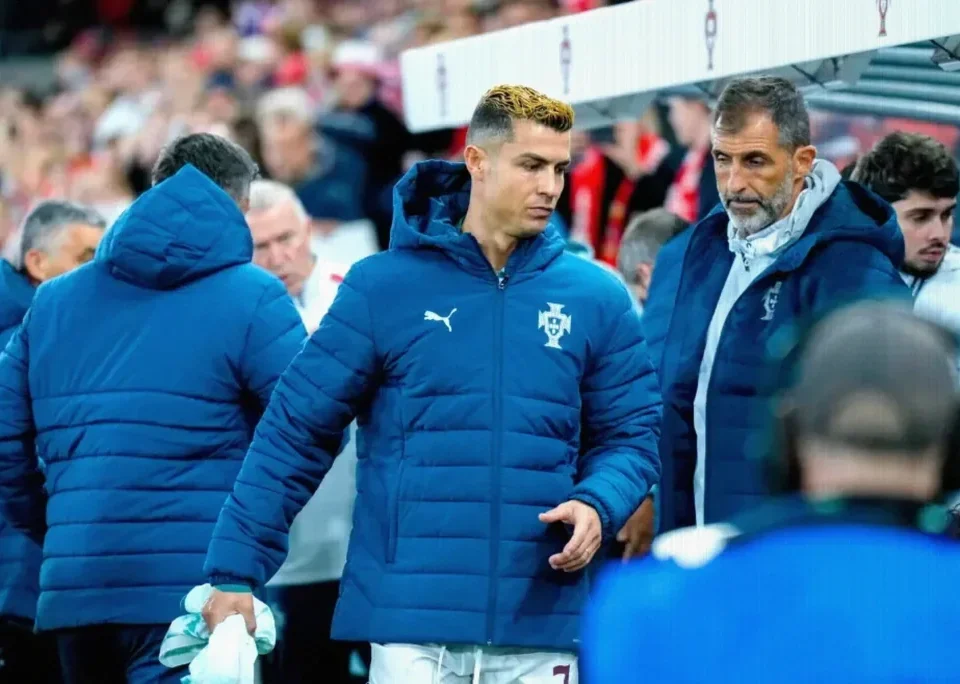
Portugal’s national-team camp has become the latest stop in Cristiano Ronaldo’s long and turbulent football journey, with the 41-year-old captain facing a disciplinary ban after leaving the squad in the wake of a dispute with coach Jorge Jesus.
Key takeaways
- Ronaldo is under provisional suspension while the Portuguese Football Federation examines a case opened on 10 October.
- The captain left the camp on 30 September after being unused in Portugal’s 2-1 defeat to Norway in Oslo three days earlier.
- Federation rules allow a ban of one to six months and a minimum fine of €510 for professional players.
- His acceptance of responsibility could limit the maximum punishment to three months.
- The time already spent suspended will count towards any final sanction, leaving a possible November return if the minimum penalty is imposed.
- Both Jesus and FPF president Pedro Proença have indicated that Ronaldo remains welcome in the Portugal setup.
An urgent case after the Oslo dispute
The Portuguese Football Federation’s disciplinary investigation is being handled as an urgent matter. Its regulations impose an automatic provisional suspension when a player abandons an international gathering, and that measure has applied to Ronaldo since his departure on 30 September.
The argument followed Portugal’s 27 September trip to Oslo, where Norway won 2-1. Ronaldo was not selected to play. He later said that Jesus had asked him to warm up for around half an hour before ultimately keeping him on the bench, a decision that led to the breakdown between player and coach.
Article 160 of the federation’s disciplinary code sets out a possible suspension from one to six months, alongside a financial penalty of at least €510. Ronaldo addressed the matter in a lengthy statement on 6 October, acknowledging that he had made a mistake and accepting that a punishment could follow.
“I am not just another player; I am the team captain, and that makes this more serious,” Ronaldo wrote. “I have apologised, but I understand that actions must have consequences.”
That admission may be treated as a mitigating factor, potentially lowering the ceiling of the ban from six months to three. With the provisional suspension deducted from the final term, the Al Nassr forward could be available again for Portugal’s November fixtures should the disciplinary commission choose the lightest sanction.
A past precedent, and a route back
Portugal have dealt with a comparable departure before. In 2011, Ricardo Carvalho left the squad on the eve of a match after falling out with then-coach Paulo Bento. The Real Madrid centre-back received a one-year suspension, though the federation said at the time that his sporting record had prevented a harsher outcome.
Ronaldo took a firm line on Carvalho’s case during their Madrid years, insisting that no player had an automatic place with the national team and that selection should belong to those performing best. Carvalho is now one of Portugal’s assistant coaches.
Despite the current disciplinary process, there is no indication that Portugal intend to shut the door on their record international. Jesus said on 4 October that Ronaldo could return if he remained active and wished to represent the country, asking: “Why not?”
Proença struck a similarly conciliatory note on 10 October, saying the wish to reunite was shared by the federation, its president, the coach, the captain and the rest of the players. “Without exception, everyone wants us to be together again in November,” he said.
Portugal’s official channels have also continued to celebrate Ronaldo’s club achievements during the controversy. On Monday evening, the national team posted an image of their captain in Portugal colours to mark his goal for Al Nassr in a 3-1 Asian Champions League win over Uzbekistan’s Neftchi.