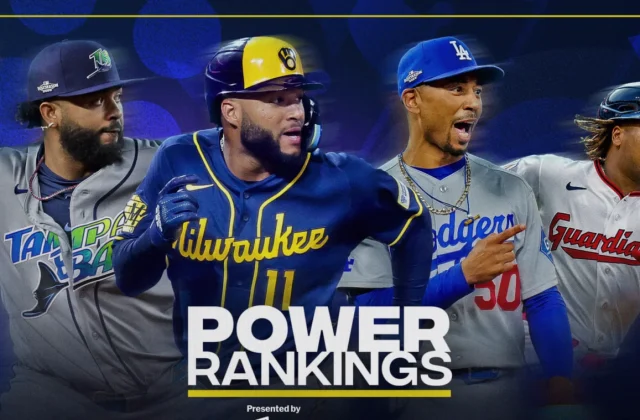
The League Championship Series is where the rotation gets trimmed to its essentials. Four clubs remain, with the Dodgers meeting the Brewers in the National League and the Rays facing the Guardians in the American League, and every manager now has to decide how far to trust a starter, when to turn to the bullpen and which arm gets the ball with a World Series berth hanging in the balance.
The healthy starters left in the field offer a little of everything: proven October aces, young power arms, injury comebacks and pitchers who have found a new gear after a change of scenery. Here is the pitching board entering the LCS round.
The LCS starting-pitcher board
| Rank | Pitcher | Club | Regular-season and postseason note |
|---|---|---|---|
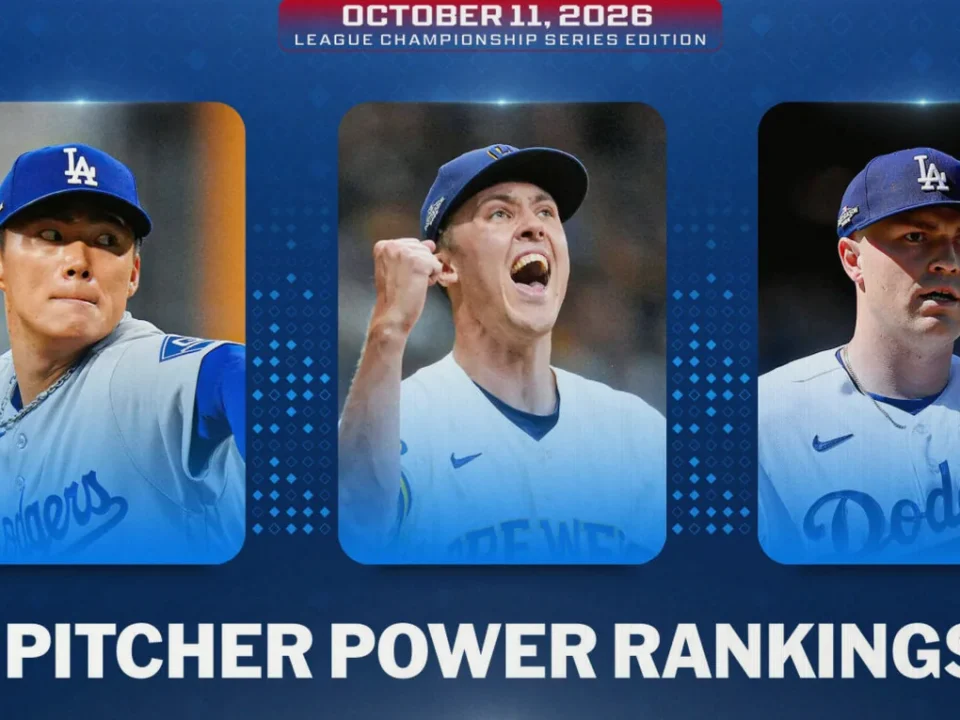
| 1 | Yoshinobu Yamamoto | Dodgers | Worked seven innings in NLDS Game 3 against Atlanta, allowing one run on four hits with one walk and 10 strikeouts. |
| 2 | Jacob Misiorowski | Brewers | Led the Majors with a 1.80 ERA and recorded 252 strikeouts in 174 2/3 innings. |
| 3 | Tarik Skubal | Dodgers | Opened the NLDS against Atlanta with six innings of one-run, seven-strikeout work. |
| 4 | Drew Rasmussen | Rays | Carried a no-hit bid into the eighth inning of ALDS Game 1 against the Yankees. |
| 5 | Parker Messick | Guardians | Finished his rookie regular season with a 2.56 ERA across 186 1/3 innings. |
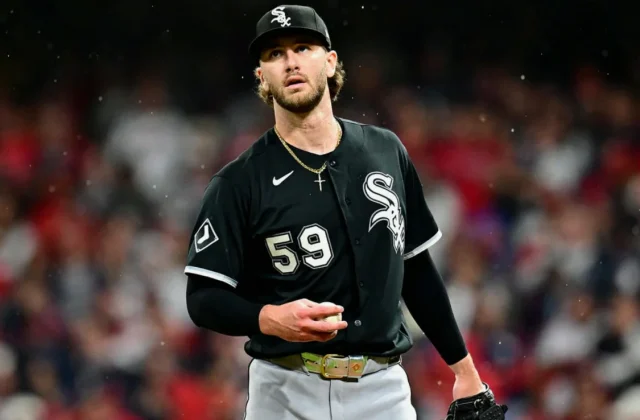
| 6 | Gavin Williams | Guardians | Struck out 12 White Sox hitters in ALDS Game 5, matching Cleveland’s postseason club record. |
| 7 | Logan Henderson | Brewers | Posted a 2.39 ERA over 75 1/3 innings after returning from a back injury in July. |
| 8 | Blake Snell | Dodgers | Allowed one run in 3 2/3 innings in NLDS Game 2, though five walks pushed his pitch count to 90. |
| 9 | Freddy Peralta | Rays | Ran a 0.79 ERA over his final 34 regular-season innings after settling in following his August trade. |
| 10 | Tyler Glasnow | Dodgers | Returned from a regular-season back issue and owns a 1.69 ERA in 21 1/3 innings from last postseason. |
Dodgers and Brewers bring the headline arms
Yamamoto remains the standard-bearer. The 28-year-old right-hander was last year’s World Series MVP and has continued to pitch like one this October. His seven-inning outing against the Braves came with the Division Series tied, and he gave Los Angeles exactly what it needed: four hits permitted, one run, one walk and 10 strikeouts.
His recent October body of work is just as imposing. Last postseason, Yamamoto posted a 1.45 ERA in 37 1/3 innings, including two standout World Series starts against Toronto and a Game 7 relief appearance on no rest to finish the series.
Milwaukee’s answer is Misiorowski, the 24-year-old right-hander whose pure velocity has made him one of the game’s most difficult assignments. His first postseason start did not unfold smoothly. San Diego extended at-bats, fouled off pitches and forced him out after four innings in NLDS Game 1. He surrendered two runs on four hits, walked one and struck out six over 88 pitches.
That rougher introduction does not erase a remarkable season. Misiorowski led baseball in ERA, punched out 252 hitters and set starting-pitcher velocity marks along the way. He enters the round as the leading contender for the National League Cy Young Award and carries Milwaukee’s hopes of reaching its first World Series in 44 years.
- Henderson became a key piece of Milwaukee’s rotation after Kyle Harrison’s season took a downturn in June.
- The rookie right-hander returned from a back injury in early July and put up his 2.39 ERA over the remainder of the season.
- In his first playoff start, Henderson went five innings against San Diego in NLDS Game 2, yielding two runs, one earned, on two hits. He walked three and struck out four.
Henderson’s health matters all the more because the Brewers have uncertainty behind Misiorowski and their emerging young No. 2.
Skubal adds another frontline look for Los Angeles
Skubal, a two-time reigning American League Cy Young Award winner with Detroit, has made an immediate October impact for his new club. He held Atlanta to one run and two hits over six innings in the Dodgers’ 5-3 NLDS Game 1 victory, striking out seven while issuing two walks.
He is lined up to start Game 1 of the NLCS against Misiorowski. The assignment comes after a regular season shaped by injuries and the adjustment of joining a different team, but Skubal has repeatedly shown he can handle playoff pressure. Across six postseason starts with the Tigers in 2024 and 2025, he produced a 2.04 ERA with 56 strikeouts against six walks.
Snell and Glasnow give the Dodgers two more high-ceiling options, though neither supplied much length in the Division Series.
- Snell, back after May surgery to remove loose bodies from his left elbow, allowed one run against Atlanta in Game 2 but walked five in 3 2/3 innings.
- Glasnow followed in Game 4 and delivered a nearly identical line: one run allowed in 4 2/3 innings, accompanied by five walks.
- Glasnow missed more than half the regular season because of lower-back spasms, but struck out 34% of opposing hitters in his 13 starts and finished with a 3.53 ERA.
Snell has generally been a reliable October choice, carrying a 3.23 ERA over 86 1/3 innings in 19 postseason appearances, 16 of them starts. His exception came in last year’s World Series against Toronto, when he posted a 6.92 ERA over three appearances. Glasnow, meanwhile, was outstanding in last year’s title run, recording a 1.69 ERA in 21 1/3 innings and earning a save in World Series Game 6.
Rays and Guardians have their own October answers
Rasmussen nearly wrote a no-hitter into the ALDS opener against the Yankees. The Tampa Bay right-hander did not allow a hit until two outs in the eighth inning, finishing with eight scoreless frames, two walks and 10 strikeouts. During the regular season, he posted a 2.67 ERA and led the American League with a 5.44 strikeout-to-walk ratio.
The Rays have not reached the World Series since 2020 and are still seeking the first championship in franchise history. Rasmussen’s composure at the top of the staff gives them a strong opening hand.
Peralta’s season took a sharp turn for the better after his August move from the Mets. His first four Tampa Bay starts produced a 7.17 ERA, but he finished his regular season with a 0.79 mark over 34 innings once he found his footing. He followed with 4 2/3 innings of one-run ball against the Yankees in ALDS Game 2, allowing three hits.
Cleveland has two very different but dangerous arms. Messick, a 25-year-old left-hander who will turn 26 later this month, earned an All-Star selection after a 2.56 ERA over 186 1/3 innings in his first full Major League season. His four-seam fastball averaged 93.9 mph, but the fastball-changeup combination played far better than the velocity alone might suggest.
His first two postseason starts against the White Sox have been uneven. In Games 1 and 4 of the ALDS, Messick gave up four runs in a combined 6 2/3 innings, walking six and striking out 11. Still, the regular-season body of work leaves Cleveland plenty of reason to believe he can make a defining contribution before October is over.
Williams already has one. Two days after closing out ALDS Game 4 from the bullpen, the 25-year-old right-hander took the mound in Game 5 and overpowered Chicago. He gave up one hit in 5 2/3 innings while fanning 12, tying the club’s postseason record and sending Cleveland to the ALCS for the second time in three years.
Williams led the American League with 248 strikeouts during the season, posting a 3.76 ERA in 184 1/3 innings. His fastball, sweeper and knuckle-curve mix follows a 2025 campaign in which he made 31 starts with a 3.06 ERA.
Depth pieces still in the mix
Nick Martinez and Ian Seymour remain additional Tampa Bay options. Cleveland can turn to Foster Griffin, while Milwaukee’s depth includes Robert Gasser and Dustin May. In a round where starters can be asked to work deep or shifted into a relief role, those names may yet matter.
For now, the clearest picture is at the front: Yamamoto, Misiorowski, Skubal, Rasmussen and a collection of October-tested arms holding the path to the World Series in their hands.