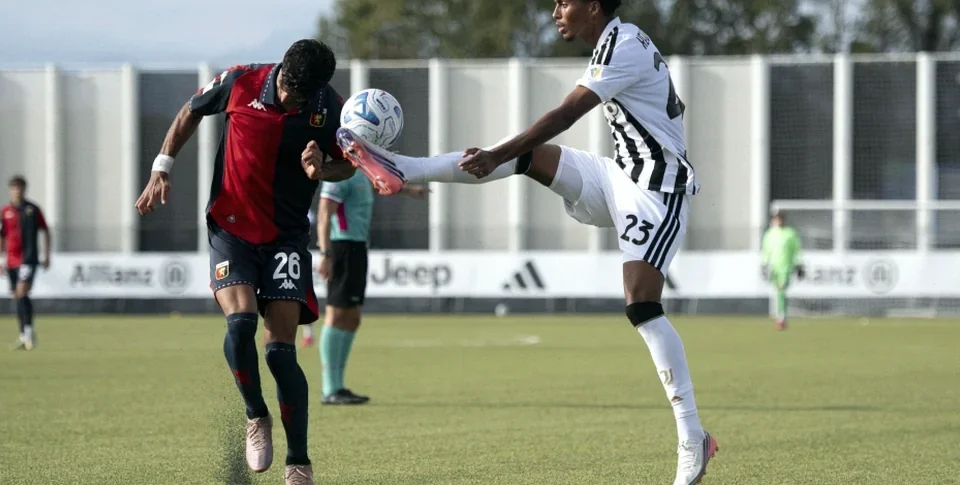
Italy’s Primavera championship has returned with a familiar question hanging over every academy bench: is it a genuine bridge to senior football, or too often a place where talented players wait longer than they should?
The answer is not absolute. Primavera 1 can offer an important competitive stage, particularly for players facing older opponents while still below the age group. But the early evidence from this season, and the experiences of those who have worked inside the system, suggest that the strongest prospects usually move on quickly. For them, one full campaign may be useful; a second can become a delay.
After six rounds, Inter lead the Primavera 1 table, two points clear of Roma, Empoli, Parma and Bologna. Genoa and Lazio are among the sides in pursuit, while champions Fiorentina have made a slower start after winning last season’s title at Viola Park.
The league has increasingly resembled a smaller version of Serie A. It now includes 20 clubs, having expanded from 16 until 2021 and 18 until 2024, with three relegation places and a home-and-away schedule that is not fully symmetrical. The Scudetto is still decided through play-offs, preserving the title race until the final.
Where Primavera fits in the pathway
Since 1 July 2024, the competition has moved from Under-19 to Under-20 football, a change that prompted debate across the youth game. This season’s principal age groups are those born in 2007, 2008 and 2009.
Yet several of the country’s most prominent teenagers are already beyond the standard Primavera route. Milan’s Francesco Camarda, Parma’s Samuele Lontani, Roma’s Antonio Arena and Juventus prospect Elimoghale are examples of players not currently featuring regularly in the competition. The pattern is revealing: the best young players often pass through Primavera early, then seek senior minutes elsewhere.
Across the opening five matchdays of Serie A and Serie B, 26 Under-20 players made their debuts: 10 in the top flight and 16 in Serie B. Nineteen of them had spent at least one season in Primavera football. The remaining seven arrived through different routes, including direct promotion from younger academy sides, Serie C and even Serie D.
The numbers show that Primavera remains part of the process, but not necessarily the final destination before the first team.
Debuts show different routes to senior football
Parma’s Dominik Drobnic, born in 2007, made his Serie A debut against Juventus after 58 appearances across Primavera 1 and Primavera 2. Cagliari’s Alessandro Sugamele, also born in 2007 and developed at Roma, reached senior football after 50 Primavera appearances for the Giallorossi.
Torino goalkeeper Diego Mascardi offers a contrasting case. The 2006-born keeper played only 11 Primavera 2 matches, but had already collected 17 Serie B appearances with Spezia before his Serie A involvement. Spezia have also helped introduce players including Pio Esposito and Christian Comotto to the professional environment.
Most of the other Serie A debutants had a shorter Primavera education. Bologna’s Libra, Sassuolo’s Kulla, Parma’s Lontani, Genoa’s Zulevic, Roma’s Lulli and Monza’s Mout generally arrived after around 20 to 30 matches at that level — effectively one season rather than a prolonged stay.
Serie B provides equally varied examples. Matteo Cocchi, the Inter left-sided player now on loan at Padova, has accumulated 54 Primavera appearances, excluding UEFA Youth League fixtures. His total is substantial, although it must be read in the context of having started at the level three years below the age limit.
Others have barely used Primavera at all. Empoli’s Roberto Berizzi, a 2007-born player, developed through Serie D with Prato without a Primavera spell. Team-mate Edoardo Biondini, born in 2009, had played only twice at Primavera level before entering senior football. Verona’s Salvatore Cerbone came through Serie C at Casarano before stepping into the Bentegodi environment, while Avellino’s Sebastiano Di Paolo built his experience first in Serie D and then in Serie C with Siracusa.
For many of the remaining Serie B newcomers, the story is similar to that in Serie A: approximately a season in Primavera, followed by the move into the adult game.
The case for a shorter stay
Mauro Bianchessi, whose youth-development work has taken him through Brescia, Atalanta, Milan, Lazio and Monza, believes the competition should represent the summit of an academy structure but does not always fulfil that purpose. He has been associated with the development of Gianluigi Donnarumma, Mattia Caldara, Raoul Bellanova, Matteo Gabbia, Davide Bartesaghi, Lorenzo Colombo, Bakoune and Camarda.
“Primavera ought to be the highest expression of youth football, but it is not always that,” Bianchessi said.
He pointed to a steepening dropout rate across Italian youth football: 9 per cent between the ages of 11 and 14, 16 per cent from 15 to 17, and 28 per cent among 18- and 19-year-olds. He also noted that about 30 per cent of Primavera squads are made up of players recruited from abroad.
“Clubs often sign players who fit an immediate function, rather than selecting the best ones,” he said. “The technical level has declined in recent years.”
In Bianchessi’s view, elite prospects are rarely playing Primavera at their proper age. They tend to appear two or three years early before moving into senior football, as seen with Camarda, Pio Esposito, Mattia Liberali and Comotto. This season, he cited Lontani’s step into Serie A, Longoni’s move to Paris Saint-Germain and Mout’s involvement at Monza as signs of that trend.
“Look at the senior national-team players and very few played more than 20 or 30 Primavera games,” Bianchessi said. “Two years is too long. Once a talented player is ready, he has to go and work with adults.”
A coach’s view: the context matters
Guglielmo “Willy” Stendardo sees more value in Primavera, but reaches a similar conclusion on timing. The former Sampdoria, Salernitana, Catania, Perugia, Lazio, Juventus, Lecce, Atalanta and Pescara defender is now a lawyer as well as a coach. Last season he guided Salernitana’s Primavera side to safety in Primavera 2, following earlier work with Valmontone and Luiss.
Stendardo believes Italy remains too focused on immediate results and too reluctant to trust young players in the senior game. “It is a serious issue in our youth systems,” he said. “There is not enough courage to use young footballers, and too few reach the top.”
He still regards Primavera as a crucial stage before the professional game. “It is an important championship and there is no shortage of quality,” Stendardo said. “But a player should not stay there for more than a year. The best ones leave quickly.”
The choice between remaining with a leading Primavera 1 team or joining a Serie C side cannot be reduced to one rule, he added. Some clubs have a clear pathway and are prepared to promote their academy talent; in those cases, patience can make sense. In other environments, a loan or permanent move into first-team football is the better education.
Players feel the difference
Francesco Nunziatini has experienced both sides. The 2003-born Torres midfielder came through Livorno, made his Serie B debut, completed a season as a Serie C regular and then joined Inter’s Primavera team. Under Cristian Chivu, he won Inter’s tenth Primavera title.
His route ran from senior football to youth football and back again, and his verdict is direct. “I would choose Serie C, or any first team, every time,” Nunziatini said. “That is where you gain real experience, learn the details of the profession and become sharper.”
He also warned that the first-team step can be unforgiving. “If you are not ready when you leave Primavera, you can be overwhelmed,” he said.
For Nunziatini, Primavera can create a misleading sense of arrival. “At that level you feel like a real player, but then you enter senior football and become the youngest person in a dressing room full of older men who may not even know your name,” he said.
His conclusion matched Bianchessi’s and Stendardo’s: one year can be enough, while two usually becomes excessive. Given the choice, he would advise a young player to seek minutes in senior football.
The under-age examples
The careers of Sebastiano Esposito and Camarda underline the argument. Esposito recorded 13 appearances and three goals for Inter Primavera in 2018-19 despite being eligible for Under-17 football that season. Camarda played 30 times and scored seven goals for Milan Primavera in 2023-24 while also being of Under-17 age.
Those cases do not diminish Primavera 1. They explain its most useful role: a demanding test for players who are ready to face it early, rather than a competition in which the leading talents settle for several years.
As the season develops, the championship will continue to matter to Inter, Roma, Fiorentina and the rest in the race for the youth Scudetto. But its larger significance lies beyond the table. Primavera works best when it prepares a player for the next dressing room, the next division and the harder rhythm of Sunday football. The question is not whether it belongs in the pathway. It is whether clubs know when to let the best prospects leave it behind.