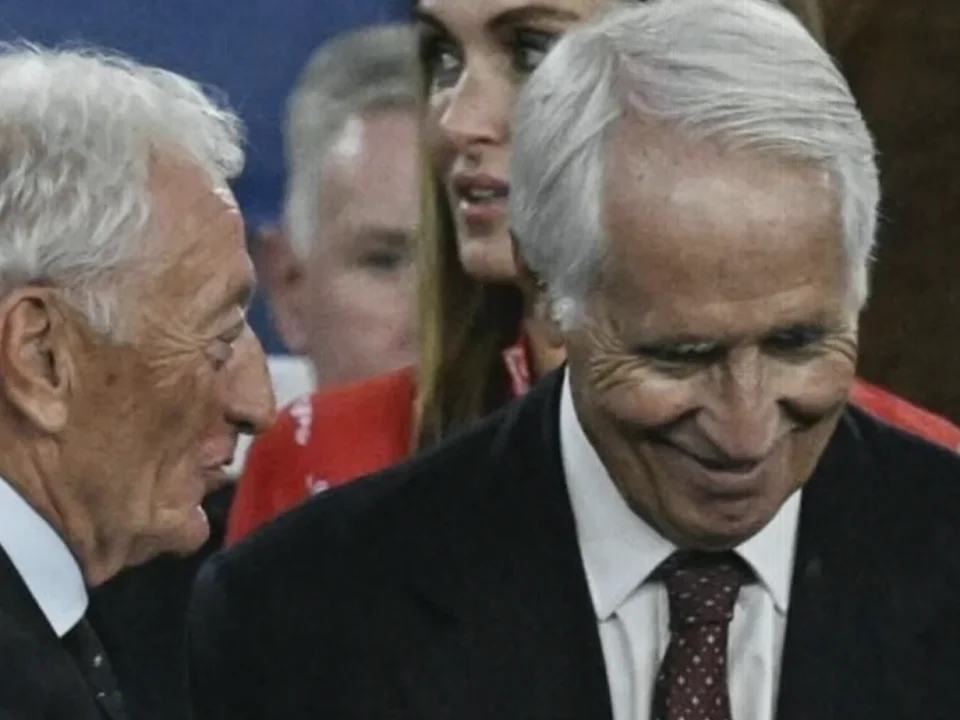
Italian football faced an institutional afternoon in Rome on Tuesday 6 October, with Giovanni Malagò’s position as FIGC president under scrutiny only three months after his election. The dispute did not concern the strength of his mandate, but whether he met the federation’s registration requirement at the moment he stood for office.
The coach and the club
There was no question of a changing-room crisis or a result on a Sunday deciding the matter. This was the kind of chapter that often sits behind the championship itself: the relationship between a federation, its rules and the people asked to lead it.
Malagò had been elected with almost 70 per cent of the vote, while 19 of Serie A’s 20 clubs had backed him as the sole candidate. Yet the lack of a FIGC registration at the point of his candidacy prompted a challenge that could formally remove him from the presidency.
Article 29 of the FIGC statute says that candidates for federal posts must be compliant with registration rules when they submit their candidacy. FIGC’s interpretation is that compliance does not necessarily mean a candidate must already hold a registration. The General Prosecutor for Sport took the opposite view, considering an existing registration to be necessary.
The prosecutor’s examination of Malagò personally had already been closed, with no individual wrongdoing attributed to him. The remaining issue was therefore institutional: whether the federation had to be placed under extraordinary administration because of the procedural breach.
A solution under discussion would have carried considerable irony. Malagò could lose his title as president on a formal basis, only to be appointed extraordinary commissioner of the same federation. In that role, he would guide FIGC until fresh elections, with broader immediate powers than those attached to the presidency.
He would then be able to stand again in around three months, provided he had completed the required registration. Given the backing he received in the last vote, a renewed mandate was regarded as a realistic possibility.
A decisive day at Palazzo H
- Malagò arrived at CONI’s Palazzo H in Rome at 12:08.
- He was scheduled to meet CONI president Luciano Buonfiglio before the institutional meetings began.
- The CONI executive committee was due to convene at 13:00.
- The National Council was then set to meet at 14:00, with a vote expected to clarify the federation’s path.
Buonfiglio and CONI were considering whether to press ahead with a commissarial solution, treating the registration issue as a serious violation. However, the balance inside the voting bodies was uncertain, particularly given Malagò’s support and his experience within Italian sport.
Before the meeting, Buonfiglio was reported to have consulted senior figures within Palazzo H. Their discussions centred on whether an extraordinary commission led by Malagò himself could protect CONI’s insistence on the rule while avoiding a prolonged vacuum at FIGC.
What it means for Italian football
The prospect was not of a new sporting direction, but of an interruption to the federation’s administration over a technical requirement. FIGC could be led by the same man who had just been judged unable to remain president because of that requirement, before returning to elections a few months later.
For Serie A and the wider Italian game, the principal concern was time. A federation emerging from an election with a strong mandate risked being sent back to the ballot box almost immediately, despite the absence of a finding of personal fault against its elected president.
The executive committee and National Council were therefore left with a choice between enforcing the registration interpretation through formal intervention or finding a route that preserved continuity. Either way, the events at Palazzo H placed the governance of Italian football, rather than the football itself, at the centre of the day.