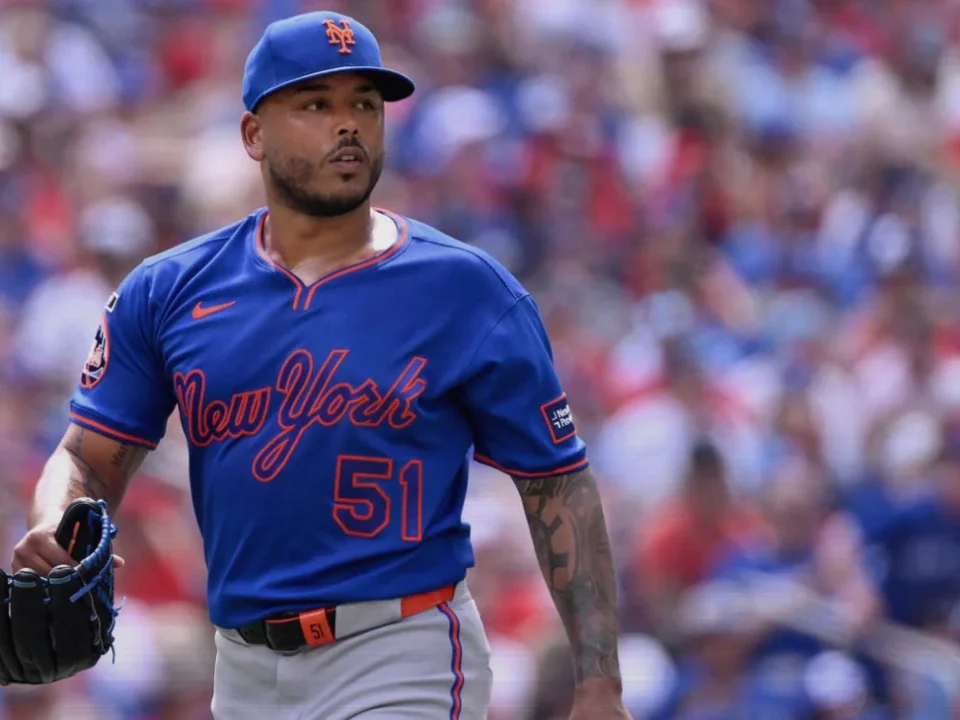
Freddy Peralta’s October surge has left the Mets with a familiar kind of offseason ache: a former front-line starter thriving somewhere else, and a pitching department examining why the breakthrough arrived after he left New York.
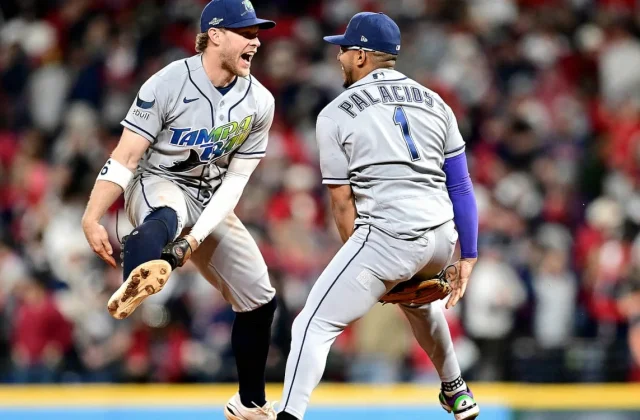
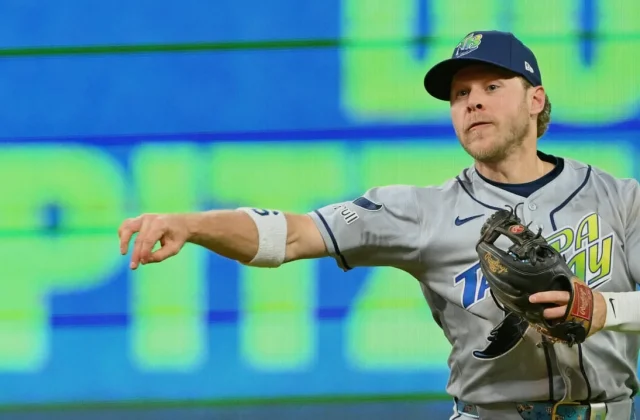
Peralta blanked the Guardians for six innings in Game 2 of the American League Championship Series, his longest postseason outing. His final pitch finished under Petey Halpin’s bat, bringing a yell and a clenched fist from the right-hander after a dominant night for Tampa Bay.
He reached back for three of the five hardest pitches of his career, topped by a 99.4 mph fastball that established a personal best. It was a long way from the version of Peralta the Mets saw only months earlier.
Quick facts
- Peralta threw six scoreless innings against Cleveland in ALCS Game 2.
- His 99.4 mph fastball was the fastest pitch of his career.
- He owns a 0.81 ERA across his last seven Rays starts.
- In three postseason appearances for Tampa Bay, he has posted a 0.79 ERA.
- With the Mets, he recorded a 6.89 ERA over a 10-start stretch.
- New York finished 17th in MLB staff ERA, one place better than in 2025.
Back in Toronto three months earlier, Peralta allowed five runs in four innings and spoke candidly about his condition. “I don’t feel good,” he said then, while adding that he would keep working to make changes.
That start fell within a difficult 10-game run that produced a 6.89 ERA. By the Trade Deadline, the last-place Mets were not certain they would find a return strong enough to justify moving him.
They did trade him, and the Rays quickly found a different result. Peralta has become an important rotation piece in Tampa Bay, carrying a 0.81 ERA over his past seven starts and a 0.79 mark through three playoff outings.
“When I got traded here, I just felt different,” Peralta said after his latest postseason start. “For some reason I got here, and I felt like myself again.”
The same ideas, a different result
The Mets maintain that the mechanical and strategic targets were not dramatically different. Their staff wanted Peralta to move more quickly down the slope, creating added fastball velocity, while also raising his arm slot.
They also encouraged more fastballs in the top portion of the strike zone and greater use of the changeup at the bottom of it. Those are the adjustments Peralta eventually put into action with the Rays, but he never fully carried them out in New York.
Peralta has credited Tampa Bay pitching coach Kyle Snyder, bullpen coach Jorge Moncada and bullpen catcher Charlie Valerio for the way their instruction reached him. For the Mets, the issue is not simply identifying the right adjustment, but getting a pitcher to trust it and repeat it when the results turn rough.
“We were unable to get him to do what Tampa through their processes has been able to get him to,” president of baseball operations David Stearns said. “I think the goals were the same. We just couldn’t quite get him over the hump.”
New York retained its Major League pitching group despite other changes on the coaching staff after the season. That decision signals continuing faith in pitching coach Justin Willard, whose work included positive results with Nolan McLean, Christian Scott and Zac Thornton.
Peralta’s turnaround does not erase those successes, nor does it give the Mets one simple answer. But it sharpens the questions around communication, player buy-in and the challenge of limiting distractions when a pitcher is struggling under the New York spotlight.
Stearns said the Major League pitching staff did strong work with several other players and that he remained pleased with the group overall. Still, Peralta stands as the case they could not solve — and the one they will carry into the next season as a lesson in turning good instruction into a pitcher’s own conviction.