
The Friedkin family has roughly six months to test Austin and Houston as homes for a possible NHL club, with a $3.5 billion commitment covering an expansion fee and a new arena project. The choice is not merely about putting another jersey in Texas: Houston offers television scale and a hockey past, while Austin brings fast growth, deep tech wealth and the chance to be the city’s first major “big four” franchise.
Texas expansion puts Austin in the crease with Houston
NHL commissioner Gary Bettman has identified Austin and Houston as the two Texas options for a potential second franchise in the state. Dallas has been in the league since 1993, and another Texas club would represent the NHL’s third expansion step since 2017, following the Vegas Golden Knights and Seattle Kraken.
Houston remains the country’s largest metro area without an NHL team, but Austin has gained traction with the prospective ownership group. The Friedkins initially appeared headed toward Houston, yet Austin’s demographics, growth and business base made it a serious alternative.
Austin’s appeal is straightforward. It has grown quickly for more than 15 years, carries substantial technology-sector money and would offer the NHL a less crowded major-pro-sports lane. In Houston, a hockey team would join a packed local landscape. In Austin, it could arrive as the first club from the NFL, NBA, MLB or NHL, much as Vegas became an immediate focal point before the Golden Knights took the ice.
The final call would not rest solely with the Friedkin family. League approval is required, and the NHL’s existing ownership group must sign off on both expansion and the selected market.
The two Texas markets
Austin’s sporting identity has long revolved around the University of Texas, whose football, basketball, baseball, softball, swimming, diving and track programs command major local attention. Austin FC remains the city’s only current major men’s professional franchise, having begun MLS play five years ago. The city also hosts Formula 1’s United States Grand Prix at Circuit of the Americas, which has staged the event since 2012, along with NASCAR’s Texas Grand Prix since 2021.
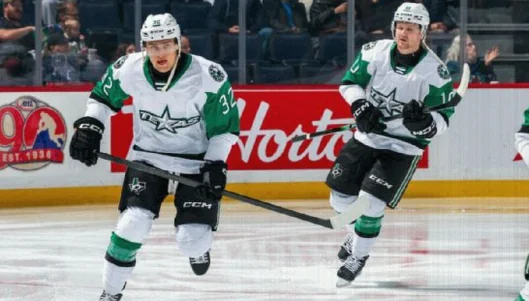
There is hockey already in the Austin orbit. The Dallas Stars’ AHL affiliate, the Texas Stars, has played in nearby Cedar Park since moving from Iowa in 2009. Cedar Park is also home to the Austin Spurs, San Antonio’s G League affiliate, while the Round Rock Express, Triple-A affiliate of the Texas Rangers, plays in Round Rock.
Houston has the more established major-league footprint. By 2027, it is set to have six clubs across major men’s and women’s leagues. The Astros have played there since 1962 and own two World Series titles. The Rockets arrived in 1967 and won back-to-back NBA championships in the 1990s. The Texans began play in 2002 after Houston’s prior NFL team left for Nashville.
The Dynamo entered MLS in 2006 and won championships in each of their first two seasons. The Dash joined the NWSL in 2014. Houston’s original WNBA Comets folded in 2008, but the Fertitta family, which owns the Rockets, agreed in March to buy the Connecticut Sun, move the club to Houston and restore the Comets name.
Hockey has also left marks in Houston. Minor-league teams operated briefly in the late 1940s. The Houston Aeros then arrived in 1972 after a planned Dayton, Ohio, team ran into trouble. Featuring Gordie Howe alongside sons Mark and Marty, the Aeros captured two league championships before their final season in 1979.
A later Aeros franchise played 19 seasons in Houston, first in the IHL and then in the AHL beginning in 2001. It served mainly as the Minnesota Wild’s affiliate, with one season linked to Dallas, before relocating to Iowa in 2013.
Friedkin brings major ownership experience
This would be the family’s first North American professional sports investment, but Dan Friedkin has run prominent European soccer clubs. A Rice University graduate, Friedkin owns and serves as president of AS Roma, chairs Everton and also owns French third-division side AS Cannes.
Roma came under Friedkin control in August 2020 and has finished no lower than seventh in Serie A since. The club won the UEFA Conference League in 2022, reached the Europa League final in 2023 and finished third in Serie A in 2025-26 before entering this season’s Champions League competition.
Friedkin took over Everton in December 2024. The club posted consecutive 13th-place finishes in the 20-team Premier League and moved last season from Goodison Park to Hill Dickinson Stadium, England’s eighth-largest soccer venue.
Building an expansion roster
A Texas newcomer would likely receive expansion-draft terms similar to those used by Vegas and Seattle. The format gives a new club a workable base, but it does not guarantee a contender.
- Existing teams could keep either seven forwards, three defensemen and one goaltender, or eight skaters plus a goalie.
- Clubs would need to leave available at least two forwards and one defenseman under contract for the new team’s opening season, plus a goalie under contract or a restricted free agent.
- No-movement clauses would generally require protection, subject to exceptions.
Vegas turned those rules into an aggressive launch. Other clubs made deals to ease their protection problems, helping the Golden Knights acquire players including Shea Theodore, Alex Tuch and Reilly Smith, along with valuable draft capital. Vegas reached the Stanley Cup Final in Year 1 and won the Cup in 2023.
Seattle found a more prepared league when it entered. The Kraken finished third from the bottom in their inaugural season, made the playoffs only once in five years and have not yet turned their expansion assets into sustained roster gains.
For an Austin or Houston club, the early blueprint would center on capable depth defenders, veteran forwards and available backup goaltending. Three issues would determine whether that foundation becomes competitive quickly:
- Goaltending: Vegas had Marc-Andre Fleury in its first season. Seattle received poor results from Philipp Grubauer and Chris Driedger, whose combined work left the Kraken with the NHL’s lowest save percentage.
- Coaching: Gerard Gallant extracted immediate results in Vegas. Seattle’s Dave Hakstol oversaw the franchise’s lone playoff trip and series victory but never established a lasting club identity across three seasons.
- Player appeal: Both Texas candidates can offer desirable living conditions, while the absence of a state income tax could aid recruitment and retention, as it has been seen as an advantage for clubs such as Dallas, Florida, Tampa Bay and Vegas.
After the horn
A 33rd NHL team would give the league more clubs than the NFL’s 32, while the NBA, MLB and MLS each sit at 30. The NHL generated between $7.5 billion and $8 billion last season, but expansion still raises concerns inside ownership circles about thinning the player pool and making a 16-team playoff field harder to reach.
Bettman has indicated that numerical balance should not control expansion decisions. “Symmetry should not necessarily govern expansion,” he said in June. “You expand if you think it makes sense and enhances what the league has.”
The most direct alignment solution would place a Texas expansion team in the Central Division, leaving 17 Western Conference clubs and 16 in the East. That could force scheduling and playoff-format considerations. A wider realignment, potentially featuring as many as six divisions, could offer a longer-term answer if a 34th club does not follow quickly.
Atlanta and Phoenix remain possible future destinations, with arena readiness central to any discussion. Atlanta has multiple ownership groups pursuing a team tied to real-estate development, while any future market must show it can provide an NHL-caliber building on a workable timeline.
The board of governors is expected to receive a clearer read Tuesday. Deputy commissioner Bill Daly planned to seek an update from the Friedkins, who have said both Austin and Houston will receive full consideration. Ownership sentiment is divided: influential owners favor Houston’s television reach, while some newer owners lean toward Austin.
Houston is the nation’s sixth-largest television market, compared with Austin at No. 34. Atlanta ranks seventh and Phoenix 12th. Dallas, in the fourth-largest U.S. market, will begin an exclusive regional Amazon Prime streaming arrangement in 2026-27. Houston has established regional networks and local broadcasters serving its existing teams, while Austin FC games are carried through MLS’s Apple TV agreement before local television rebroadcasts. The changing regional-media business will be part of the NHL’s market calculation.
| SEO field | Content |
|---|---|
| SEO title | NHL Texas Expansion: Austin and Houston Battle for 33rd Franchise |
| SEO description | The Friedkin family is weighing Austin and Houston for a potential NHL expansion club, with arena costs, television reach, roster-building rules and league alignment all in play. |