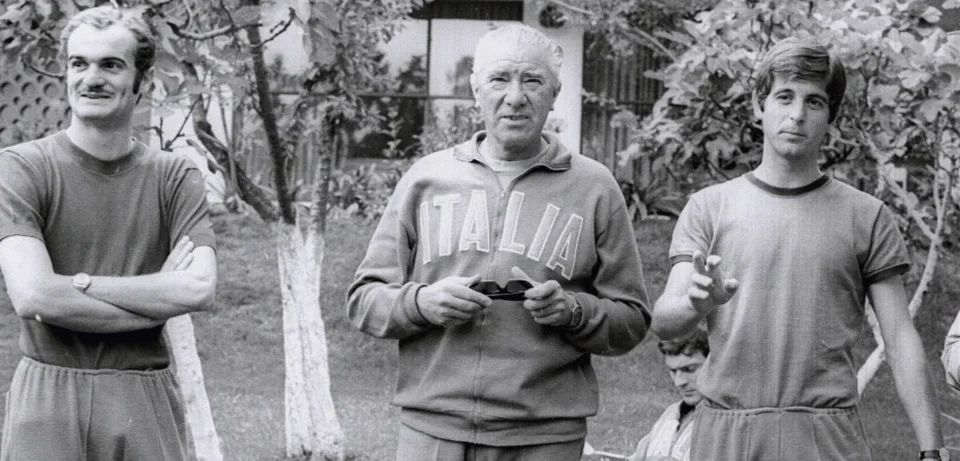
Italian football is mourning Sandro Mazzola, remembered not only as an Inter symbol but as one of the defining figures of Ferruccio Valcareggi’s national team. Furio Valcareggi, the former Italy coach’s son, has recalled a player he describes as a leader of the 1968 European Championship winners and a central presence through a decade in the Azzurri set-up.
A constant in Valcareggi’s Italy
Mazzola was a regular reference point during Ferruccio Valcareggi’s ten years in charge of Italy. In Furio Valcareggi’s recollection, his importance extended beyond his technical standing: he was a trusted figure in the group and a man who maintained a warm relationship with the Valcareggi family.
- Mazzola played a major part in Italy’s triumph at the 1968 European Championship.
- He was regarded as one of the leaders of the national side during Valcareggi’s spell as coach.
- His family remained close to the Valcareggis, with Mazzola’s wife occasionally calling to ask after Furio’s mother.
- Mazzola’s Inter supplied many players to Italy during that era, reflecting the strength of the club’s great side.
The bond also reached back to Mazzola’s father, Valentino. Ferruccio Valcareggi had served in the Navy alongside the Torino legend and held him in exceptionally high esteem, considering Valentino Mazzola the finest Italian inside-forward of all time. Furio said that admiration was often expressed directly to Sandro, helping to make the connection between the families particularly close.
The Mexico 1970 debate that never faded
No chapter of Mazzola’s international career has been discussed more often than the selection debate with Gianni Rivera at the 1970 World Cup in Mexico. The two attacking midfielders became associated with the famous “staffetta”, a planned alternation which remained a source of argument long after Italy reached the final.
Furio Valcareggi believes the issue has often been overstated. In his view, Mazzola was in better condition than Rivera at that point and therefore deserved to begin matches. He acknowledged Rivera’s quality and imagination in midfield, but stressed that Mazzola was a complete champion whose work served the side as well as himself.
- Mazzola started the semi-final against West Germany, the match later known as the “Game of the Century”.
- Italy won that extraordinary contest and progressed to the World Cup final.
- Mazzola also began the final against Brazil.
- Rivera’s appearance for only six minutes late in the final became the focus of enduring controversy.
Furio maintained that the supposed hostility between the two players did not reflect their real relationship. He recalled that Mazzola and Rivera joked together at Coverciano, while the Inter-Milan divide gave the discussion extra force among supporters and observers. Nereo Rocco, Rivera’s Milan coach, even arrived to calm the player, although Furio said such intervention was unnecessary.
Ferruccio Valcareggi’s calm response
The criticism of the rotation did not unsettle Ferruccio Valcareggi in the way it affected those around him. Furio said his father remained calm under pressure and was convinced that Mazzola should play when he was the sharper player.
The pair were not always kept apart, either. Mazzola and Rivera did share the pitch on occasions, with another player making way. Furio identified Giancarlo De Sisti as the one player his father considered untouchable, adding that De Sisti and Mazzola were fundamental to the European Championship success in 1968.
Looking at the modern game, Furio suggested that his father’s approach has become routine. Substitutions, rotations and changes of roles are now part of football’s everyday management, whereas the Mazzola-Rivera alternation was treated as a national drama in its own time. “Ferruccio invented the staffetta,” he said with a laugh, adding that the family ought to hold the copyright.
A loss for Italian football
For Furio Valcareggi, Mazzola’s legacy also lay in his intelligence away from the pitch. He believed the former Inter forward was ahead of his time in recognising the importance of sponsors and the wider responsibilities attached to being a leading footballer.
Mazzola belonged to the formidable Inter side of his era and to a highly successful Italy under Ferruccio Valcareggi, whose national team lost only four matches across ten years. Furio’s farewell was to a player he saw as gifted, influential and thoughtful, a major champion whose passing comes little more than a month after the loss of Franco Baresi.