AC Milan’s attempt to restore its place among Europe’s regulars is now being supported directly by Gerry Cardinale. The RedBird founder has made a €50 million capital contribution to the club in recent weeks, with a further equity injection under consideration, as Milan confront the financial and sporting cost of a second successive season outside the Champions League.
Key takeaways
- Cardinale has put €50 million of new equity into Milan, with another contribution possible in the coming months.
- Milan recorded a €24 million loss for the year ending 30 June 2026 after three consecutive profitable seasons.
- The club’s net equity stood at €176 million after the latest loss was covered.
- Summer recruitment cost around €160 million before player sales, increasing the squad’s overall cost by roughly €30 million.
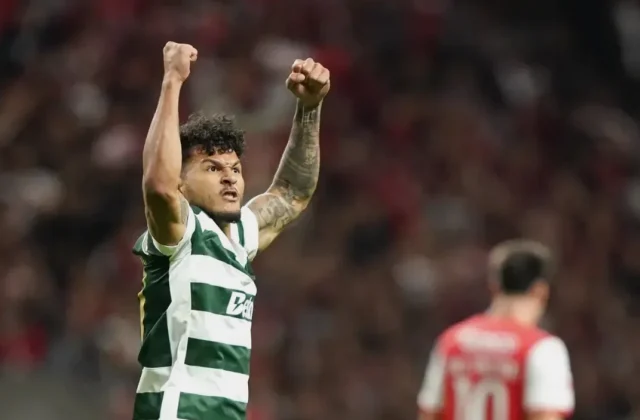
- Milan are considering January moves for Sporting defender Gonçalo Inácio and Real Madrid forward Endrick.
- The first designs for the new San Siro are due to be presented on 29 October, with opening targeted for 2031.
Capital for a sporting reset
In May, Cardinale set out his view of an owner’s responsibility at Milan: “I cannot coach, score goals or defend on the pitch. But I can provide financial resources and build a winning team.” He said his task was to create urgency and a culture of winning, adding that he would not stop until he had won.
The latest contribution gives those words a more concrete place in Milan’s season. It is not understood to have been required by corporate rules on capital adequacy. Even after absorbing the 2025-26 loss, the club retained net equity of €176 million, a position that points to the financial base built in recent years.
Instead, the funding is intended to cover cash needs and support investment while limiting reliance on borrowing. RedBird has generally taken a cautious approach to debt: Milan’s net financial debt has risen to €145 million, but remains well below Juventus’ €331 million.
The pressure comes from the Champions League absence. Milan had posted profits of €6 million in 2022-23, €4 million in 2023-24 and €3 million in 2024-25, before the accounts approved by Paolo Scaroni’s board showed the €24 million deficit at 30 June 2026. Another loss is anticipated in 2026-27, although Europa League participation could soften the effect.
The ownership’s new money is therefore tied to the football side of the project: the belief that commercial growth and the wider business plan require a side capable of returning to the Champions League on a lasting basis. RedBird had previously injected €55 million across 2023 and 2024, principally to meet costs linked to the stadium project. This latest sum is its first direct equity investment aimed at sporting activity.
A squad, a stadium and the next phase
Milan’s summer business reflected that priority. Around €160 million was committed to signings before sales were deducted, while the cost of the playing squad grew by approximately €30 million. The club’s intention is not to treat that window as an isolated push, with January also expected to offer opportunities to strengthen the group.
Inácio remains a defensive target after Milan had already submitted an offer exceeding €40 million for the Sporting player during the summer. Endrick is also under consideration for the attack. A loan from Real Madrid would mean the principal immediate accounting cost would be his wages rather than a major transfer fee.
Cardinale’s role has become increasingly hands-on in the fifth year of RedBird’s control, which began when the fund bought the club from Elliott in the summer of 2022. Its owner-operator model is built around more than holding an asset, with internal expertise developed across commercial operations, data and artificial intelligence, ticketing, hospitality and licensing.
The stadium file, meanwhile, has moved forward after the administrative court rejected challenges to the sale of San Siro. Foster + Partners and Manica are scheduled to reveal their first rendering of the new stadium on 29 October. The main construction work is planned to begin in summer 2027, with the new arena intended to open in 2031.
For Milan, the two strands belong together. A modern home can reshape the club’s revenues and standing, but its value will be greatest only if the team and the Rossoneri brand are once again consistently visible in international competition. Cardinale’s latest intervention is a signal that RedBird sees the current Champions League gap not as a condition to accept, but as the central problem of the next chapter.