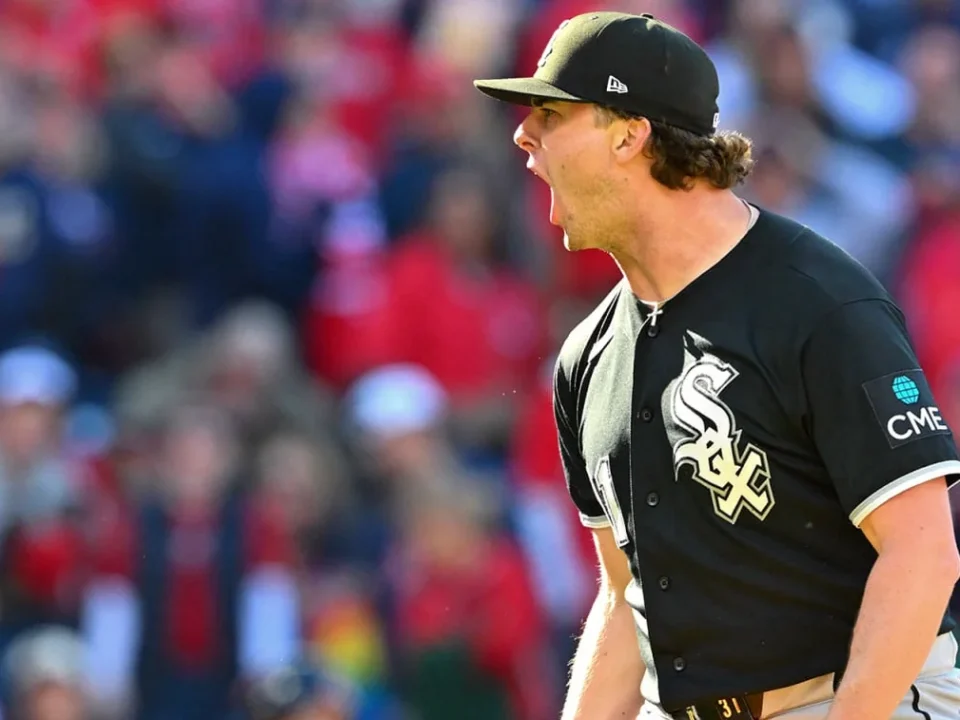
Grant Taylor took the ball in the sixth inning Saturday afternoon and never gave it back. The White Sox closer turned Game 1 of the American League Division Series into his own four-inning assignment, locking down a 3-0 victory over the Guardians at Progressive Field with a finish that carried all the noise of October.
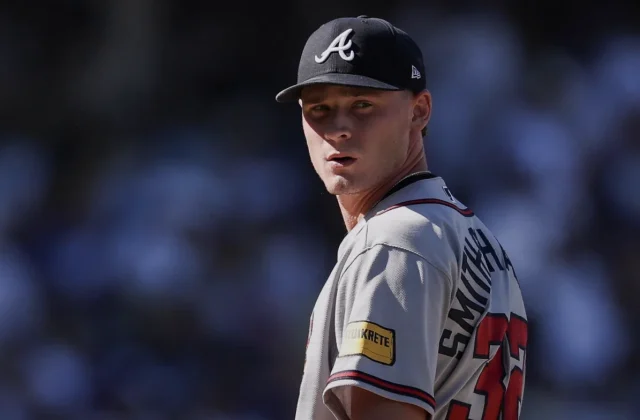
His final pitch was a big breaking ball in the dirt to Travis Bazzana. The Cleveland hitter offered at it just enough for third-base umpire Jansen Visconti to ring him up on an appeal, and Taylor answered with a roar after completing a three-hit shutout. Chicago got only 2 2/3 innings from opener Hagen Smith, then received four scoreless frames from its closer to seize the best-of-five series.
For a White Sox club working without the conventional October rotation depth, the arrangement was no accident. Smith laughed before the game when asked whether he now considers himself a starter or a reliever.
“At this point, I’m just a pitcher,” Smith said.
That could serve as the motto for Chicago’s postseason staff. Taylor, a 24-year-old right-hander who began his college career as a starter at LSU before moving into relief at Double-A Birmingham last season, has become the centerpiece of that flexible approach. He threw 42 pitches against Cleveland, delivering 34 for strikes, permitting two hits and striking out six without a walk.
The Guardians swung at nine curveballs and missed on seven of them. Overall, 23 of Taylor’s 42 pitches either produced a called strike or a swing-and-miss. He did not merely survive the unusual workload; manager Will Venable felt his pitcher sharpened as the afternoon unfolded.
“He wants the baseball,” Venable said. “The stuff is outstanding. I thought he got better as he continued. Grant gave us some incredible work.”
A closer built for length
Taylor had already shown the White Sox he could cover more than a normal late-inning stint. In the opener of the Wild Card Series at Houston, he worked 2 1/3 innings on 54 pitches. Both of his postseason appearances have exceeded every outing he made during the regular season.
Against the Guardians, there was even a moment of confusion in the press box when an announcement indicated Sean Newcomb would take the mound in the ninth. It was quickly corrected. Taylor was staying in, and the game remained his to finish.
He became the first pitcher ever to record a postseason save with at least six strikeouts and no walks. His four-inning save also placed him in a very short historical group. Since saves became an official statistic in 1969, only Lance McCullers Jr. in the 2017 ALCS, Madison Bumgarner in the 2014 World Series, Sammy Stewart in 1983, Pedro Borbón in 1976 and Vida Blue in 1972 had previously posted postseason saves lasting at least four innings. Bumgarner’s Game 7 effort went five innings.
Taylor’s regular season had already mattered greatly to Chicago’s unexpected run, as he went 84 innings with a 2.25 ERA and 106 strikeouts. October, though, is giving the right-hander a larger stage. He was recovering from Tommy John surgery when LSU won the 2023 national championship, a title he felt connected to without being able to fully share in on the field.
“I felt like I was part of that 2023 club, but it didn’t completely feel like my ring,” Taylor said. “To be able to help this team however I can, and to be a central part of it, is awesome.”
Chicago’s formula may be particularly suited to this series. Cleveland has a more traditional starting-pitching profile and uses Cade Smith in a more familiar bullpen role, while the White Sox are prepared to deploy pitchers based on matchup, workload and the shape of the game rather than job titles. The ALDS calendar offers nearly as many travel and workout days as game days, giving Venable room to mix his arms aggressively.
Taylor’s availability for Game 2 on Monday remains uncertain, even with Sunday’s extra off-day. But the White Sox will take the field at 5 p.m. ET in Cleveland with a 1-0 series lead, and with their bullpen blueprint already stamped on the series. Taylor said he tried to remain calm through his long relief appearance. The emotion, he explained, came out only when Bazzana’s half-swing brought the final call.
“Finishing a game like that was obviously exciting,” Taylor said. “I was trying to stay even-keel the whole time, so there were a lot of emotions built up that all came out in that one moment.”