The 2026 World Cup will be staged by the United States, Mexico and Canada, the first tournament to be shared by three host nations. Their preparations are not only about venues and matchdays: each country is using the tournament cycle to present a distinct international identity before the teams arrive.
2026 World Cup: United States, Mexico and Canada
For the United States, the tournament is another chance to underline its technological reach, economic weight, large-scale infrastructure and ability to turn major events into worldwide entertainment. Mexico enters the calendar with a different strength: deep football tradition, a powerful popular connection to the game and internationally recognised cultural heritage. It will become the first country to host matches at three separate World Cups.
Canada’s role is shaped by another objective. Without Mexico’s historic football status or the United States’ media power, it can use the competition to promote itself as innovative, stable, diverse and welcoming to international talent. The exposure may support tourism and investment, raise the profile of Canadian cities and help accelerate the domestic growth of football.
A World Cup does not create a single image for all hosts. Each country arrives with its own assets and its own message. But global attention can magnify shortcomings as readily as it can showcase success. Hosting alone is not a guarantee of a stronger reputation.
Germany’s 2006 finals helped portray the country as modern and welcoming, challenging older perceptions through an open tournament atmosphere. South Africa in 2010 carried major symbolic value as an African nation delivered a global sporting event, despite debate over infrastructure and organisational difficulties. Brazil’s 2014 edition exposed the other side of the equation, with its football appeal and cultural presence accompanied by protests over public spending, inequality and political priorities.
Qatar used the 2022 World Cup to place itself at the centre of international attention and to demonstrate its economic capacity and global ambitions. At the same time, the competition intensified scrutiny of labour rights, civil freedoms and the emirate’s political model. The lesson for future hosts is clear: stadiums, construction schedules and good matches are only part of the legacy. Planning must extend before the opening game and beyond the final.
The World Cup also creates a concentrated business environment. Executives, investors, institutional representatives and corporate leaders gather in hospitality areas, hotels, boxes and associated events around the fixtures. Juanfer F. Calderín, chief executive of The Queen, described the tournament as an exceptional setting in which stadiums can become meeting places for top-level international business.
He argued that organisers must look beyond welcoming national teams and supporters, because the event can also generate commercial partnerships. In his view, the key conditions are trust, direct physical access to decision-makers for extended periods and the possibility of completing complex agreements in a sporting setting.
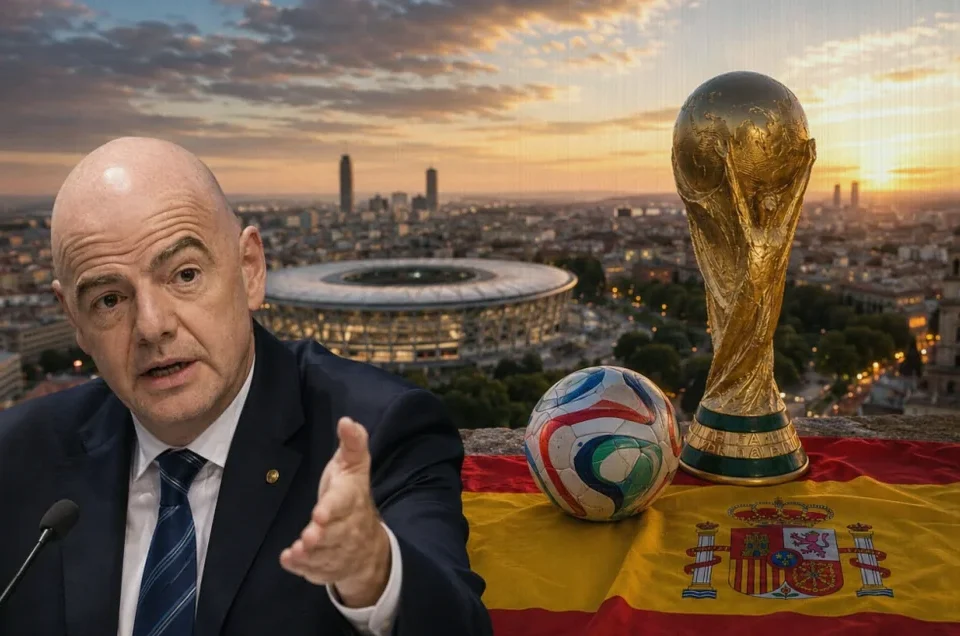
Calderín noted that combined ticketing and executive-hospitality revenues at the most recent World Cup passed $3 billion, a record figure. Looking toward 2030, he believes Spain, Portugal and Morocco must ensure that high-level corporate networking reaches beyond FIFA’s official spaces rather than being confined to them.
For Spain, the 2030 cycle is also expected to bring a domestic football legacy before the first ball is kicked. Marc Menchén, founder and director of 2Playbook, said the World Cup has helped unlock stadium investment that might not otherwise have been undertaken through CVC funding or clubs’ own financial resources. Modernised grounds, he said, should benefit LaLiga, its clubs and supporters through an improved matchgoing experience.
Menchén expects the effects to reach training complexes and sporting facilities as well, strengthening academy business and programmes run by clubs with overseas students and teams. He also sees the tournament as a renewed international shop window for Spanish host cities, including Las Palmas, Valencia, Bilbao, Madrid and Barcelona.
That visibility may not produce an immediate and dramatic jump in tourism, but it can help destinations remain competitive over the medium and long term. Menchén’s proposed balance for Spain is between FIFA’s VIP, celebrity and hospitality model and full stands containing genuine supporters of the competing national teams. Sponsors and corporate guests, he argued, need not displace the traditional football public.
David Martín, head of Brand Spain at MARCO, said the lasting measure of a World Cup is not solely sporting success or smooth delivery, but the reputation left behind when the tournament has ended. Global attention lasts only weeks, he said, while national-brand planning must start well in advance and continue after the final.
Spain already has a widely recognised identity through tourism, food, climate and sport. The 2030 tournament could also be used to present a more contemporary picture: innovative, technological, sustainable and able to attract talent. Martín stressed that this cannot be achieved through a communications campaign alone; visitors’ real experience must match the promise being made abroad.
The host-city plan will matter as much as the headline venues. Madrid and Barcelona already possess established global profiles, but other cities and regions can use the arrival of supporters, media, sponsors and business delegations to explain their own identities and strategic sectors. Spain’s range of landscapes, destinations and cultures can prevent the World Cup story from becoming too uniform.
Sustainability will be a central test in 2030. Mobility, energy use, infrastructure reuse and emissions reduction will face greater scrutiny than in earlier tournaments. Spain will need visible results rather than broad promises, while transport, urban upgrades and public services should answer residents’ long-term needs instead of serving only the short life of the event.
Spain, Portugal and Morocco can also build business forums, meeting networks and hospitality programmes alongside FIFA’s official operation. The aim is to spread economic activity outside the stadium footprint and create relationships between companies, institutions and investors that survive the tournament.
The 2026 hosts now have the immediate global stage in view. For the 2030 organisers, the longer diary is already underway: investment, city planning, sustainability, hospitality and national reputation will all be judged alongside the football.
SEO Title: 2026 World Cup Hosts Set Their Global Stage as Spain Plans for 2030
SEO Description: The United States, Mexico and Canada prepare to host the 2026 World Cup, while Spain, Portugal and Morocco consider the investment, reputation and sustainability legacy of 2030.