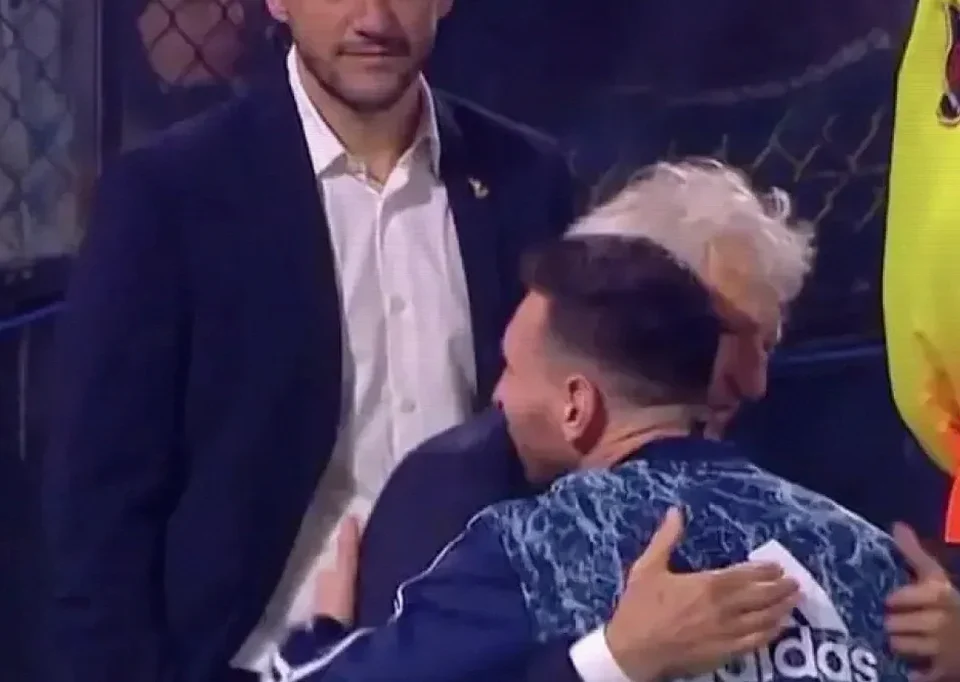
Buenos Aires has always kept room for football prophecies, and one of the most consequential was carried across the Atlantic from Spain in the spring of 2004. José Pekerman, then working as sporting director at Leganés, had travelled to watch a slight Barcelona academy player whose name was still unknown beyond a small circle of coaches, relatives and Catalan youth football. Lionel Messi was not yet Argentina’s player in any formal sense, but Pekerman came away convinced he had seen the country’s next great figure.
He later recalled watching Messi for Barcelona’s youth side and immediately imagining a career that could echo Diego Maradona’s. The urgency came from more than admiration. Spain were aware of the Rosario-born teenager and were considering him for their under-20 side, while Messi himself wished to represent Argentina. For Pekerman, a three-time youth world champion with Argentina and one of the game’s most respected developers of young players, delay was not an option.
A race between Barcelona and Buenos Aires
The warning signs had appeared during the 2003 Under-17 World Cup in Finland. Members of Spain’s staff had told Argentina’s representatives that, had they possessed “that boy”, Argentina might have won the competition. Pekerman contacted Hugo Tocalli, Argentina’s under-20 coach, and argued that Messi had to be brought into the national set-up quickly.
Tocalli had already shaped his squad for the 2005 South American Under-20 Championship in Colombia, but Pekerman’s concern was narrower and more immediate. Between 2003 and 2020, FIFA regulations prevented a player from changing senior international allegiance after appearing for another country. Under Article 18 of the governing body’s statutes, the essential task was to place Messi in an officially recorded Argentina match before Spain could do so.
Pekerman suggested that Messi did not need to play in the South American tournament straight away. A friendly with an international referee, a signed match sheet and FIFA registration would be enough to secure his future with the Albiceleste. Tocalli agreed, then directed Pekerman towards Julio Grondona, the president of the Argentine Football Association.
Pekerman asked Grondona to arrange an opponent, with one condition: the fixture had to take place at Argentinos Juniors’ stadium. It was a meaningful choice. Pekerman had begun his own professional playing life at the Buenos Aires club, while Maradona had emerged there before becoming a global symbol of Argentine football. Grondona reportedly laughed at Pekerman’s confidence in the teenager, asking whether he truly believed so strongly in him.
There was another small echo of Maradona’s early days. The association’s request to Barcelona misspelled the young player’s name as “Leonel Mecci”. Decades earlier, a newspaper had referred to the emerging Maradona as “Diego Caradona” while writing about Los Cebollitas, the children’s team in which he had dazzled.
The match that fixed Messi’s international future
Grondona organised two friendlies against Paraguay, one in Asunción and the other in Buenos Aires. Barcelona were initially reluctant to release Messi, but eventually allowed him to travel. He arrived at Argentina’s Ezeiza training complex on 25 June 2004, one day after his 17th birthday.
Four days later, Argentina met Paraguay in the second friendly at Argentinos Juniors. The home side won 8-0, and Messi entered after half-time in place of Ezequiel Lavezzi wearing No. 17. He scored Argentina’s seventh goal and set up their fifth, completing the administrative and sporting step that Pekerman had pressed for.
Tocalli subsequently selected him for the 2005 South American Under-20 Championship in Colombia. That year brought an even larger stage in the Netherlands, where Messi won his first youth World Cup at 18. By then Pekerman had become Argentina’s senior coach, and on 17 August 2005 he handed Messi his full international debut in Budapest, where Argentina defeated Hungary 2-1.
The journey from a Barcelona youth match to the Argentina shirt had taken little more than a year. Pekerman’s insistence, Barcelona’s eventual consent and one overwhelming evening against Paraguay ensured that the player first summoned under the wrong name would belong to the country he had always wanted to represent.