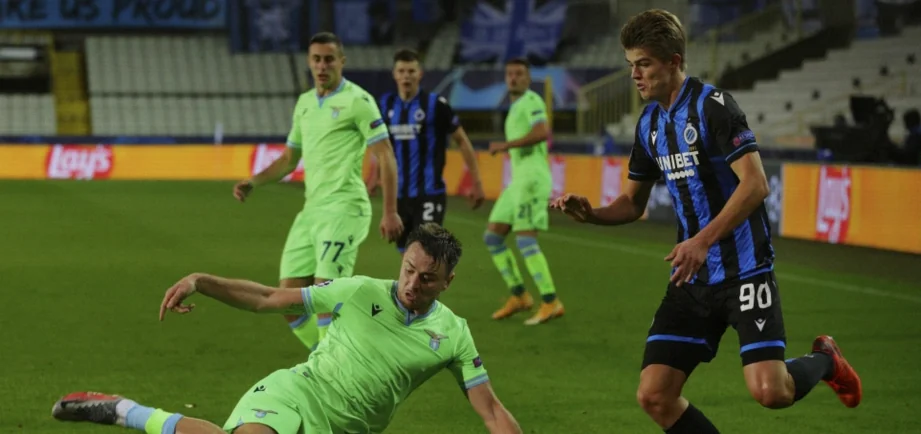
Serie A has already felt the reach of Club Brugge’s academy, now organised under the Club Nxt identity. Charles De Ketelaere rebuilt his standing in Bergamo after a difficult Milan spell, while Ignace Van der Brempt is on loan at Sassuolo after Como bought him in 2025. Loïs Openda, meanwhile, arrived in Italy after his rise through Vitesse, Lens and RB Leipzig, first on loan and then permanently for more than €40 million. Their routes differ, but they belong to the same wider story: a Belgian development system that has become one of Europe’s most productive trading floors for young footballers.
Over the past decade, Brugge have combined local recruitment with international scouting, giving prospects a competitive setting through Belgium’s second division before either promoting them to the senior side or selling at the right moment. The academy’s influence is not limited to the largest fees. It has also created a pathway for players to leave before fully establishing themselves in the first team, with major clubs prepared to invest in potential rather than wait for a finished product.
Noah Mbamba is one of the clearest cases. The Congolese midfielder, also capable of dropping into defence, played Champions League football for Brugge at 16 and quickly drew attention across the continent. Bayer Leverkusen secured him for an initial €100,000 as his contract approached its end, and his value has since climbed to around €2 million.
Arne Engels followed an earlier route out of the system. A commanding centre-back with aerial strength, he joined Augsburg for roughly €100,000 and is now described as a West Ham player valued at €25 million. Another physically strong central defender, noted for his reading of the game, was sold directly from the Club Nxt youth teams to Levante for close to €3 million, underlining the willingness of foreign clubs to pay significant sums for Brugge-trained players before they become established senior names.
Van der Brempt developed as an attacking right-back with the athleticism to cover the entire flank. Salzburg paid €5 million for him before his subsequent Italian chapter, which has taken him from Como to his current spell at Sassuolo. Jesse Bisiwu represents another early departure: Barcelona paid €8.5 million for the Belgian, convinced by his pace and technical ability before he had made a lasting first-team breakthrough in Brugge.
A pathway that reaches Italy
Openda remains among the academy’s biggest successes and regrets. A modern centre-forward with a strong instinct in front of goal, he came through every age group at Brugge before loans and moves allowed his career to build steadily. He flourished at Vitesse in the Netherlands and then Lens in France, earning a move to Leipzig and eventually a place in Italian football. His permanent arrival in black and white for more than €40 million marked the financial scale now attached to graduates of the Brugge school.
De Ketelaere is still its most recognisable product. He emerged in Brugge’s senior team with a versatility and composure in possession that made him one of Belgium’s most sought-after young players. Milan eventually paid a club-record €37.5 million after a long summer negotiation. His Rossoneri period did not offer the expected breakthrough, but under Gian Piero Gasperini at Atalanta he found the setting in which he developed into a more complete forward.
The export line has continued elsewhere. Chemsdine Talbi, a creative winger and attacking midfielder developed entirely at Brugge, attracted substantial English interest after his youth-level displays in European competitions. Sunderland won that contest with a €20 million investment in the young Moroccan.
Maxim De Cuyper was one of the academy players Brugge retained long enough to become a genuine first-team reference point. Following a loan at Westerlo in 2023, he returned for the next two seasons before Brighton paid €20 million in July 2025. He has started his Premier League campaign with two goals and two assists from six appearances.
Antonio Nusa illustrates the international side of the project. The Norwegian arrived in Belgium at a young age, developed through the youth ranks and then caught attention in the first team with his acceleration and ability to beat opponents one against one. Brugge sold him to Leipzig for €21 million during the previous summer window, seeing the German club as the next stage in his progress.
The value of Club Nxt, however, is also visible in the players still serving the first team. Joaquin Seys, the 2005-born full-back and wide player, has become one of the academy’s leading current prospects, with a market valuation reported at €27 million. On the opposite side, fellow 2005 graduate Kyriani Sabbe has reached a valuation of €13 million.
At centre-back, Jorne Spileers represents the next generation alongside Brandon Mechele, the long-standing Brugge figure who provides leadership for the younger group. Behind them, 2007-born goalkeeper Argus Vanden Driessche has been integrated into the senior squad structure as part of his development.
There are options further forward as well. Lynnt Audoor offers midfield running, timing into the box and clean distribution, while Romeo Vermant is regarded as a mobile centre-forward with an important family connection to the club: his father Sven is a Brugge icon. The younger Vermant is already viewed in Belgium as a potential future number nine for the national team.
For Italian clubs, the lesson is familiar. Brugge’s academy does not simply produce occasional transfer opportunities; it sustains a first team while regularly sending players into the Bundesliga, Premier League, La Liga and Serie A. De Ketelaere, Openda and Van der Brempt are different chapters of that work, and the current group suggests the story is far from complete.