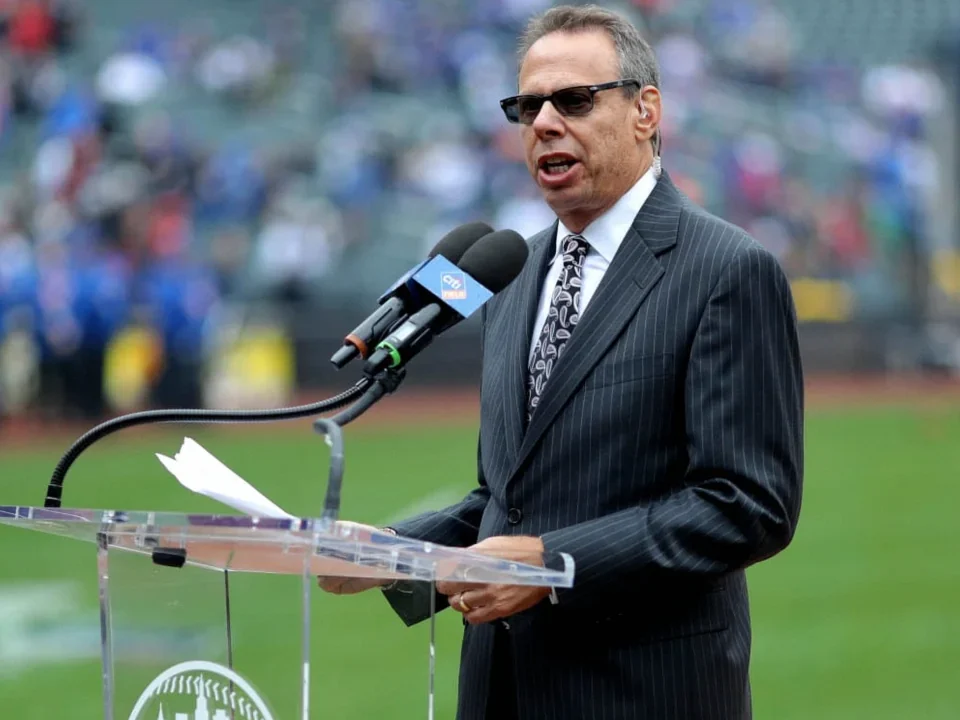
Howie Rose’s road to the Mets Hall of Fame started high above home plate at Shea Stadium, where a kid from Bayside could claim a wooden upper-deck seat for a Saturday afternoon and dream about making the game sound as big as it felt.
Rose’s retirement ceremony, originally set for Sunday, has been pushed to Opening Weekend in 2027 because of bad weather. The change only extends a farewell that has brought Rose back to the places that shaped him: Queens, Shea, the radio booth and a fan base he understood long before he spoke to it over the air.
Quick facts
- Rose and Gary Cohen entered the Mets Hall of Fame in 2023, following Bob Murphy, Lindsey Nelson and Ralph Kiner.
- Rose attended Mets games from Section 1, Row 1 in Shea Stadium’s upper deck.
- He began his New York broadcasting career with Sports Phone in 1975.
- His Rangers call of “Matteau! Matteau! Matteau!” remains one of New York hockey’s signature radio moments.
- Among his defining Mets calls were the 2015 NLCS pennant clincher and Pete Alonso’s go-ahead homer in the 2024 NL Wild Card Series Game 3.
Back then, Rose and childhood friend Richard Joseph took the Q27 from Springfield Boulevard and 73rd Avenue to Main Street, then walked over the Roosevelt Avenue Bridge toward Shea. Gates had not opened yet, but the pair made sure they were close enough to race for their preferred spot when noon arrived.
The seats were general admission, though Rose and Joseph treated them like private property. They even cut their initials into the wood. Joseph bought hot dogs for a dollar or two; Rose packed salami sandwiches and could finish two or three before the final out.
Rose was 8 when the Mets played their first game, 15 when the club won its first championship, in his early 40s when he became a regular in the booth and in his early 50s when he took over as the lead play-by-play voice. That timing gave him a rare view of the entire franchise, from the lovable chaos of the early years through the club’s modern era.
Rose has said a broadcaster earns longevity by building a genuine bond with listeners. Every club has voices who become part of its own history, he noted, but a long run only comes after the announcer has made that connection.
For Rose, that relationship was never manufactured. Cohen has called Rose’s understanding of what it means to live as a Mets fan unmatched. Former booth partner Wayne Randazzo said Rose’s knowledge comes from having watched virtually every chapter of Mets history unfold in real time.
One Shea afternoon in particular stayed with him. On Aug. 4, 1966, Giants ace Juan Marichal set down the first 17 Mets in order, and New York fell behind by as many as five runs. The Mets rallied in the eighth, then Ron Swoboda ended it with a three-run walk-off homer in the ninth.
Rose knew he would not be the player supplying that blast. Riding home on the bus, he instead wondered how Murphy, Nelson and Kiner had handled the call — and how their words would preserve the moment for people listening. That was when the future broadcaster began to recognize what he wanted to do.
Joseph remembered Rose practicing the craft well before it became a profession, carrying a tape recorder to Rangers games at Madison Square Garden. Rose finished at Cardozo High School in Bayside and Queens College in Flushing, with each stop bringing him a little nearer to the ballpark that had become his second home.
His first break came in 1975 with Sports Phone, the call-in service that delivered scores and updates to New York fans. He later served as sports director at WHN and built much of his early reputation in hockey, including the famous Rangers call on Stephane Matteau’s overtime goal.
Baseball asked for another kind of discipline. Hockey demands quick identification and constant tracking of the puck; baseball gives the announcer room to describe, reflect and occasionally get into trouble with too much room to fill. Rose learned to use that pace, turning innings into conversations filled with Queens landmarks, Mets lore and the occasional Yiddish turn of phrase.
His Mets radio education accelerated when he hosted the club’s pregame and postgame coverage. Rose has credited Cohen with helping him sharpen the finer points of radio play-by-play: paint the whole field for listeners, but know when a big moment needs silence around it.
Randazzo said Rose possessed both the storytelling touch and the core fundamentals required of a hometown baseball voice. That blend helped Rose call the Mets with feeling without becoming a rooter on the microphone.
Rose grew up wanting the Mets to win, just as Cohen, Al Leiter, John Franco and David Wright did before joining the club’s Hall of Fame. But Rose kept that loyalty out of the call. When the Mets clinched the 2015 National League pennant in Game 4 of the NLCS, he finally got to deliver the sentence he had waited his whole broadcasting life to say: the Mets were going to the World Series.
Nearly a decade later, Alonso gave Rose another October jolt with his go-ahead home run in the deciding game of the National League Wild Card Series. Those calls joined a personal archive that began with a boy staring down from the Shea upper deck.
Retirement has made the familiar details hit harder. Rose recently told former Yankees manager Joe Torre that he was beginning to feel emotional about leaving the booth. Torre’s advice was simple: do not push those feelings away; take them in.
Rose no longer rides the Q27 to Mets games, sprints up Shea’s escalators or unwraps sandwiches in the stands. But the kid in Section 1, Row 1 never really left. His Hall of Fame place is another kind of permanent seat, built from the same Queens memory, patience and devotion that first carried him through the Shea gates.