
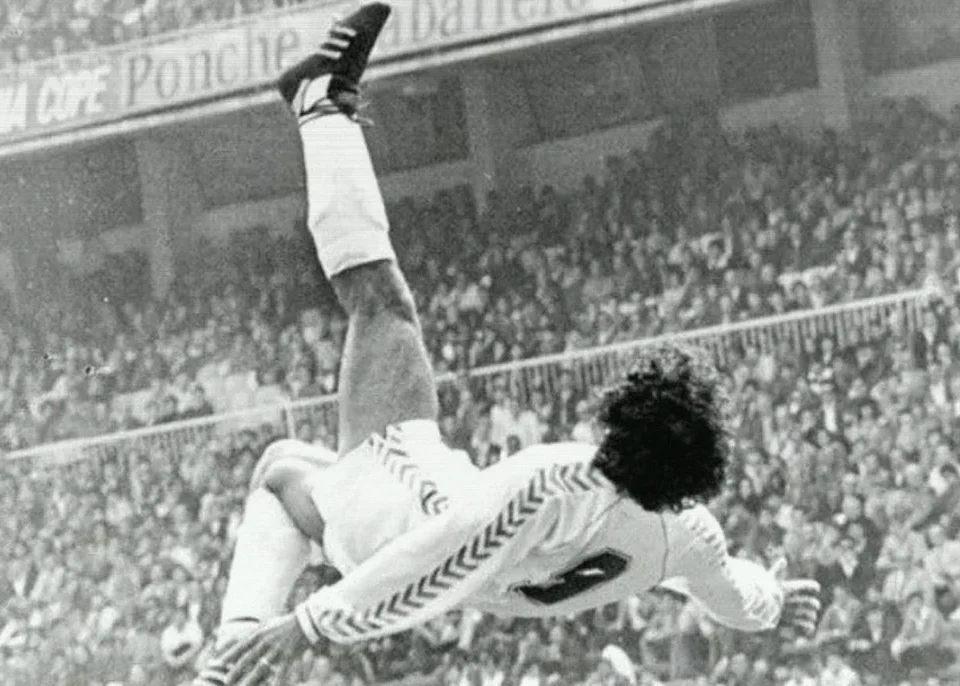
Madrid in 1981 was the first European stop for Hugo Sánchez, and the Mexican striker arrived carrying far more than the usual pressure of a foreign signing. Before his goals made him a landmark figure in Spanish football, he faced racist abuse and hostility aimed at his nationality from the stands.
Sánchez joined Atlético de Madrid at a time when European players dominated the game in Spain. He later described those opening months as among the hardest of his career, with supporters questioning whether a Mexican could belong at that level.
Quick facts
- Hugo Sánchez moved to Atlético de Madrid in 1981.
- He won the Copa del Rey with Atlético and collected his first Pichichi award as Spain’s leading league scorer.
- Real Madrid signed him in 1985.
- His career included five Pichichi trophies, and he won the European Golden Shoe after scoring 38 goals in 1990.
- At the time, Ballon d’Or rules excluded non-European players from contention.
The abuse was explicit. Sánchez recalled hearing insults including: “Indian bastard, we’ll send you to the firing squad,” as well as chants demanding “footballers, not mariachis.” The attacks went beyond sporting criticism and targeted his Mexican identity.
He chose to answer on the pitch. Goals altered his standing at Atlético, where his scoring form brought both silverware and the first Pichichi of his career, before Real Madrid moved for him in 1985.
At the Bernabéu, Sánchez became one of the defining forwards of a successful Real Madrid era. His acrobatic finishes, notably his bicycle kicks, his trademark celebration and his repeated scoring returns made him a recognised name across European football.
Yet the barriers of that period were not limited to terraces. Sánchez has pointed out that his achievements could not place him in the Ballon d’Or race because the award was then reserved for European players.
That restriction remained a source of frustration in 1990, when he finished a 38-goal season by winning the European Golden Shoe. His route from a difficult first reception in Spain to status as one of LaLiga’s greatest foreign strikers became a lasting example of success achieved despite prejudice.
For Sánchez, the response was ultimately delivered in results rather than argument: talent, his career showed, did not depend on nationality.