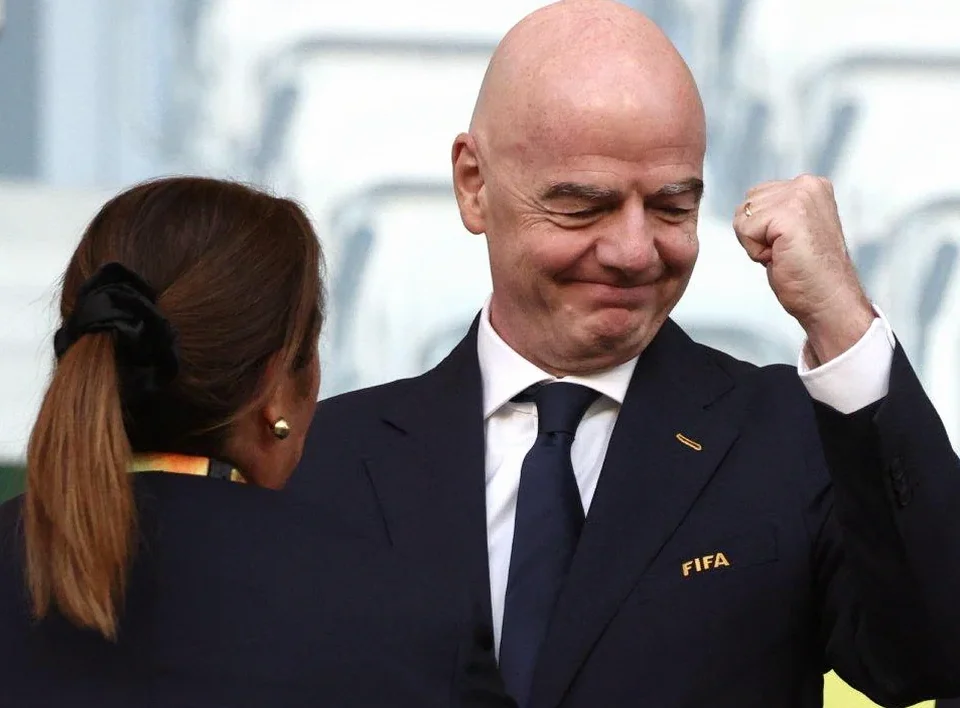
Zurich’s FIFA headquarters became the latest stop in a widening argument over how football’s biggest commercial prizes are governed. Gianni Infantino used a three-and-a-half-hour meeting of the FIFA Council on Thursday to apologise for failures in the communication and consultation around a proposed World Cup investment project, yet European delegates left without the disclosure they had sought on the abandoned plan or on the Folarin Balogun case from the most recent tournament.
The proposal, known as FIFA Forward Enterprise, envisaged a commercial structure connected to World Cup rights with a reported valuation of $4.2 billion. It was unveiled and then swiftly withdrawn in July. Infantino told council members that it had remained a proposal rather than a completed transaction, while FIFA said material concerning potential investors could not be released because legal processes in the United States were continuing.
That explanation did little to soften opposition from UEFA’s representatives on the 37-member council. Bernd Neuendorf, the German football leader and one of UEFA’s eight delegates, said the meeting had not delivered adequate answers. Debbie Hewitt, chair of the English Football Association and a FIFA vice-president, warned that a president who did not answer the outstanding questions would not be suitable to lead the organisation.
Infantino asked members to put their questions in writing before 18 November, the deadline for candidates to be nominated against him ahead of FIFA’s presidential election in March. He did not speak to reporters after the Zurich session, issuing a video statement instead in which he acknowledged mistakes in the way the enterprise project had been handled and consulted upon.
Europe presses for clarity as the election map takes shape
Two disputes dominated the gathering. Alongside the World Cup rights proposal was the dismissal of Folarin Balogun during the last World Cup, an episode in which United States president Donald Trump intervened to assist the host nation’s forward. No fresh account of the incident or Trump’s role was provided at the meeting. FIFA is, however, to consider whether it should continue with the peace prize created to honour Trump last December.
UEFA’s concerns have moved beyond the council chamber. The European confederation has sought permission from courts in the United States to obtain evidence for a criminal complaint against Infantino in Switzerland. Court filings raise the possibility of financial mismanagement in the valuation of the proposed company that would have controlled the tournament’s commercial rights.
The structure was expected to leave at least 20% in the hands of an investor group led by Joshua Kushner, Trump’s son-in-law. FIFA lawyers, resisting or seeking to delay the evidence requests, have described UEFA’s action as a smear campaign. The episode has reinforced a long-standing European complaint that major initiatives are developed without sufficient consultation with the confederation, as well as with leaders in North America and Asia.
For all the resistance in Europe, Infantino retains important backing elsewhere. Africa’s 54 member associations, within FIFA’s 211-member electorate, have often proved decisive in presidential contests over the past half-century. Ahmed Yahya, the Mauritanian federation president and a FIFA Council member, said African figures regarded Infantino as the right person to continue directing the game.
The council also advanced a plan that would add $15 million in FIFA funding for each of the 211 member associations over the next four years. Every association had already been set to receive $10 million through to 2030, making development money an unavoidable part of the political landscape before the vote.
From Rabat to Doha, the road to March runs through several hosts
The presidential election is scheduled for 18 March in Rabat, where Morocco’s close relationship with Infantino will be conspicuous. Fouzi Lekjaa, Morocco’s influential football chief, is a member of the FIFA Council, while the country is preparing to share the 2030 World Cup with Spain and Portugal. Morocco is also seeking to stage the final, a future hosting decision that may shape alliances in the months before the ballot.
Another council meeting is due in Qatar on 16 December. The 2022 World Cup host has remained loyal to Infantino. Azerbaijan, whose senior football official Elkhan Mammadov belongs to the FIFA president’s inner circle, is also an ally; its Under-15 World Cup later this month is likely to offer another setting for campaign conversations.
Before then, FIFA will hold an extraordinary congress on 23 November, five days after the nomination deadline, to confirm hosts for the 2031 and 2035 Women’s World Cups. There is only one proposal in each race: the United States, Mexico, Costa Rica and Jamaica for 2031, followed by the four United Kingdom associations for 2035.
Across Zurich, Rabat, Doha and the countries lining up for future tournaments, the contest is no longer only about one shelved investment vehicle. It is about the balance between confidential commercial ambition and the demand from football’s continental powers for a clearer account of how the World Cup is being carried into its next era.