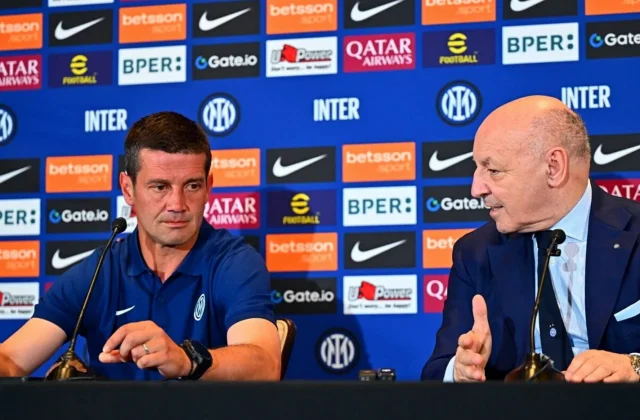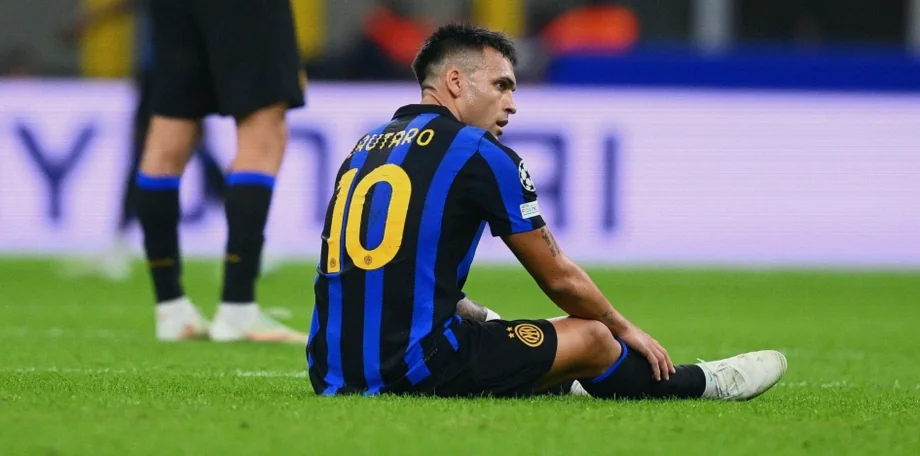
Italian football has reached an early point of strain in the Champions League. After two rounds of the league phase, Inter and Napoli — last season’s Serie A champions and runners-up — are still without a point, while Roma have collected only one and Como have three. The four clubs then all lost on the same matchday, a first for Italy’s representatives in this campaign, and the margin for error is already narrowing.
The new Champions League format offers 18 points in total across the opening stage, so neither Inter, Napoli nor Roma is mathematically out of contention. Yet recent evidence gives the table a sharper meaning: among the 12 sides left on zero points after two matches across the previous two editions, only two reached the play-offs, one in each season.
There is an Italian precedent for recovering from such a start. Milan, beaten by Liverpool and Bayer Leverkusen, responded with five consecutive victories and began that sequence by defeating Club Brugge 3-1. Benfica also fought back after a poor opening in 2025-26. But those examples do not erase the scale of the task now facing Serie A.
Italy’s difficult European opening
Como remain top of Serie A and celebrated their Champions League debut win over Leipzig, but their latest defeat exposed the limitations expected of a side taking its first steps at this level. A setback need not halt Cesc Fabregas’ project, though Como cannot reasonably be asked to carry Italy’s European standing on their own.
There was also an opportunity missed. Como’s closing fixtures in the league phase include Paris Saint-Germain and Barcelona, making the earlier meetings especially important for building a workable total. Manchester United are next at Como, with both clubs level on points.
Roma’s sole point came in Istanbul against Fenerbahce, a team that then conceded six goals to Aston Villa. Roma must now respond to the damage caused by their collapse against Real when Slovan Bratislava visit. Slovan are bottom of the standings, with a goal difference of minus eight, and the fixture has become one that Roma cannot afford to mishandle.
Inter meet Shakhtar next, with their opponents holding a four-point advantage. Napoli host Bodo/Glimt, who arrive encouraged by a win against Borussia Dortmund. The idea that the Norwegian side are dangerous only on their own artificial surface no longer stands up: they won at San Siro last February.
By history and financial weight, those three matches may still appear within reach for Inter, Napoli and Roma. Their performances so far, however, have made reputation a far less reliable guide than it once was.
A changing Champions League landscape
The broader concern is that Europe’s middle tier has become stronger, physically and tactically, while Italian teams have struggled to match that rise. The old assumption that the established clubs from Serie A can manage supposedly lesser opponents has become increasingly unsafe.
In the latest round, Inter, Napoli, Roma and Como conceded 14 goals between them. The defensive authority traditionally associated with Italian football has been absent, with individual mistakes and sudden collective lapses adding to the problem.
Massimiliano Allegri put the issue bluntly: “It seems that defending has become something to be ashamed of.”
Defensive discipline remains essential, but this competition is no longer built for teams that simply protect a narrow lead or wait for mistakes. Goal difference can separate sides packed together in the final table, and attacking intent can matter as much as caution. The latest matchday produced a record 78 goals, with teams continuing to press for more even after the result looked settled.
Last season’s 5-4 Champions League semi-final between Paris Saint-Germain and Bayern showed how far elite European football has moved from controlled, low-scoring ties. Such scorelines are no longer exceptional, and Italy’s clubs may need to accept that initiative carries risk but also offers a route forward.
The threshold is already in view
In each of the previous two editions under the revised system, 16 points were enough to secure direct passage to the round of 16. No Italian club has yet faced a Champions League season without a Serie A team in that round since the phase was introduced in 2003-04.
That unwanted possibility is no longer remote. The next fixtures arrive quickly under the compressed international calendar, and Italy’s representatives will play them under pressure. Inter, Napoli and Roma need their first victories; Como need to treat their remaining opportunities with the realism required of a debutant facing Europe’s strongest clubs.
The championship season can still change its European story. But Serie A’s response will need more than memories of past comebacks: it requires cleaner defending, fewer moments of confusion, and the courage to pursue goals rather than trust a resistance that has so far failed to hold.