Inter’s Champions League campaign has reached an early point of strain after a 4-2 defeat to Club Brugge at San Siro, a night in which possession, pressure and 31 attempts could not conceal the frailty that repeatedly appeared behind the ball. Cristian Chivu’s side remain on zero points after two matches, having conceded six goals, and the result was their seventh defeat in the last eight Champions League games as well as a fourth consecutive home loss in the competition.
The Italian champions began with authority and spent long periods forcing Brugge back, but the Belgian side had arrived with a clear understanding of where the contest could be won. Their wide players, Virgili and Carlos Forbs, offered pace that Inter struggled to contain whenever the match opened up, while Nicolo Tresoldi occupied the central spaces with the composure of a natural penalty-area forward.
Inter’s first major warning became the opening goal. After wasting a chance at one end, they committed bodies forward for a corner and were caught as Carlos Forbs broke from deep in his own half. Hakan Calhanoglu’s foul was unavoidable, and Tresoldi converted the resulting penalty. It was the first of three Brugge goals born from counter-attacks, an uncomfortable pattern for a team playing at home in a fixture it needed to win.
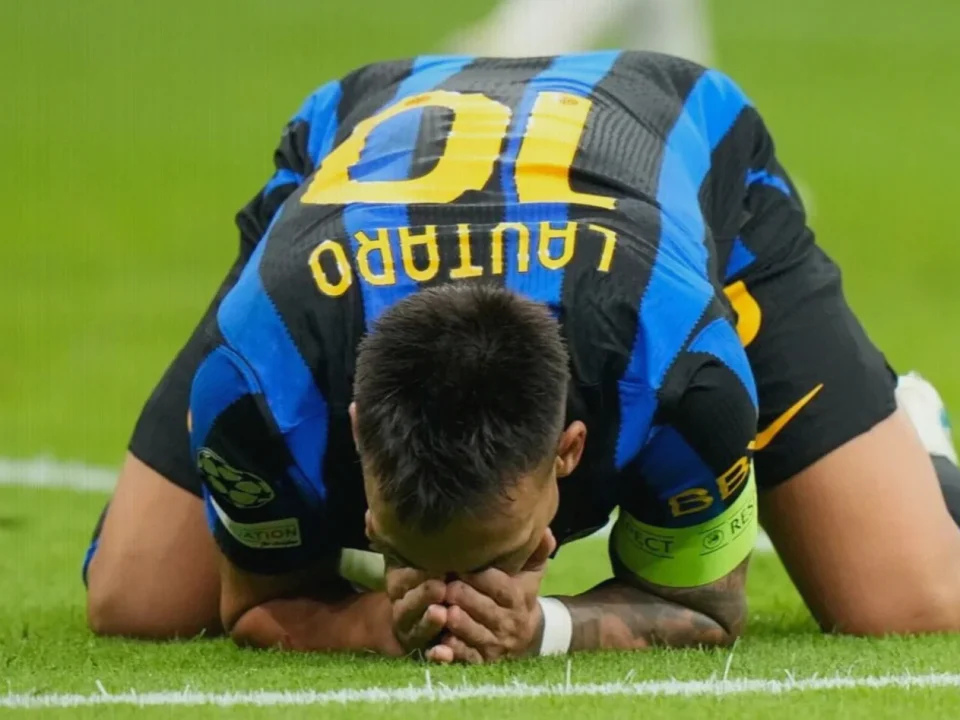
Chivu’s players did not retreat after falling behind. Their response carried personality and aggression, and Lautaro Martinez levelled shortly before half-time. By the interval Inter led the shot count 18-6, a figure that reflected their territorial superiority but not the danger Brugge continued to pose whenever they escaped the first wave of pressure.
Brugge punish Inter’s loss of control
The second half turned on Inter’s belief that the contest was already under control. Rather than managing their advantage in the flow of the game, they became increasingly exposed, and Brugge found the same route forward again. The visitors’ second goal, which followed an error by Josep Martinez, unsettled Inter completely.
There was then a Brugge effort against the post before Tresoldi completed his hat-trick for 3-1. In defence, Inter’s usual dependability deserted them: Manuel Akanji and Alessandro Bastoni were among those unable to restore order as Brugge attacked with growing conviction. The home side looked disoriented in and around their own penalty area, a sharp contrast to the control they had established through much of the opening hour.
Martinez again pulled Inter back into the match, but the comeback never developed into sustained momentum. Brugge’s fourth goal arrived on another break, the third successful counter of the evening, and settled a match in which their organisation and ruthlessness outweighed Inter’s volume of attacking play.
The encounter had the relentless rhythm that often separates Champions League nights from the domestic calendar: pressure was immediate, transitions were sharp and lost balls were quickly contested again. Yet the decisive difference lay in Brugge’s ability to turn those transitions into clear chances. Their system gave width to Virgili and Carlos Forbs, leaving Tresoldi alone through the middle and creating space for the two wide forwards to attack at speed. Inter could not recover once the Belgian wingers reached open ground.
There was also a physical contrast as the match wore on. Excluding the goalkeepers, Brugge’s starting side had an average age of 24.3, compared with 28.5 for Inter. The four-year gap was visible late in the evening, when Brugge continued to run into the spaces left by a home team whose energy and defensive clarity had drained away.
For Chivu, the concern is not simply the scoreline. Inter created enough to make the night different and Lautaro once again carried the responsibility of captain and scorer, but the ease with which Brugge exposed them will demand a response. In a season shaped by the accumulation of results, this was not merely a missed European opportunity; it was a reminder that Inter’s authority in Serie A will need to be matched by greater discipline when the game breaks open.