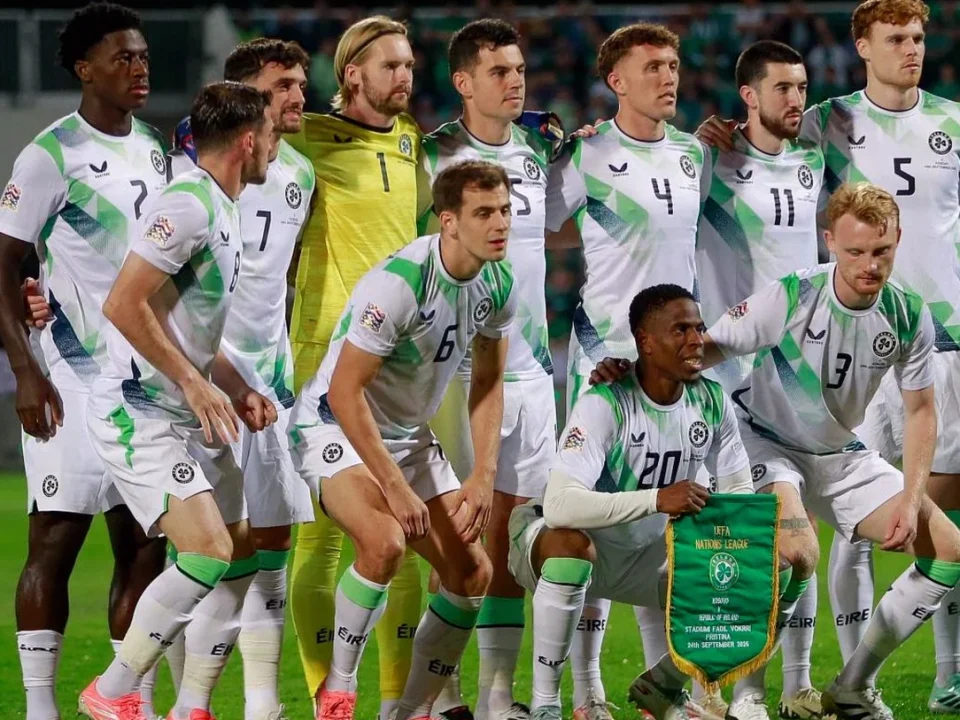
In Debrecen, where Ireland’s Nations League meeting with Israel is being staged on neutral ground, the football calendar has become inseparable from a deeper national argument. Hours of discussion inside the Irish team hotel on Saturday delayed both training and the pre-match media schedule by more than five hours, before the squad voted by a substantial majority to fulfil its two fixtures against Israel.
The decision did not come without an immediate personal cost. Goalkeeper Gavin Bazunu, 24 and serving as Ireland’s deputy goalkeeper, left the camp after deciding he could not take part. In a social-media statement, he said playing would conflict with his personal belief that the killing of innocent people is wrong. Bazunu stressed that his position was not directed at Israeli people or the Jewish community, but at what he called atrocities in the region, adding that some moments require people to stand for matters beyond sport.
Ireland manager Heimir Hallgrimsson confirmed that one player had departed while the rest of the group trained. He said the issue remained under discussion within the camp, with further talks expected, but made clear that Sunday’s game would go ahead. The association’s chief executive, David Courell, said one player’s unease about the match had prompted the wider squad to deliberate, before the vote produced clear support for continuing with the scheduled matches.
Courell said the Football Association of Ireland had therefore decided to honour the fixtures. Ireland are due to face Israel in Debrecen on Sunday, in a match designated as Israel’s home game, before hosting the return contest at Bačka Topola in Serbia on 4 October. Neither match will be open to travelling Irish supporters.
A gesture planned in Hungary
The Irish players intend to wear black armbands in memory of all those killed in the conflict. They will also decline to take part in elements of the pre-match ceremony, while asking not to undertake media duties around Sunday’s game because of the pressure of addressing subjects outside football.
The players and the FAI will make what Courell described as a significant charitable donation from their match fees, supplemented by proceeds connected to Ireland’s game against Austria in Dublin on 1 October. Irish public broadcaster RTÉ has also said it will restrict its output around both Israel matches to contractual minimums: there will be no studio presentation, international-feed commentary or analysis, and no advertising or sponsorship connected with the games. RTÉ additionally announced that Ireland would boycott the Eurovision Song Contest for a second straight year because of Israel’s participation.
The fixture originally listed as Ireland’s home match was moved abroad in June, with the FAI citing operational reasons and confirming it would be played behind closed doors. That decision followed sustained calls in Ireland for a boycott, and came after the association had submitted a motion to UEFA in November seeking Israel’s suspension from club and international competition.
Pressure carried from Dublin
Public opposition has followed the squad from the February draw through the present international window. More than 160 Irish athletes signed an open letter calling on the FAI to reconsider proceeding, while demonstrators gathered outside the team hotel in Dublin last week. Ireland’s SIPTU union displayed a large banner beside the River Liffey urging players to follow their conscience and not play amid the war.
Hallgrimsson said Ireland’s strong solidarity with Palestinians had created growing pressure on both the players and the association. Jason Knight, speaking after Thursday’s 1-0 defeat in Kosovo, said the squad had been placed in a difficult position and that he did not believe the fixtures should proceed.
The Icelandic coach had previously said Ireland were not “playing with genocide” but playing against it, because the opponent was Israel. The Israeli Football Association responded angrily, accusing Hallgrimsson of stupidity, ignorance and hypocrisy.
Former Ireland manager Brian Kerr argued that the FAI had lost public respect by maintaining the fixtures. He said Irish people and football supporters had made their opposition clear over the past year, and questioned why UEFA had not acted in line with the FAI’s earlier call for Israel to be excluded. The FAI, however, had resisted a boycott on the grounds that UEFA sanctions could be severe, with Ireland also preparing to co-host Euro 2028 alongside England, Scotland and Wales.