Rome begins another uneasy journey on Friday, when Italy welcome Belgium in the Nations League and attempt to turn the page after a sequence that has left even a four-time world champion looking fragile. The Azzurri have missed the World Cup in 2018, 2022 and 2026, each failure arriving through a knockout route, and Roberto Mancini returns to the bench with a public that has grown sceptical, tired and increasingly detached from the national side.
The match in Italy, scheduled for 15:45 Brasília time, opens a demanding League A1 campaign also featuring France and Turkey. All three opponents appeared at the most recent World Cup and arrive with more recent international standing than Mancini’s rebuilt squad. Italy then travel to Turkey and France before hosting the Turks in the next home fixture.
Mancini, the coach of Italy’s Euro 2021 triumph, departed after the team failed to reach the 2022 finals. His second spell begins with nine uncapped players and a clear effort to redraw the squad after years in which established Italian professionals have gone their entire careers without playing at a World Cup. Only six members of the 34-man group were part of the European Championship-winning side, a success that now stands as the country’s lone major moment of celebration over the past two decades.
A changing Italy and an urgent rebuild
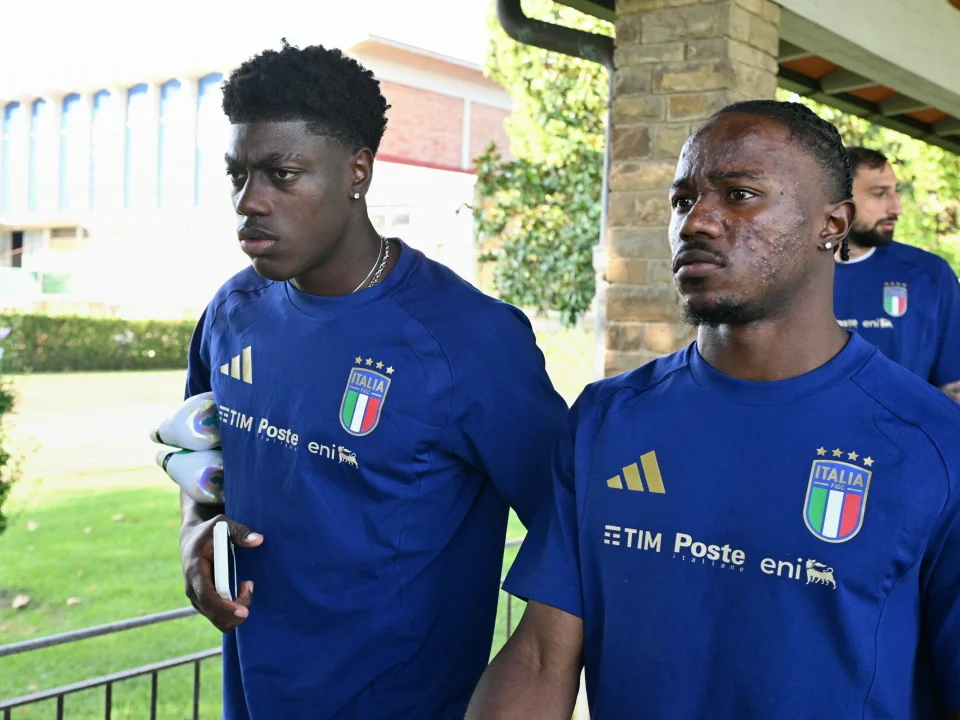
The newcomers are Pessina, Ghilardi, Romano, Sebastiano Esposito, Vergara, Michael Kayode, Kouadio, Doumbia and Zoma. Kayode plays for Brentford, while Caleb Okoli of Leicester is also involved with the national team setup. Mancini’s call-up reflects a changing country as well as a footballing need: six of the 34 players have African family backgrounds, the largest such representation Italy have had in a senior selection.
Kouadio, Doumbia and Zoma are among four debutants with African heritage. Crystal Palace defender Honest Anahor and forward Moise Kean complete the group of six. Italy’s demographic transformation has accelerated since the 1980s, when the country shifted from being chiefly a place of emigration to one of Europe’s principal destinations for new arrivals.
Massimo Franchi described the modern Italian side as part of a broader international change. “Italy is now cosmopolitan and ethnically multi-dimensional, like Europe, Brazil and Australia,” he said, drawing comparisons with England and France. “The world changes, and football teams change with it.”
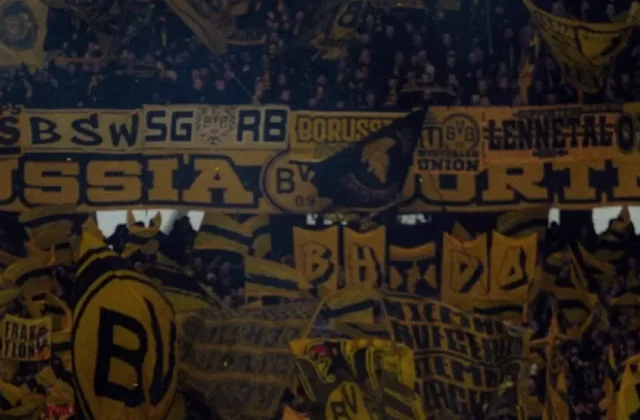
There is also a Brazilian link in the new group. Eighteen-year-old Borussia Dortmund attacker Samuele Inácio, son of former Napoli player Inácio Piá, has Brazilian nationality. Yet for all the fresh faces, Italy still lack a deep pool of forwards making a major impact across Europe. Inter’s young striker Pio Esposito is viewed as their leading attacking prospect.
The route to this point has been turbulent. Giovanni Malagò, president of the Italian federation, initially appointed Paolo Maldini as football director and brought in Brazilian former player Leonardo as an adviser. Their choice of Andrea Pirlo as head coach did not survive: Malagò blocked it amid public pressure over Pirlo’s commercial connections with a Russian state-owned company. Maldini and Leonardo then departed, and the structure was swiftly recast, with Claudio Ranieri installed as director and Mancini restored as coach.
That instability has compounded the mood around the team. Italy were beaten by Sweden in the 2018 qualifying playoff, at a time when Zlatan Ibrahimovic was retired from international football and recovering from a serious injury. North Macedonia eliminated them in the playoff for 2022, before Bosnia beat Italy on penalties in the route to the 2026 World Cup.
Esposito missed one of Italy’s penalties against Bosnia and later spoke openly about the impact. “I struggled to absorb the disappointment,” he said. “I was staring at one spot and could not understand what had happened; I was in shock. My first thought was that I had let down my teammates, the supporters at home, my friends and family.” He has since begun working with a sports psychologist, describing the conversations and practical guidance as helpful.
Sports psychologist Priscila Mendes said repeated eliminations can make a traditionally powerful national team play under the feeling that another mistake is intolerable. Fear of failure, anxiety, physical tension, impaired decisions and lost confidence can follow, she said; when fear of defeat outweighs the wish to compete, players may become inhibited, avoid risks and struggle with actions they usually perform naturally.
Italy’s federation has not publicised any psychological programme for the squad. Franchi said the subject remains deeply sensitive in a country where discussing mental support can be framed as admitting weakness after losses to sides such as Sweden, North Macedonia and Bosnia.
Belgium’s visit is therefore more than the first fixture of a Nations League group. In the streets and stadiums of Italy, another cycle begins under the weight of three absences from football’s greatest stage. Mancini’s task is to make a new generation believe that the next road will not end in the same place.