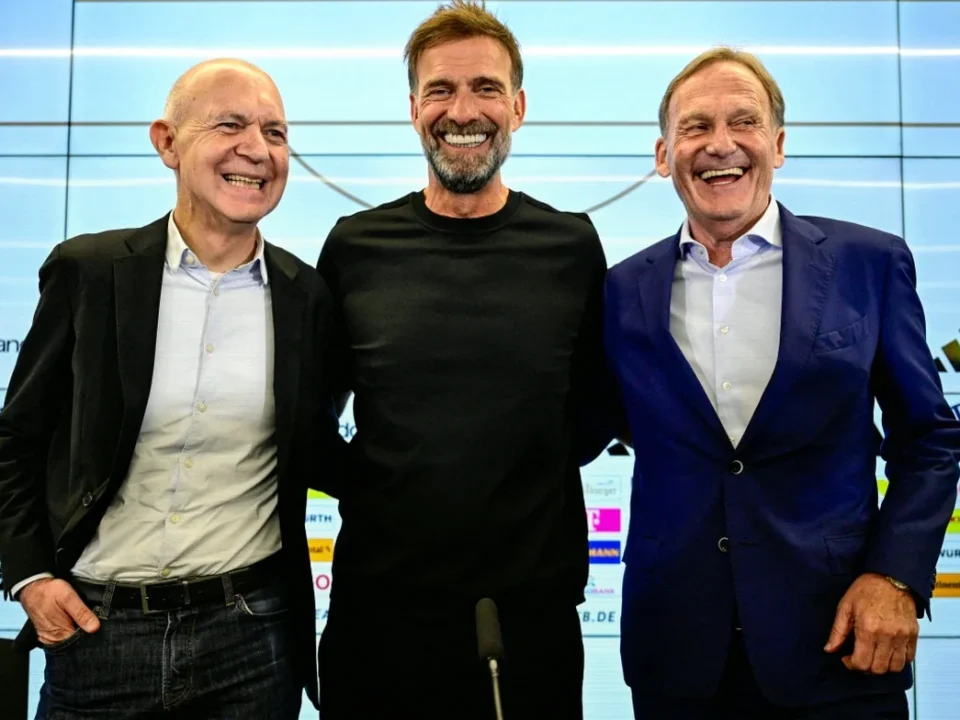
In Germany’s football cities, Jürgen Klopp has long been more than a coach who arrived with a touchline roar and a clear game plan. From Mainz to Dortmund, Liverpool and the television studios of major tournaments, he has built an unusually broad public presence. Now, as he begins work with the four-time world champions, Klopp takes charge of Germany with a mandate that extends beyond team selection.
A communicator before the national job
Klopp’s connection with German football’s public conversation began well before his major coaching successes. During the 1990s, while playing for Mainz 05, he spent three months as an intern in the regional sports department of Sat.1.
- Concerned that his playing career might not provide a long-term future, Klopp studied Sports Science at the University of Frankfurt while continuing his football career.
- At Sat.1, he learned practical television work, including producing and editing reports and conducting interviews.
- In 1992, he secured an interview with Dragoslav Stepanovic, then involved in a Bundesliga title challenge. Stepanovic had declined requests from a number of outlets, but Klopp’s earlier connection with him at Rot-Weiss Frankfurt helped open the door.
- Klopp played for Mainz from 1990 until 2000, beginning as a forward before also appearing at left-back and centre-back. He was a regular rather than a star for a club then competing in the second tier.
- After ending his playing career in 2001, he immediately became Mainz coach. The club would reach the Bundesliga for the first time in 2003-04 under his management.
His quick, engaging post-match remarks made him a popular figure with local journalists during his Mainz years. The ease with which he could make football understandable would later become central to his national profile.
Television debates and tournament analysis
In September 2001, Klopp appeared on DSF alongside Hannover coach Ralf Rangnick to discuss German football’s difficulties. The programme also featured 1974 World Cup winner Paul Breitner, who was then working as a television pundit.
Klopp and Rangnick argued that Germany had weaknesses in youth development and in teaching football as a collective game. Breitner challenged their assessment, insisting he did not want to “belittle anyone” and suggesting elite players possessed enough ability without needing to learn every detail of the game.
Klopp answered with good humour, saying the standard of the second division was “not that bad”. The two coaches would later become defining figures in the development of gegenpressing, a style that has had a lasting impact on German football.
- While coaching Mainz, Klopp returned to broadcasting for ZDF during the 2005 Confederations Cup.
- He then became a prominent analyst during the 2006 World Cup on home soil, using an interactive screen to stop footage and draw explanations directly over the images.
- Franz Beckenbauer, also part of ZDF’s World Cup coverage, praised Klopp’s ability to explain the game, saying: “The way he explains football is excellent.”
- A former ZDF sports editor said Klopp connected immediately with viewers, adding that even “a distracted grandmother” could understand his explanations and describing communication as his outstanding gift.
- His World Cup work reached audiences of more than 20 million people, turning the Mainz coach into a recognisable national celebrity who was regularly approached for autographs.
- Klopp continued analysing Germany matches, including friendlies, through Euro 2008, before taking the Borussia Dortmund job and focusing fully on coaching.
- He returned to World Cup broadcasting with RTL in 2010 and worked as a MagentaTV analyst at the 2026 World Cup.
From club success to a wider German project
Between 2008 and 2024, Klopp led Borussia Dortmund and Liverpool through two transformative periods. Across those roles, he won 13 trophies, including two Bundesliga titles, the German Cup, the Premier League, Champions League and Club World Cup.
His departure from Liverpool came in June 2024, when he cited exhaustion from the demands of the football calendar. From January 2025 until July 2026, he worked as Red Bull’s global head of football, a position that gave him experience across a wider sporting structure.
Germany now offer a different kind of task. Since lifting the World Cup in 2014, the national side have endured a difficult sequence of tournament disappointments. Klopp’s assignment is expected to involve more than naming squads and choosing a starting XI: he is being asked to help restore a recognisable German identity on the pitch.
He already sits on a German Football League expert committee examining subjects including possible improvements to player development. That interest echoes the concerns he raised publicly in the 2001 debate with Rangnick.
A 44-man start to the new era
Klopp opens his Germany tenure with an unconventional first international window. He has called up 44 players and divided them into two squads, with each group set to play two separate matches.
- Germany face the Netherlands on Thursday.
- They play Greece the following Sunday.
- Serbia are the opponents on 1 October.
- Germany meet Greece again on 4 October.
The four Nations League fixtures are the first practical test of a project carrying unusually high expectations. Klopp arrives with the authority of his club achievements, but also with two decades of experience shaping how Germany talks about its football.