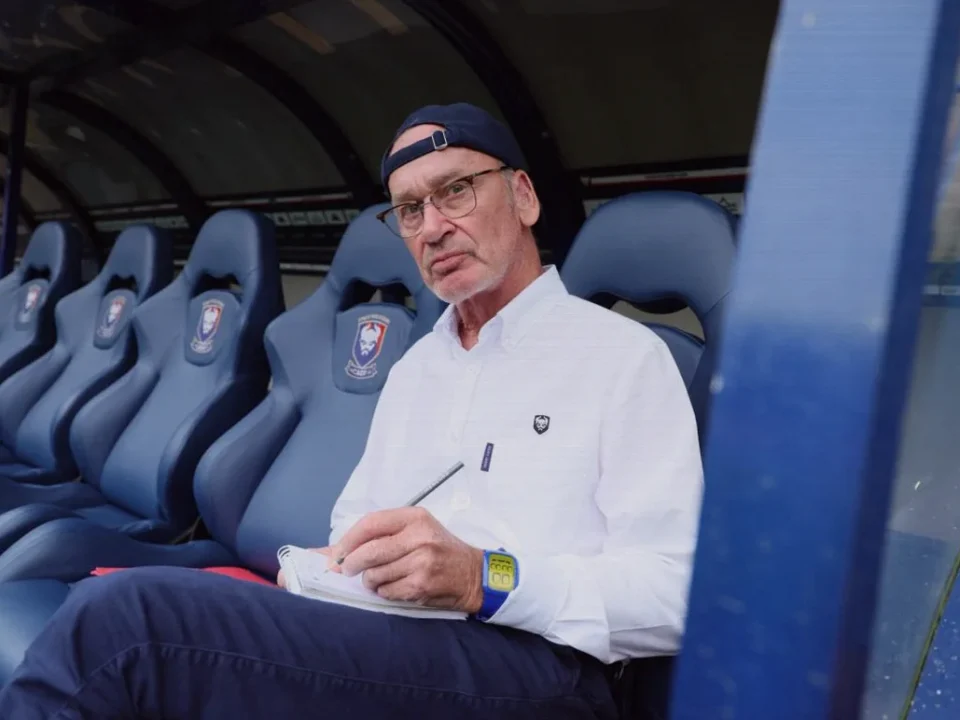
The noise around Jean-Marc Furlan faded after his final months at Caen, but the reason for that quiet is now being revealed by his family. The former French player and coach has been living with a neurodegenerative illness for several years, his wife Cécile Traverse Furlan writes in a new book.
Jean-Marc Furlan, le don d’une vie, written by Cécile Traverse Furlan with Clément Commolet, is due to be published on Thursday, October 1, by Amphora. The book, which carries a preface from Raphaël Varane, looks back on a figure who has been part of French football for almost half a century, while also detailing the illness that has removed him from public view.
Furlan left professional football in November 2023 after being dismissed by Stade Malherbe Caen, then a Ligue 2 club, following a poor sequence of results. His wife explains that his increasingly low-profile departure from the game was connected to his condition, particularly changes in behaviour that became harder to contain in an environment where public bluntness is rarely tolerated.
“I can feel the barriers breaking down in several areas, especially in his disinhibition and his lack of filters,” she writes. “In football, that is simply not allowed.”
Furlan had long been known for an unvarnished manner which could entertain as much as it unsettled. Traverse Furlan recalls players calling her after his media appearances, telling her that she might be angry with him but that he had made them laugh. That openness, she says, made it difficult for outsiders to recognise that some of what was happening during his Caen spell was not simply the coach behaving as he always had.
“Jean-Marc has always appealed to people because he was genuine and spoke his mind,” she says. “But I could not allow people to tell me that what was happening in Caen was just him. The more stress he felt, the more uninhibited he became.”
The book also raises the possibility that the illness may be connected to head injuries suffered during his playing career, as well as the sustained intensity of his years in management. It gives a painful explanation for the disappearance of a coach whose personality, directness and long presence had made him one of French football’s familiar voices.