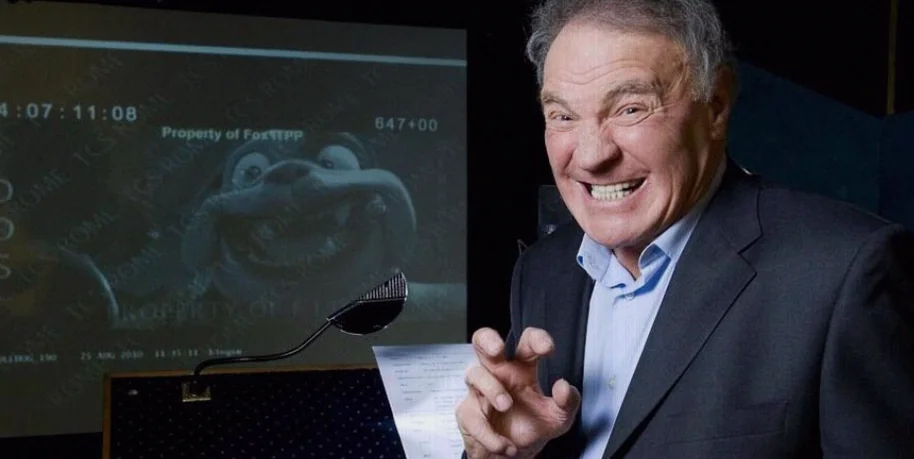
José Altafini’s story still belongs to Milan’s European history, but it has never been confined to one final at Wembley. At 88, the former striker looks back on a life that began with manual jobs in Brazil, crossed the Atlantic through football, and took him from Milan’s first European Cup to Napoli, television and a working life on the road in Italy.
José Altafini: the man behind Milan’s first European Cup
SEO Title: José Altafini recalls Milan’s 1963 European Cup triumph
SEO Description: José Altafini revisits Milan’s 1963 European Cup final, his departure for Napoli, his view of today’s Milan and life at 88 in Alessandria.
From Brazil to the centre-forward’s shirt
- Before football became his profession, Altafini had already worked in seven different trades: as a barber’s assistant, broom packer, furniture polisher, orange-drink factory worker, dyer, butcher and mechanic.
- He was living in Brazil, where he initially played as an attacking midfielder. His family roots, however, ran back to Caldonazzo in the Trento area and Giacciano con Baruchella, near Rovigo.
- Palmeiras signed him in an unusually modest deal involving two suits and two shirts. One of his coaches, Gonzales, then moved him into the centre-forward role, a decision that altered the direction of his career.
- In Brazil he was known as Mazzola, or Mazola, because of a resemblance to Valentino Mazzola, the Torino captain who died in the Superga disaster. In Italy, he became known simply as Altafini.
- Milan brought him to Italy in 1958. Altafini also remembers how the language surrounding football and his background was very different in that period, with newspapers publishing racist descriptions of his grandfather’s life on a plantation.
He says there are two things he would change. The first is his name: he would have preferred to be called Zezo, the name used by his mother, rather than living with the confusion between Mazola and Altafini. The second concerns his own approach to the game.
“I loved football, but it was not the only thing in my head,” he said. “I was never a great athlete.” He insists that this was not a question of women, having married at 20, but of a personality built around humour and practical jokes. That habit, he believes, meant people did not always take him seriously, even later in his broadcasting work.
The night Milan changed its European standing
The defining match of Altafini’s Milan career remains the 1963 European Cup final against Benfica. Milan won 2-1 after falling behind to Eusébio, with Altafini scoring both Rossoneri goals.
- On the eve of the final, Milan’s players watched Fulham. When a centre-half was injured, his coach pushed him into attack because substitutes were not available at the time.
- Altafini’s team-mates spent the evening teasing him, suggesting that a centre-forward was not especially important.
- During the final, Eusébio caused serious problems for Milan, particularly against Benitez.
- Cesare Maldini made the crucial adjustment on the pitch, moving Giovanni Trapattoni onto Eusébio because Nereo Rocco could not get instructions through from the bench.
- Benfica also played for a long spell with 10 men after an injury, and Milan recovered to take the trophy through Altafini’s two goals.
Altafini says his colleagues had revised their opinion of the striker’s importance by the end of the 90 minutes. Yet little physical evidence of that evening remains in his home. A supporter took his shirt after the game, and he does not know what became of his boots.
What has endured is a hard lump on his calf, caused by a kick from Humberto. Altafini spent the evening applying ice rather than celebrating. He also remembers a long embrace with Rocco after the final whistle. He told his coach he was happy for him, aware that Rocco was preparing to leave Milan.
Even that triumph is not, in Altafini’s view, the greatest emotion of his life. He gives that place to his second wife, with whom he has spent 50 years. “We were told to stay together for as long as we can,” he said.
A painful Milan exit and a lasting attachment
His departure from Milan remains a sore point. Altafini says that whenever the team lost, Gipo Viani would turn his anger towards him and tell him the defeat was his fault. Amarildo defended him on one occasion, but Altafini had already decided he wanted to be sold.
He moved to Napoli, although he says Milan never left his heart. It is the familiar tension of a long football life: a club can be both a source of glory and the place where a player feels he has been judged too harshly.
His view of Milan, Como and today’s forwards
Altafini measures great Milan sides by exceptional individuals. In his eyes, a truly dominant team is built around three major players, as Milan once did with Ruud Gullit, Marco van Basten and Frank Rijkaard.
He is less convinced by the current Milan squad, saying the club have added numerous players without finding enough figures who can give the side momentum. He does, however, rate Gila highly and points to the strength Milan had when Franck Kessié, Sandro Tonali and Theo Hernández were together.
His assessment of Rafael Leão is more severe. Altafini said he had grown tired of watching the Portuguese forward, believing that Leão can appear to play as though he is doing the audience a favour.
On Gonçalo Ramos, he offered a more sympathetic reading. Altafini said a striker cannot be blamed for a match such as Juventus-Milan when team-mates do not provide him with a single useful ball. He recalls experiencing the same problem himself and receiving criticism for it.
If he were playing now, Altafini believes he would respond by moving away from the penalty area, drifting wide or dropping deeper to find involvement. In his own era, he said, centre-forwards did not generally make those adjustments.
The Serie A side he most enjoys watching is Como. “They play wonderfully,” he said, before joking that the club would win the league if they signed him now because he had always brought success wherever he went.
Asked which individual player gave him the greatest pleasure, he chose Ronaldinho rather than Pelé. He added, with characteristic humour, that he intends to watch Ronaldinho when he plays for Ravenna.
Life at 88
Altafini lives in Alessandria and says he did not earn the kind of money available to modern players. He receives a social pension of €900 and continues to work for Italgreen, a company involved in artificial-turf pitches.
- He first met the company’s owner at an event several years ago.
- He now acts as a testimonial and, in his words, almost as an executive for the business.
- His work regularly keeps him in the car, sometimes covering 300 kilometres in a day.
- He says driving changes his state of mind because it gives him space for his thoughts: “The car is like a home to me.”
Football remains present in the family. Altafini and his wife have more than 10 grandchildren between their two families. One grandson, the son of his daughter and based in Brazil, is a young footballer who is said to strike the ball very well.
He once considered building a small pitch at home, but his wife refused on the grounds that she did not want to play. He also admits that being called “grandfather” makes him feel old, even if the irritation soon passes.
There is one final image that joins Italy and Brazil in his imagination. Altafini has said he would like his ashes scattered in the River Po, because the river reaches the sea and, perhaps, could somehow carry him back towards Brazil. At 88, asked what remains to be done, he pauses before answering: “I need to think about it.”