Juventus have reached the middle of October with Luciano Spalletti still in charge, but the discussion around the club has already moved beyond the next fixture. That alone underlines the pressure on a coach whose position is not regarded as immediately under threat, yet whose longer-term future will depend on whether the team begins to show clearer progress.
Chief executive Giovanni Carnevali has repeatedly indicated that Juventus intend to continue with Spalletti, and the club’s preferred course is not to make an instant change on the bench. The calculation could alter only if results and performances deteriorate sharply in the coming weeks, with warning signs already having emerged.
Spalletti’s objectives remain decisive
A return to the club’s season targets would calm the situation. Juventus want qualification for next season’s Champions League, while also seeking to advance as far as possible in the Europa League and Coppa Italia. If those ambitions remain within reach, the coaching debate would be put aside until later in the campaign.
Only an exceptional turnaround would be likely to turn Spalletti’s renewed contract into a guarantee beyond the season. Otherwise, Juventus could assess their options in the coming months, as they look not merely for a technical solution but for a figure capable of leading the entire dressing room.
Should the present situation become untenable, the club would have two broad routes. One would be to appoint a coach for a new long-term project, with Antonio Conte the sole name currently viewed in that category. The other would be a temporary appointment, a more difficult profile to find because it would offer no certainty beyond the short term. Stefano Pioli could fit that second scenario.
Inzaghi’s case for a future role
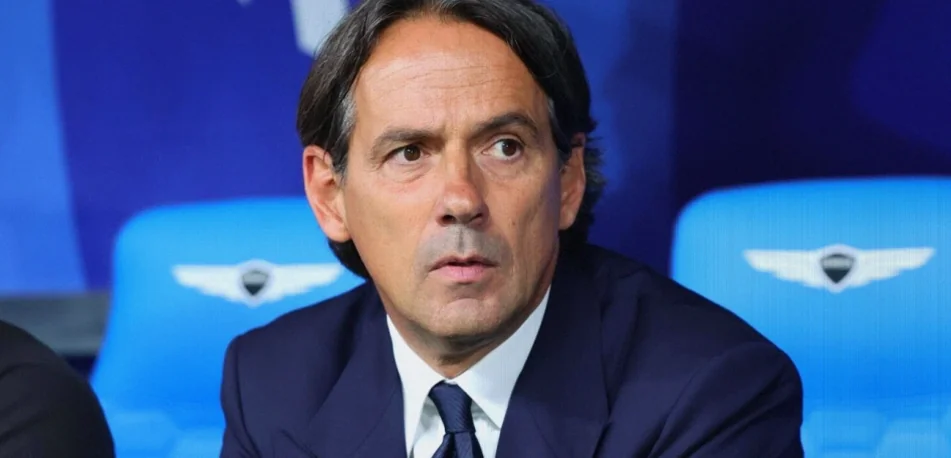
If Juventus recover their course and postpone the decision until the end of the season, Simone Inzaghi is seen as one of the strongest candidates, potentially at the top of the list alongside Conte. There are differing internal views on Conte, while Inzaghi’s appeal rests on his record of quickly reading a club environment, improving players and working within the practical demands of the board.
His work at Lazio and Inter has provided evidence across two markedly different settings. At both clubs, he earned the confidence of his squad, built groups with a sense of collective development and handled both emerging talent and established stars. He has been prepared to impose discipline when required, while publicly shielding his players.
That combination could carry particular weight at Juventus, where recent seasons have often given the impression of a fragmented group lacking figures able to bring it together. Inzaghi is not presented as a coach who simply seeks friendship with his players. His reputation is for balancing authority with personal management, confronting problems directly and ensuring that individual priorities do not override those of the team. Players unwilling to accept that principle are corrected or moved on.
Juventus are seeking leadership from the bench as they await more leaders on the pitch. Inzaghi’s supporters believe he could offer it.
A record of trophies and value creation
Inzaghi’s Italian career has brought substantial silverware. With Lazio, he won the Coppa Italia once and lifted two Italian Super Cups. At Inter, he added a Serie A title, two Coppa Italia trophies and three Super Cups.
There have also been disappointments. One league title slipped away amid errors for which he bore some responsibility, as well as unfavourable moments during the campaign. His Champions League final defeats remain part of the picture: the loss to Paris Saint-Germain was followed by controversy surrounding his rapid move to Saudi Arabia, which overshadowed Inter’s impressive progress against Bayern Munich and Barcelona. The final against Manchester City was another painful near miss, decided in part by serious individual mistakes.
Yet the overall assessment remains positive because his teams have not only competed and won; they have also increased the value of players and strengthened the clubs he served. In Rome and Milan, he left behind healthier sporting situations than those he inherited, developing footballers through his work and attracting attention from leading European sides.
For Juventus, that blend matters. The club need results without losing sight of financial balance. Inzaghi has shown that he can argue forcefully in internal meetings when necessary, but he is also careful in public and accustomed to seeking the best from the squad assembled for him rather than making missed signings a public grievance.
A rebuilding task in Turin
Inzaghi understands Juventus’ economic constraints and would know that the first two years could require sacrifices and targeted recruitment rather than lavish spending. A return from two years in Saudi Arabia could also make a salary compatible with Juventus’ current structure possible, potentially with greater incentives tied to results.
The prospect would offer him a distinctive challenge. At Lazio, expectations were lower; at Inter, he succeeded Conte after a title-winning cycle. Juventus would present a more demanding reconstruction, but also the chance to restore a club that has not won a European trophy since 1996, with the European Super Cup following in 1997.
Inzaghi is understood to want a return to Italy and a new domestic project. Juventus, meanwhile, want to rebuild a winning identity in Europe as well as at home. For now, Spalletti still has the opportunity to steady the season and close the issue. If he does not, the next months may define the direction of Juventus’ next cycle.