The Knicks are heading into the new season without Mitchell Robinson, their longest-serving player and a key reserve on the championship club. Robinson’s move to Boston adds an extra edge for New York fans, but the roster math suggests the frontcourt may have more lineup paths than it did a year ago.
New York kept the bulk of its title rotation and replaced Robinson with Andre Drummond on a minimum contract. The bet from Leon Rose and the front office is not that Drummond can duplicate Robinson’s game, but that a deeper roster can cover the minutes in different ways.
Quick facts
- Mitchell Robinson departed for the Celtics on a three-year, $47.4 million contract.
- Matching that offer would have carried New York over the second-apron threshold.
- Andre Drummond joined the Knicks on the minimum.
- Robinson logged 19.6 minutes per game in the regular season and 13.9 in the playoffs.
- Drummond made 32 of 90 three-point attempts last season and has cleared 60% at the foul line in consecutive years.
- New York retained Jose Alvarado, Landry Shamet, Jordan Clarkson and Mohamed Diawara.
Robinson remains the better defensive center. His rim protection and ability to survive away from the basket gave Mike Brown a useful counter against perimeter-oriented offenses, including his late Game 2 Finals possession against Victor Wembanyama.
But his role had limits. Robinson was not a 30-minute fixture, with injuries and free-throw concerns narrowing the situations in which Brown could leave him on the floor.
Drummond brings a different bench-center package. He remains a high-level rebounder, while offering quicker reads as a passer and more functional offense beyond dives to the rim.
He can work as a screener and roller, facilitate from handoff actions or space to the corner. Nobody will confuse him with Karl-Anthony Towns as an offensive hub, but those options give Brown more flexibility with second units than a pure rim-running big.
The larger variable is Brown’s willingness to keep pushing unconventional groups. His title run included the Game 4 Finals comeback lineup featuring Jalen Brunson and Alvarado together, and he previously closed a win over Philadelphia with OG Anunoby at center after Towns fouled out against Joel Embiid.
Anunoby at the 5 is one lineup worth expanding during the regular season. It puts five shooters on the court, makes switching easier and gives New York another answer when matchups call for speed rather than size.
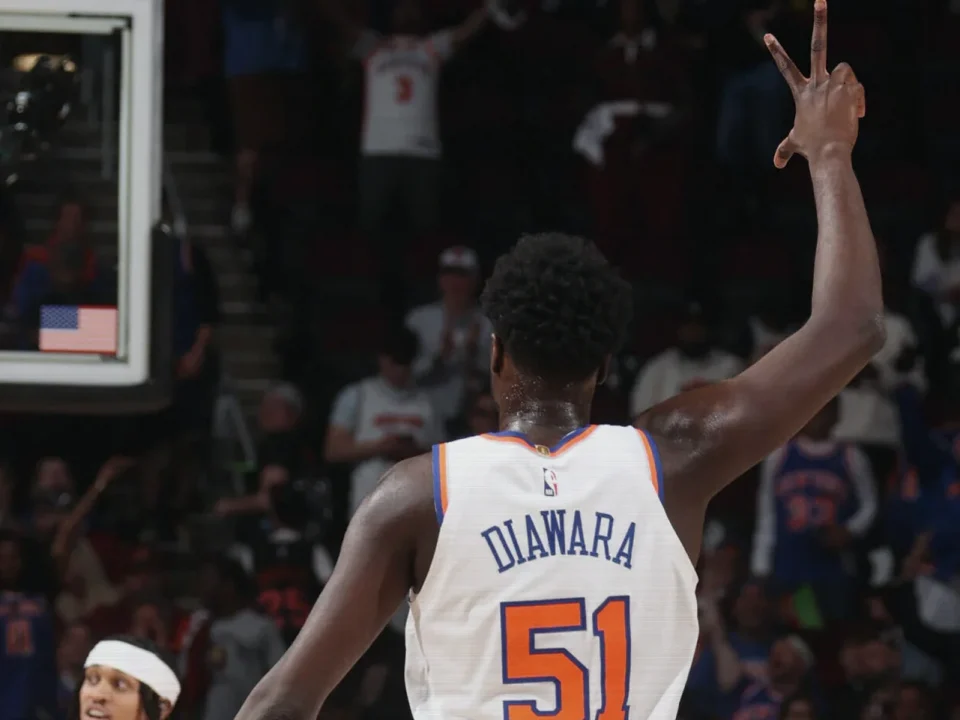
Diawara could also enter that frontcourt mix. The rookie hit 37% from three, and his 7-foot-4 wingspan gives him defensive range that could translate beside a traditional center at power forward.
Training camp will help sort out other options. James Wiseman and Drew Eubanks are candidates for the minutes where New York needs a direct rim runner and a bigger body around the paint.
Keeping the supporting cast mattered as much as adding a replacement center. Alvarado, Shamet and Clarkson preserve ball-handling and shooting, giving Brown more ways to build smaller groups around Towns, Anunoby or Drummond.
Robinson’s departure is still a real loss, particularly on defense and as an emotional link to the earlier Knicks teams. Yet New York does not need Drummond to reproduce every Robinson possession for the frontcourt to hold up; it needs its depth, shooting and lineup versatility to make the difference.