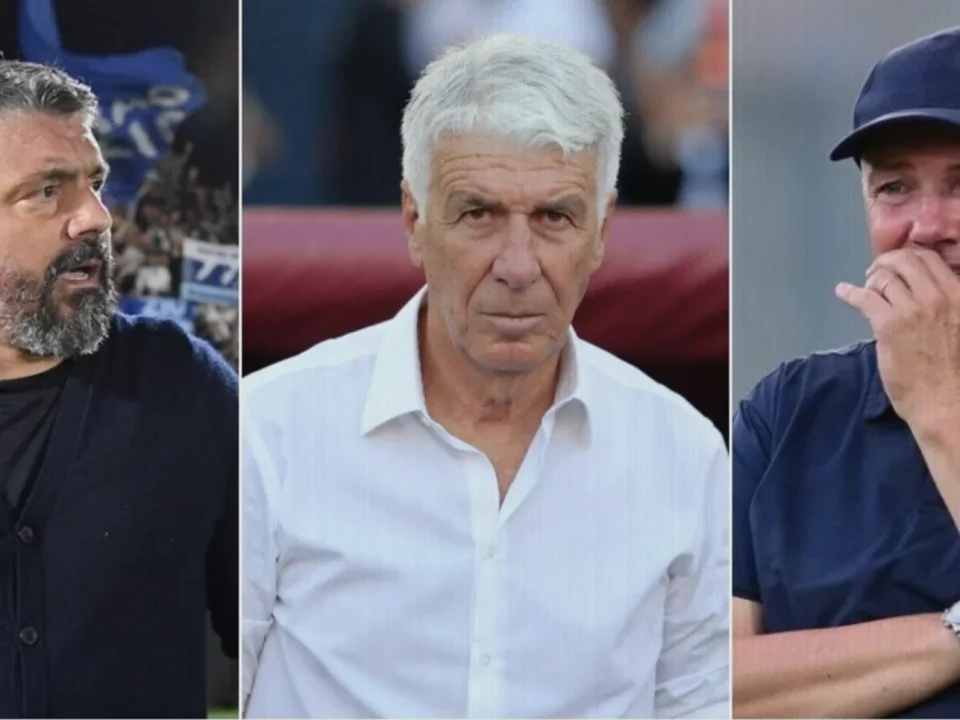
Five rounds have given Serie A an unusually broad early cast: Lazio have made the strongest opening, Roma have offered the most convincing football, while several of the division’s established powers are still searching for the authority expected of them. The coming 19-day pause will feel long, particularly after a month in which coaches and newly assembled squads have already begun to define the season’s first arguments.
Key takeaways
- Lazio lead the table with 13 points from a possible 15 under Gennaro Gattuso.
- Roma, alongside Cesc Fabregas’ Como, have been among the most attractive sides of the opening weeks.
- Frosinone and Cagliari have emerged as the early outsiders through bold, collective football.
- Inter remain the benchmark despite conceding too freely, with Lautaro Martinez setting the tone.
- Atalanta, Napoli, Juventus and Milan have all left room for concern despite differing league positions.
An early table shaped by renewal
Lazio’s place at the summit has been earned rather than borrowed. Few would have forecast such a start in the summer, yet Gattuso has guided the side through difficult circumstances and revived both performances and confidence. Nuno, Noslin, Belahyane and Mandas have all benefited from the new environment, while the team’s football has been effective without losing its purpose.
Roma have perhaps made the clearest aesthetic impression. Their game has carried aggression, defined ideas and individual quality, with Donyell Malen, Paulo Dybala, Manu Koné and Mile Svilar the central figures so far. Como’s defeat does not alter the favourable view of Fabregas’ work either; they remain among the teams to have imposed a recognisable identity on matches.
Inter have reaffirmed their status near the top of the championship, even if the number of goals conceded remains an issue to address. Cristian Chivu also needed time last season before reducing the mistakes at the back, and there is a sense that this group still possess the strongest overall level. Lautaro Martinez has been especially notable, combining output with relentless commitment and leadership in his approach.
The first month’s major surprise has been Alvini’s Frosinone. They have played without inhibition, with the feel of a group wholly committed to one another. Kvernadze has shown considerable talent, Calò has brought refinement in possession, and Raimondo has continued the promise he showed earlier in his career at Bologna and during his spell at Ternana.
Cagliari deserve to be placed in the same conversation. Pisacane has had to work with a squad substantially rebuilt from last season, but the team have already displayed spirit and a range of solutions. Maldini has settled quickly, while Caprile, Mendy, Romano, Deiola and Adopo have provided the side’s strongest foundations.
Fiorentina, meanwhile, have started again well under Vanoli. The defensive phase remains imperfect, but the squad’s technical resources are clear and there is visible room for improvement. The early evidence suggests the club are more than capable of being coached into a stronger collective.
Questions for the traditional contenders
Juventus and Milan have accumulated points without consistently convincing. Juventus showed marked improvement in their latest outing and Luciano Spalletti has the experience to correct shortcomings over time. Milan’s situation appears less settled under Amorim, who has not been given enough support and whose work can sometimes look like the application of a theory rather than the patient formation of a team.
Atalanta under Maurizio Sarri and Napoli under Massimiliano Allegri have been more disappointing still. Napoli reflect a wider mixture of anxiety, expectation and old prejudice around the club. Their squad is over 31 on average, their rhythm has resembled a diesel Mercedes rather than a fast-moving title challenger, and injuries have damaged them much as they did last year.
Allegri has several possible areas in which to intervene, but his task is made harder by the absence of the additions he had expected. Napoli needed a defender and a forward of genuine level; both had been promised, and both are now playing elsewhere.
Bologna are attempting to repair the consequences of a summer in which important elements were removed from the squad. Their choice of Domenico Tedesco ended before he was given enough time to demonstrate his abilities, with the group ultimately rejecting him. Venezia’s position is even crueller: Giovanni Stroppa’s side remain on zero points despite performances that have been far better than their return suggests.
Beyond the league, Roberto Mancini’s initial Italy selections should be read as part of a longer rebuilding plan. The Nations League can provide a developmental route for a new cycle, ideally without the defeats that would immediately create public resistance. After three successive eliminations, the national side can no longer simply reward players on the basis of an established path; repeated, painful failures have changed the standard by which the shirt is judged.
The international break arrives amid wider institutional tension involving CONI, the government and Giovanni Malagò, but Serie A has at least supplied emerging players, renewed teams and several compelling protagonists. The month also ended with an ugly moment at the Stadium, where a number of Juventus supporters turned their backs during the minute of silence for Sandro Mazzola. Such behaviour only magnified the stature of the former champion being remembered.