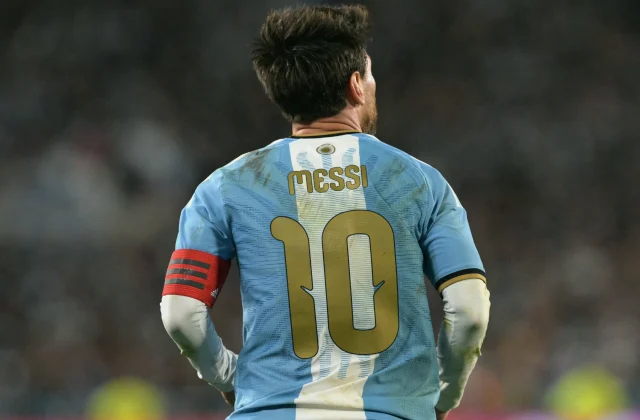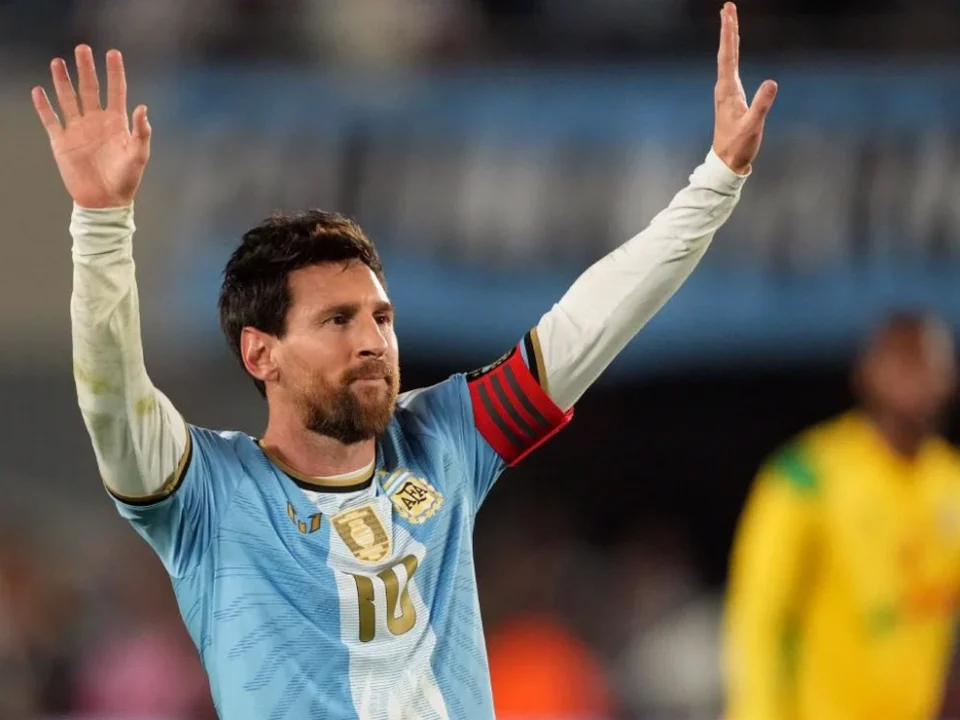
In Buenos Aires, the prospect of Lionel Messi’s farewell to Argentina is being felt as more than the departure of a great player. It points toward the end of an international era, and places the World Cup winner alongside the rare football figures whose final appearances became occasions of collective memory across continents.
The game has repeatedly found its own ceremonies for such departures: rain, tears, stadium laps and words that outlasted the match itself. Pelé, Diego Maradona, Zinedine Zidane, Francesco Totti, Andrés Iniesta and, more recently, Mexico goalkeeper Guillermo Ochoa each left behind a farewell scene with its own setting and symbolism.
Pelé’s goodbye came in 1977 at Giants Stadium, where 77,000 watched in wet conditions as he played one half for the New York Cosmos and the other for Santos. He scored his final goal during the occasion, a meeting remembered for the rain falling around football’s first global icon.
Maradona had already ended his playing career in 1997 when Boca Juniors’ Bombonera hosted his tribute in 2001. Surrounded by leading names from the sport, he delivered the line most closely associated with that night: “The ball is not stained.” His last official game for Argentina had arrived much earlier, against Nigeria at the 1994 World Cup in the United States.
Farewells from Madrid to Rome and Barcelona
Zidane’s final Real Madrid appearance at the Santiago Bernabéu in 2006 was marked by a special-shirt tribute. His farewell as a player, however, would be completed with France in that summer’s World Cup final in Germany.
In Rome, Totti’s 2017 departure carried the weight of an entire career spent in one shirt. After 25 seasons and 786 appearances for AS Roma, the captain broke down during his farewell at the Stadio Olimpico. He made a lap of the pitch, handed his armband to a younger player and admitted to supporters that, for once, he was afraid and would need them.
Iniesta’s Barcelona ending in 2018 was quieter but no less striking. After winning La Liga, he remained alone on the Camp Nou pitch long after the stadium had emptied, sitting on the grass into the early hours as his time with the club came to a close.
Ochoa’s tribute unfolded in Los Angeles at the Memorial Coliseum under the message “Thank You, Memo!” The Mexican was given the honour of lighting the Olympic cauldron and received a commemorative plaque after becoming the first Mexico goalkeeper to reach six World Cups and 154 international appearances.
His formal farewell on the field came on 24 June 2026 at the Estadio Azteca, during the World Cup group stage. Ochoa entered as a substitute in Mexico’s 3-0 victory over the Czech Republic, closing an international career that had stretched across six editions of the tournament.
Messi’s coming departure from Argentina now belongs in that lineage. The precise shape of the occasion remains to be written, but the history of the game suggests that when its defining figures leave the international stage, a country’s stadium can become a place for more than a result.