Italian football’s latest midweek debate was not about a result or a selection, but about whether the game’s financial safeguards are capable of protecting its seasons before they unravel. At the Chamber of Deputies, the scale of the issue was set out in stark terms: 209 clubs have collapsed under debt between Palermo’s 1986-87 failure and the more recent case involving Ternana.
The decision
The Commission for the Verification of the Economic and Financial Balance of Professional Clubs presented its first findings after beginning work in October 2025. Established by the government amid objections, particularly from sporting institutions, the body is chaired by Massimiliano Atelli and examines the accounts of leading professional football and basketball clubs.
Its work has already been extensive, with 1,558 routine inspections and a further 1,130 checks linked to admission requirements. The wider record is troubling: more than nine out of every ten club failures occurred in Serie C, a division where financial disorder can quickly become terminal. Since 2007-08, deductions imposed across the system add up to 930 points.
Lazio were among the clubs affected by the new scrutiny. Their summer transfer business was restricted to a zero-balance market after they failed to meet the requirements of the Expanded Labour Cost Index.
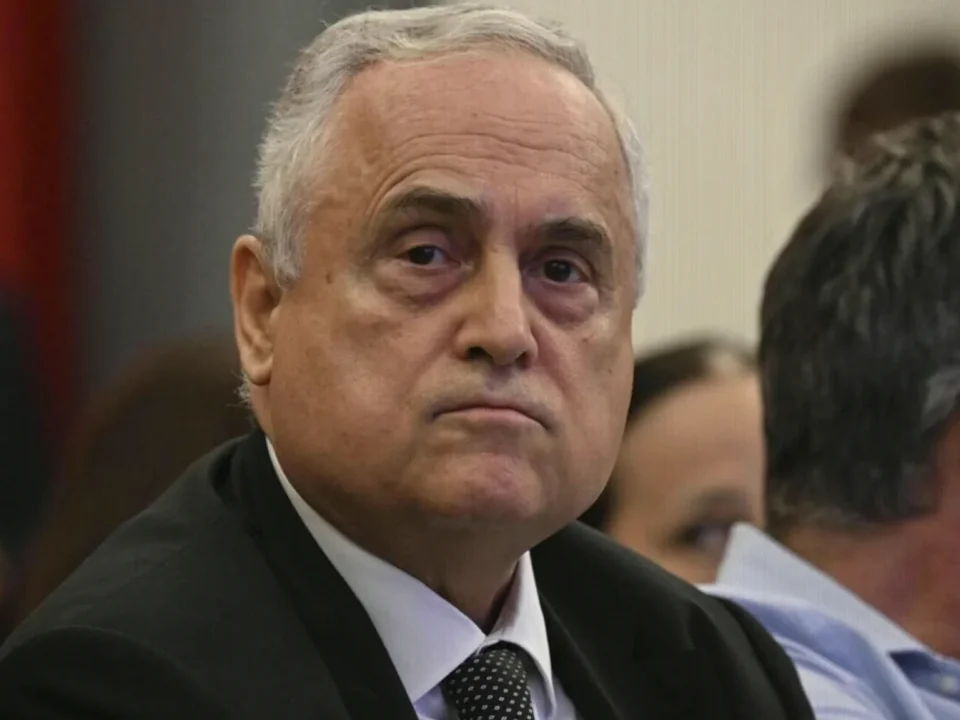
Claudio Lotito, Lazio’s owner and a senator, accepted that the regulations must be respected but argued that Parliament should revise them. He questioned why Italian clubs cannot exercise purchase options at any point in the year, as clubs in other leagues can. He also pointed to the additional cash burden faced domestically: a €10 million player can cost more than €12 million once VAT is included, before guarantees are considered. In his view, that structure encourages recruitment abroad, where less cash is required in advance.
Lotito, who has supported the appointment of a commissioner to run the FIGC, declined in public to address the registration issue concerning Giovanni Malagò. After the event, however, he held a lengthy discussion on the subject with league presidents.
The commission’s report identifies a central weakness in the present arrangement. The two federations, football and basketball, set the financial criteria used by the body that subsequently monitors their clubs. The report argues that the current capital indicators do not adequately demonstrate that a club admitted to a competition can actually complete it.
The FIGC, particularly during Gabriele Gravina’s presidency, has maintained that the replacement of Covisoc has increased costs. The commission has instead sought broader powers from Parliament and considers the investigative role of the federal prosecutor unnecessary in this area.
Atelli rejected the idea that greater public supervision automatically threatens sporting independence. He said the concept of autonomy is often taken too far in Italy, noting that state oversight is stricter in England and Germany.
The commission sees a sector changing rapidly, with foreign ownership now present at 20 of the 96 clubs under consideration. Yet it also describes a system under pressure, as operating costs rise faster than production value. Atelli said tougher checks on the integrity requirements of owners and directors will be needed.
Sports Minister Andrea Abodi, seated alongside the other institutional representatives, has become increasingly convinced of that need. Last season, Foggia, Crotone and Juve Stabia were placed under judicial administration because of criminal infiltration concerns.
The figures offered in Rome therefore carry consequences beyond balance sheets. They concern whether clubs can reach the final Sunday of a campaign intact, and whether Italian football can prevent the next crisis rather than merely count it afterwards.