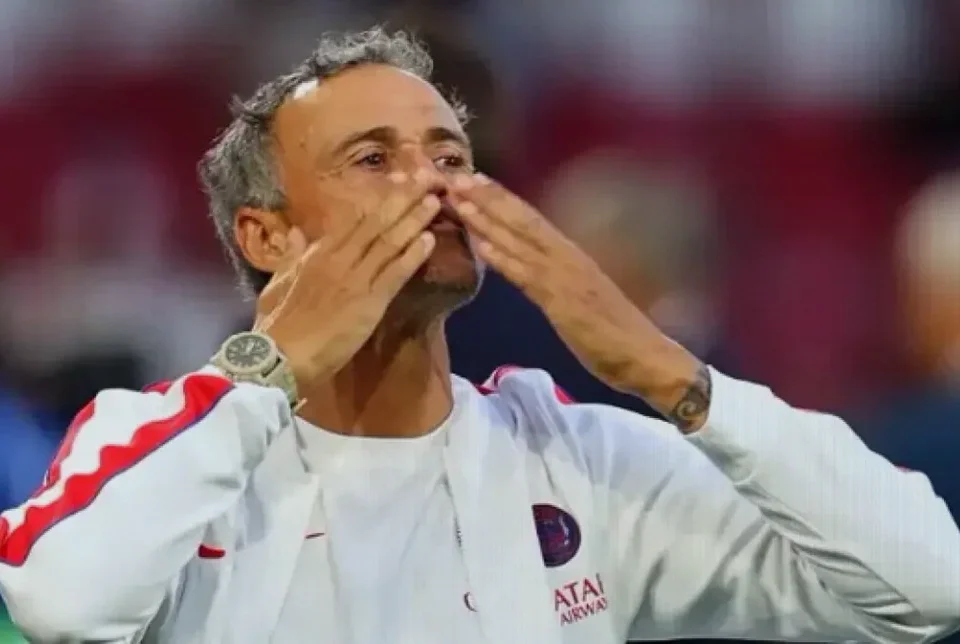
In Paris, where the club’s horizons have grown as wide as its ambitions, Luis Enrique has tied his future more firmly to Paris Saint-Germain. The Spaniard, now in his fourth season at the Parc des Princes, has spoken of a bond with the city, the squad and the club’s leadership after his contract extension through to 2030 was formally marked by PSG.
The agreement was announced on 4 September, and the club released the manager’s interview on Monday after Saturday’s 3-1 victory over Le Mans. Luis Enrique arrived in the French capital in July 2023 and is now enjoying the longest uninterrupted spell of his coaching career, exceeding his previous stays with Roma, Celta Vigo, Barcelona and Spain.
“Paris is different; it is special,” he said, describing the confidence placed in him by the club, president and sporting adviser Luis Campos. The relationship with Campos, he explained, was immediate and has become central to PSG’s progress.
Luis Enrique recalled a principle he had expressed while managing Spain: results can bring defeats, missed qualification campaigns and disappointment, but a team must still believe in the method that gives it the best prospect of winning. That conviction, he said, has found a rare home in Paris, where he feels a genuine connection with both supporters and the institution.
Although he is not French, the 56-year-old said he hopes to retain a link with the city for the rest of his life. PSG’s initial mission under his leadership, he added, was to make history, driven by the persistent urge to compete and win.
A competitive identity in the capital
The manager framed that appetite in everyday terms, from a padel match against Achraf Hakimi to training sessions and matchdays. He wants PSG to be known as a respectful, brave and ambitious side, full of gifted footballers, capable of winning while enjoying the game.
For Luis Enrique, that pleasure should reach beyond the dressing room. He wants young people to see that football can be played with joy and success at once, while supporters should leave entertained by what they have watched. He said people with no previous attachment to PSG have told him they enjoy the team’s football over the last two or three years, praise he considers especially meaningful.
He also rejected the idea of the coach as an unceasing instructor. Players must grasp the team’s structure well enough to choose the right response themselves, he said, and must bring their own answers to the problems that emerge during a match.
Preparation remains important, including studying likely game situations and the opposition’s responses, but responsibility cannot rest solely with the technical staff. Once the game begins, Luis Enrique said, the players have to recognise what is developing on the pitch and act accordingly.
He acknowledged that the widening age gap between himself and the younger members of the squad gives him “a little fear,” yet pointed to his record of building strong relationships with players. Humour, closeness and shared moments give him energy, he said, recalling that Vitinha sometimes cannot tell whether his coach is joking. Luis Enrique’s answer, he said with a laugh, is that it depends on Vitinha’s interpretation.
Every player requires a different form of communication, he added: encouragement for some, a firmer demand for others. Finding that balance is one of the parts of management he finds most compelling, particularly in a side he sees as continually evolving.
Trust with Campos
The PSG coach returned repeatedly to his partnership with Campos, recalling a recent conversation with his son Pacho about the day the sporting adviser came to his home at the beginning of their collaboration. Though they did not yet know each other well, Luis Enrique said he quickly sensed Campos trusted him and wanted to build something significant for the club.
That level of understanding surprised him positively and became an important moment in his Paris story. He has worked well with sporting directors before, he said, but regards this relationship as especially intense. For a coach, he argued, the best environment is one built on trust and collective progress.
A sporting director must also be brave enough to recruit players suited to the coach’s ideas, Luis Enrique said. He believes his own football vision and Campos’s are closely aligned, and views that shared outlook as one of the reasons for PSG’s success.
He has little interest, meanwhile, in measuring himself against fellow coaches or adding trophies merely to surpass their records. Managers should follow their own path rather than imitate what has worked elsewhere, he said, and should ask whether their team plays—and even loses—in a manner they can accept.
Defeat, he added, forces reflection. While he remains determined to win more silverware, he accepts that losing will eventually come and that another coach, club and family will then have their own moment of happiness. In Paris, however, his extended contract gives him more time to pursue the winning identity he believes PSG can sustain.