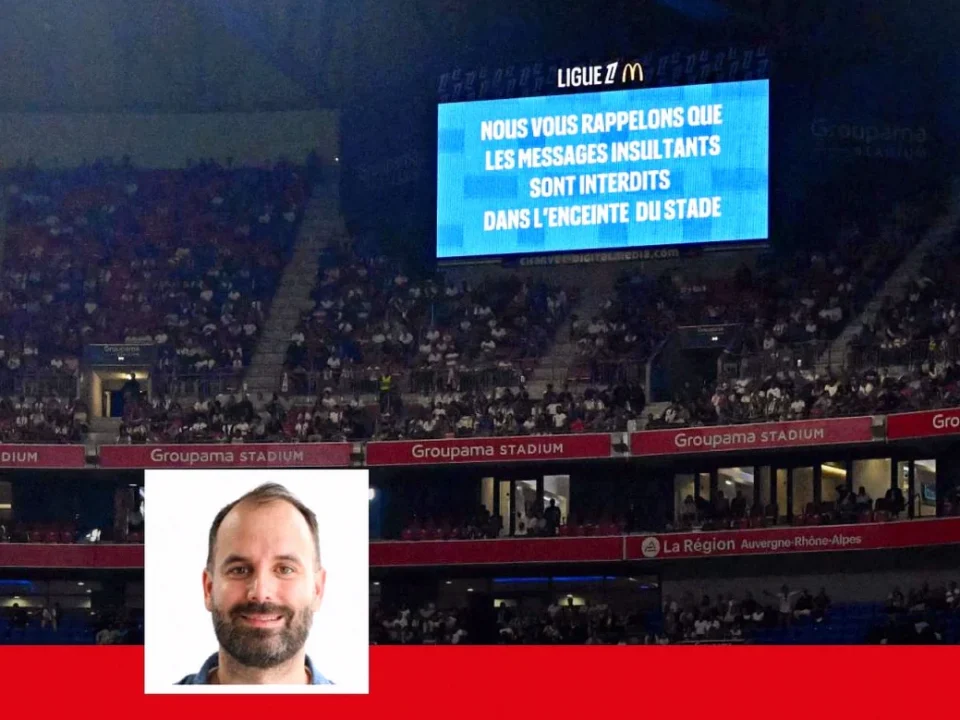
For 36 minutes, Lyon’s 4-0 win over Rennes on Saturday moved along without incident. Then the game was halted after officials noticed an offensive banner in the north stand, turning a one-sided Ligue 1 evening into another debate about how French football responds to behaviour in the stands.
The banner targeted Saint-Étienne, Lyon’s historic rivals, and used a vulgar Spanish insult. It had reportedly been displayed around 40 minutes before kick-off, but the match was only stopped in the 36th minute after the delegate alerted the referee. Play resumed following the interruption.
There is little ambiguity over the crude nature of the message. The question raised by the episode is whether a stoppage was the most effective response, particularly when it disrupts players, staff and thousands of spectators who bear no responsibility for the banner.
Ligue 1 has repeatedly faced interruptions in recent seasons, notably in cases involving objects thrown from the stands. Match officials and clubs have a duty to act against discriminatory, racist or sexist conduct, while stadium security systems can help identify those responsible. But an isolated insulting display presents a different practical dilemma: stopping the match can hand disproportionate influence to a small number of supporters.
A wider question of consistency
The Lyon incident also arrives amid renewed scrutiny of language around the game itself. On Saturday, Angers’ fitness coach was heard urging players to be “soldiers” and “killers” in the tunnel before a match. The words came before kick-off, outside the scope of any in-game stoppage procedure, but they underline the difficulty of drawing consistent boundaries around aggressive expression in football.
Lyon nevertheless completed a convincing 4-0 victory over Rennes. Yet the brief pause ensured that the night was not solely about the scoreline, leaving Ligue 1 once again to weigh deterrence against the cost of repeatedly breaking the rhythm of its matches.