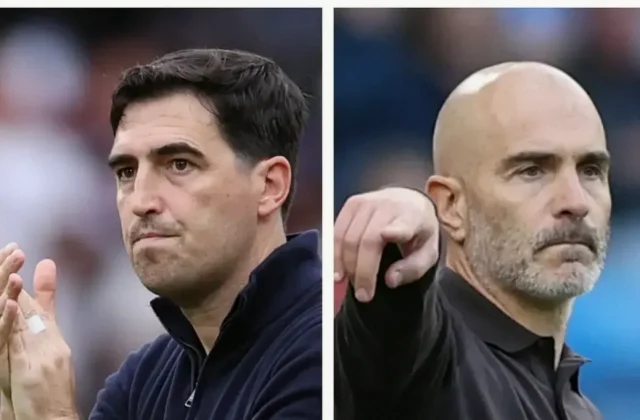
Manchester City arrive at Anfield on Sunday with a five-point story developing around Enzo Maresca: five league wins from five, a three-point lead over Arsenal, and a chance to match the sharpest opening Pep Guardiola managed in charge of the club. The backdrop remains unusually heavy after the Premier League found City guilty on every charge, but the fixture list has not paused for anyone.
Maresca closing on Guardiola’s six-win start
Victory at Liverpool would take Maresca to six consecutive league wins at the outset of his City tenure. That would equal the best opening sequence Guardiola recorded with the Blues, achieved in both 2016-17 and 2023-24.
Maresca has already entered a small Premier League club. Only five managers before him had won each of their first five league matches:
- Carlo Ancelotti, with six wins;
- Pep Guardiola, with six;
- Ole Gunnar Solskjaer, with six;
- Craig Shakespeare, with five;
- Maurizio Sarri, with five.
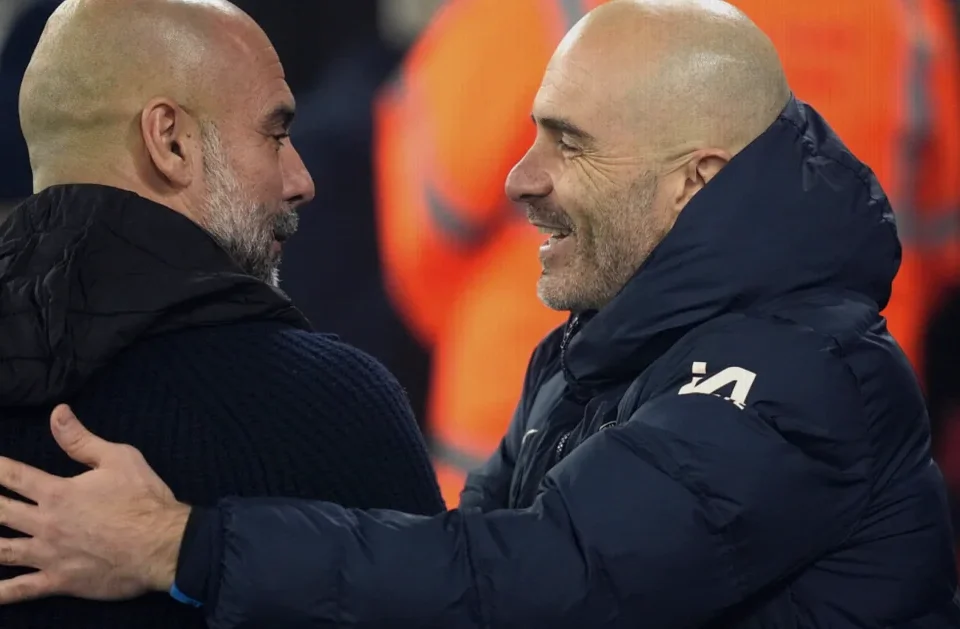
Guardiola has long held Maresca in high regard, saying he had felt the same certainty about the Italian that he once felt when first watching Mikel Arteta: that he would become an outstanding coach.
The 45-year-old knows the ground well. A former Sevilla and Málaga player, he coached City’s development side in 2020-21, returned as Guardiola’s assistant in 2022-23, then took charge of Leicester City and Chelsea before beginning his third spell at the Etihad.
A familiar football idea, with its own edges
There are obvious reasons why Maresca is measured against Guardiola. Carles Planchart, formerly part of Guardiola’s staff, believes Arteta has moved towards rather different principles, while Maresca has taken useful lessons from Guardiola and other coaches to form his own blend.
Brian Barry-Murphy, a former City man now managing Cardiff, sees common ground in the pair’s view of the game and in their insistence on coaching players until they are comfortable with their responsibilities. The emphasis, he says, is on total commitment to helping individuals improve.
Maresca, though, has no interest in presenting himself as a Guardiola replica.
“I am not here to copy anybody,” he said. “I am here to do my job and impose my own view of football. It is an interesting challenge because I consider Guardiola the best manager of the past 20 years.”
He accepts that teams must alter with the times, pointing to set pieces and man-to-man marking as areas increasingly shaping the modern game. Coaches, Maresca argues, must continue finding answers rather than assume a system can remain unchanged.
City midfielder Matheus Nunes believes the tactical family resemblance remains clear: Maresca wants control, fewer goals conceded and a team that keeps learning rather than changing overnight. In his view, that is part of the club’s established DNA.
Sporting director Hugo Viana, who succeeded Txiki Begiristain, has also stressed that Maresca was no outsider walking into an unfamiliar building. He says the manager settled quickly, bringing fresh ideas and his own working methods. Rúben Dias has described a process that retains certain familiar principles while changing details in training, pressing and defensive work.
More duels, less comfort after Sunderland
The 5-3 win over Sunderland before the international break showed both the appeal and the risk of the new City. The attacking work impressed, yet the match lacked the tidy control often associated with Guardiola’s best sides.
Paul Merson’s verdict was blunt: City were good going forward but badly disorganised at the back, and he warned that such defending would eventually prove costly in a title race.
Maresca was hardly celebrating the disorder. “To be honest, I would rather win 1-0 than 5-3,” he said.
His football still rests on positional play and progressive possession, but the details differ. Full-backs are encouraged to be more direct, while the side uses more aggressive marking around the pitch. That naturally creates more one-versus-one contests.
- Maresca’s Chelsea allowed 10.72 opposition passes per defensive action.
- Guardiola’s City recorded 11.55 in the same PPDA measure.
- Against Bournemouth, Maresca said 76% of City’s pressing actions ended with the ball being regained.
“I think we are quite close,” Maresca said of the defensive and pressing work. “The players are understanding the way we want to defend and press.”
Anfield first, Guardiola’s legacy later
Matching a six-game start is one thing; matching Guardiola’s 20 trophies at the Etihad is another entirely. Maresca recognises the scale of the job, and the scrutiny that comes with succeeding a manager of that standing.
“To be at this club after a legend such as Pep is a privilege,” he said. “I know that if I do not win, it will be a disaster. That is normal; it is my job.”
He insists he is not consumed by the previous manager’s years in the role or the honours accumulated during them. His focus, he says, is on improving the team and winning the next match.
That next test comes at Anfield, where a sixth straight league victory would put Maresca alongside Guardiola’s best City starts — and provide rather more useful evidence than any comparison board could manage.