Diego Maradona’s death has returned to the centre of public attention in Argentina, where the trial examining his final days has entered its closing stage. For a figure whose name still carries the weight of an era in Italian football, the proceedings have become a searching examination of the medical care he received after leaving hospital in November 2020.
The prosecution’s closing case
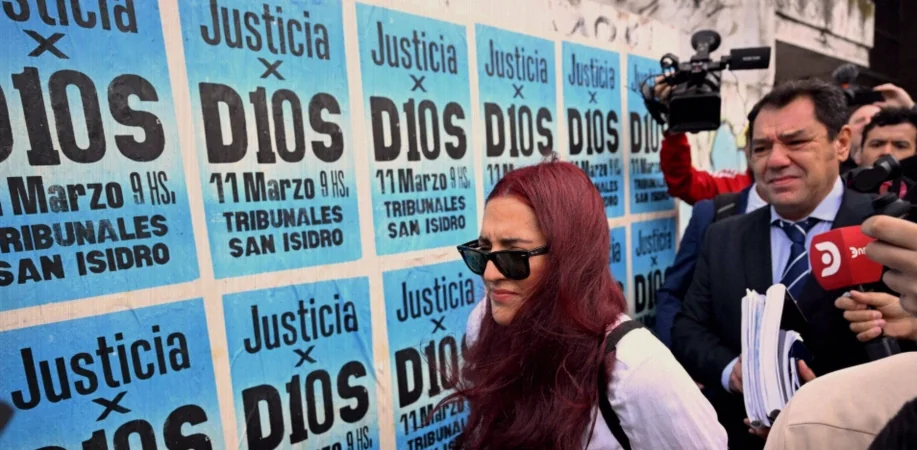
At the San Isidro court, prosecutor Patricio Ferrari delivered a severe final address, arguing that Maradona was placed in an unsuitable home-care arrangement despite the seriousness of his condition.
- Ferrari told the court that on 11 November 2020, Maradona was in an extremely fragile state and described him as “a time bomb”.
- He alleged that those responsible removed Maradona from medical care and took him to a house in San Andrés, Tigre.
- Maradona died there 14 days later, on 25 November 2020.
- The prosecution maintains that his death followed inadequate medical assistance during the period of home hospitalisation.
The case has reached its final phase after more than 40 hearings and 103 testimonies, heard from April onwards. Maradona’s daughters have attended several sessions and were visibly emotional during the proceedings.
A home judged unfit for a complex patient
Ferrari argued that the Tigre property lacked the facilities required for a patient with Maradona’s medical history. His description of the setting focused on the absence of basic emergency and treatment equipment.
“There were no gloves, gauze, an IV line, a first-aid kit, a defibrillator or an ambulance,” Ferrari said in substance. “Nothing that had been promised was there. The house had nothing.”
He told the court that the defendants were aware of Maradona’s health problems but nevertheless chose a domestic care arrangement that, in the prosecution’s view, could not safely meet his needs.
Ferrari said the failure was not confined to one moment, but developed over the days following Maradona’s arrival at the house. He cited the conclusions of an interdisciplinary medical board, which found that Maradona had not been a healthy man struck down without warning, but a patient with severe and complicated medical needs.
The board’s findings, as presented in court, held that the death could have been prevented and that the care provided had been insufficient. Ferrari described the people responsible as “a group of amateurs” who repeatedly failed to recognise that they were treating a vulnerable and medically complex patient.
The memory of 25 November
Fellow prosecutor Cosme Iribarren then reviewed Maradona’s previous illnesses and medical background. He also recalled seeing the former footballer’s body on the day of his death, saying that the image would remain with him permanently.
The trial will now move through the arguments of the civil parties before lawyers for the seven defendants make their submissions. Those accused face possible prison sentences ranging from eight to 25 years.
More than five years after Maradona’s death, the court’s final arguments have placed the focus not on the myth of the player, but on the responsibility owed to a man whose health, the prosecution says, demanded far greater care than he received.