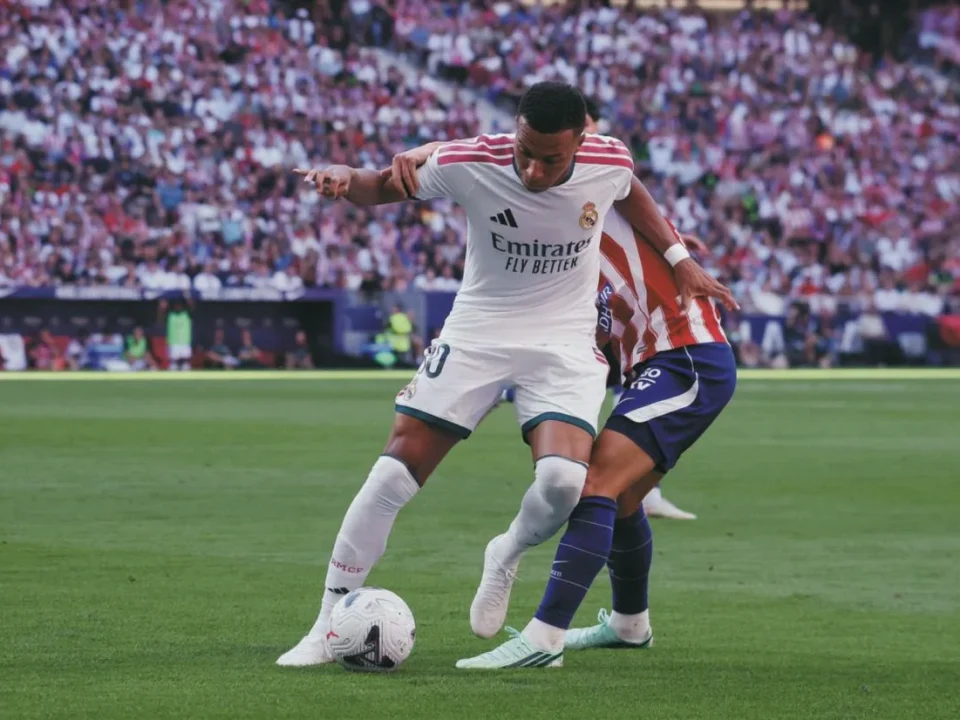
Boots can look like a small detail beneath the floodlights, but for elite players they are often the most personal piece of equipment on the pitch. Kylian Mbappé’s latest change of supplier has reopened a familiar debate in French football: when a player switches brand, comfort can matter as much as the contract.
Mbappé faces a different kind of transition
Mbappé has changed boot brands before. In 2006, aged seven, he moved away from Adidas as one of his idols, Zinédine Zidane, ended his playing career. He adopted Nike boots associated with Ronaldinho without even testing them first.
This time, the process is likely to have been more considered. Now at Real Madrid, Mbappé has the experience and support around him to assess the change carefully, potentially discussing it with team-mates before making a match-day commitment.
- Boot specialists regard footwear as a player’s principal working tool.
- A poor fit can affect comfort, confidence and performance.
- Players usually test new pairs during training before trusting them in a competitive fixture.
- The decisive test is often a match rather than a controlled session.
An experienced former player-sponsorship executive explained that brands generally seek approval on the boots before finalising an agreement. A change of supplier is more commonly driven by a player’s place in a brand’s plans or by a breakdown in relationships, rather than because the previous boots had become uncomfortable.
Konaté’s case underlines the comfort problem
Ibrahima Konaté offers a recent example of the difficulties that can follow a commercial move. He signed with Under Armour in August 2025, but is said to have worn its match model only four times.
While with Liverpool, the France international reportedly continued using Nike Phantom boots with the Nike mark concealed. Since joining Real Madrid, he has been seen playing with the Nike logo visible again, and in an older model rather than the latest release.
The conclusion drawn from the situation is simple: after more than a year tied to another supplier, he has not found the same comfort in the new footwear.
French football’s long history of boot disputes
France internationals once had far less individual freedom over their footwear. The French Football Federation’s collective arrangement with Adidas ran until 2002, even as players began signing personal agreements with competing companies.
- Didier Deschamps had a deal with Puma.
- Youri Djorkaeff was linked to Lotto.
- Laurent Blanc, Bixente Lizarazu, Lilian Thuram, Christophe Dugarry and Patrick Vieira were associated with Nike.
- In April 1997, eight of France’s starting XI against Sweden disguised their boots in protest.
Individualisation has since become far more sophisticated. Brands can produce unusual sizes, including 40.75 or 41.5, alter the heel and adjust the soleplate so that a player can retain a preferred stud configuration similar to those used on Nike Mercurial, Adidas Predator or Puma Future models.
It is also possible to disguise one manufacturer’s footwear to resemble another’s. That level of detail reflects how difficult it can be for a player to reproduce identical sensations after moving between brands.
From training-ground tests to match-day doubt
The adjustment process can begin gently, with a player wearing new boots for the opening 20 minutes of training and using them in passing exercises to avoid blisters. Yet a poor match can quickly turn a practical issue into a mental one.
The former sponsorship executive recalled trying to persuade an attacker to change boots, only for the player to miss a penalty or endure a poor game on his first competitive appearance in the new pair. From that moment, the footwear became the obvious suspect and switching again became extremely difficult.
There are also cases where a change has brought relief. In 2018, former Marseille midfielder Morgan Sanson described moving from Nike to Puma, praising a model with a very soft heel and secure support that ended recurring heel pain.
Mbappé is expected to adapt, but his new arrangement could have one visible consequence with France. In the official Bleus photograph, the front row is traditionally occupied by the leading ambassadors of federation partner Nike. His switch of supplier may leave him outside that group.