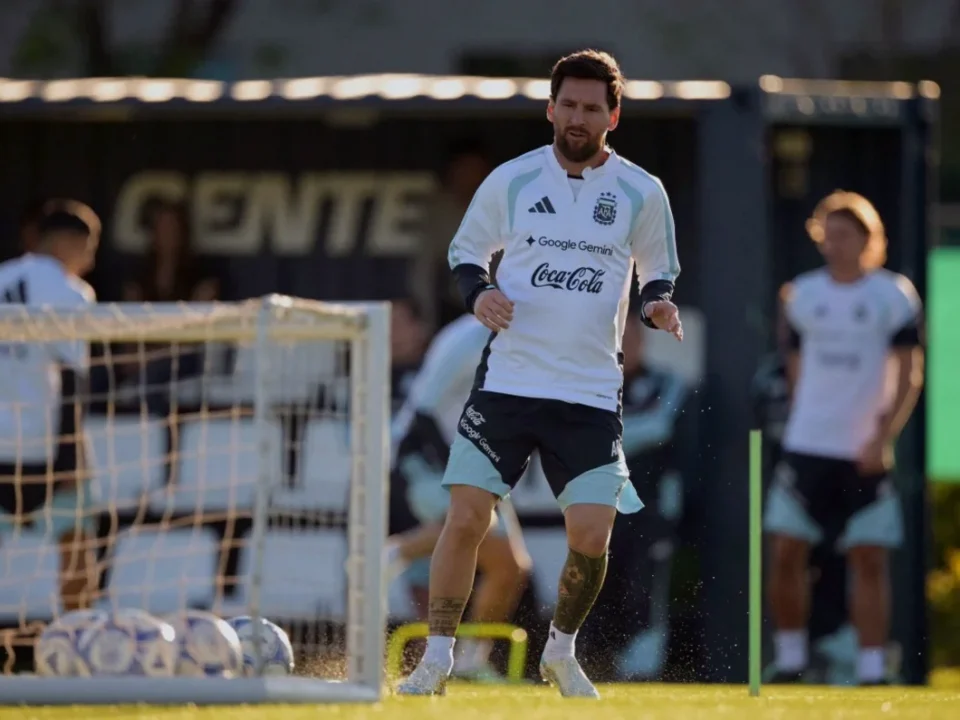
Buenos Aires is preparing to close a chapter that began more than two decades ago. Lionel Messi completed his final training session with Argentina on Monday, with Benin due at the Monumental on Tuesday for a farewell occasion that has filled the capital with the scale of a major final rather than a friendly.
Every one of the Monumental’s 85,000 seats disappeared within an hour and a half. At 39, Messi will make his last appearance for the national side in a stadium that has witnessed many turns in his long relationship with Argentina: expectation, doubt, frustration and, ultimately, the trophies that reshaped his international story.
Argentina will mark the night with a specially produced shirt. Its design combines elements of the national flag with references to Messi’s 20-year journey in the No. 10 shirt, from his debut in 2005 to the years in which he became the central figure of the country’s modern football history.
From difficult beginnings to the defining victories
Messi’s first World Cup came in Germany in 2006, but the route to international fulfilment was long. Argentina lost the 2014 World Cup final and then finished runners-up in successive Copa América tournaments in 2015 and 2016. After the latter defeat, his third consecutive final loss, Messi announced that he would step away from the national team.
The public response, joined by voices inside the Argentina squad, persuaded him to return. Yet there was another setback at the 2018 World Cup in Russia, where Argentina went out in the round of 16. The arrival of Lionel Scaloni gradually changed the atmosphere around the team and gave Messi a renewed reason to continue.
The breakthrough arrived at the Maracanã in 2021, when Argentina defeated Brazil 1-0 to win the Copa América, Messi’s first senior title with his country. A year later came the World Cup in Qatar, the triumph that settled a generation of argument. Argentina added another Copa América in 2024, while Messi also remained a leading presence in the side that finished second at the 2026 World Cup.
Benin’s players have made a 25-hour journey for the match, viewing the fixture as an uncommon opportunity to bring their own football before a global audience. But in Núñez, their role will be part of the setting for an Argentine goodbye: one last evening for the player whose national-team career moved from unfulfilled promise to an era of silverware.