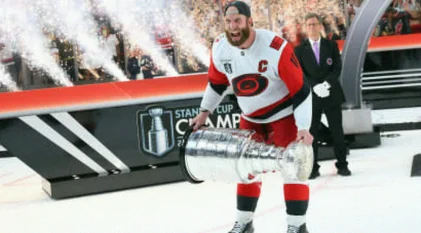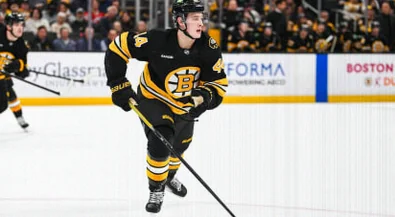
Mike Condon’s NHL career taught him how much pressure can pile up behind a goalie mask. His next chapter is built around helping athletes deal with it before the game, the season or the expectations overwhelm them.
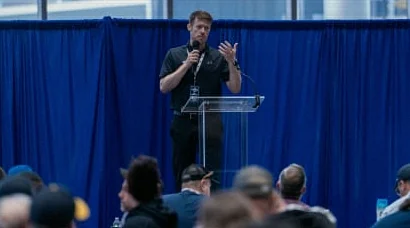
The former Montreal Canadiens, Pittsburgh Penguins and Ottawa Senators goaltender now runs Condon Performance Consulting after earning a master’s degree in counseling psychology and sport psychology from Boston University’s Wheelock College of Education and Human Development in May 2025. Condon, 36, discussed that work while appearing at the National Goaltending Symposium in Boston in August.
Condon played 129 NHL games from 2015 through 2019, posting a 45-58-17 record, a 2.79 goals-against average, a .905 save percentage and six shutouts. He arrived in the League as an undrafted goalie and spent much of his career on two-way contracts, circumstances he says made it difficult to acknowledge his own struggles.
“I never spoke up,” Condon said of that period. “You are either making 75 grand or 600 grand, and as an undrafted player, I did not feel I could do that.”
From the crease to counseling
The direction became clearer during Condon’s two seasons as Northeastern University’s goalie coach from 2021-23. He enjoyed designing practices and handling the technical work, but his conversations with goaltenders regularly moved beyond stance, tracking and glove positioning.
Sessions that appeared likely to last a few minutes would sometimes stretch to 90 minutes, including talks with Devon Levi. Condon recognized that those wider conversations were more meaningful than simply breaking down mechanics, and he decided to pursue formal training.
He had studied political science and international relations at Princeton, but said psychology had long interested him. His own experience in hockey gave that interest urgency. Condon said he loved practice and was driven by competition, yet games often brought dread rather than excitement.
Winning did not always feel like a celebration, he said; it more often felt like escaping a loss. Instead of becoming easier as he gained experience, the strain intensified, including after his playing career ended.
“I wanted to understand it,” Condon said. “You see a lot of suffering in hockey and people coping in unhealthy ways. I wanted my next chapter to have meaning and to use what I learned to help somebody else.”
Returning to school was no small commitment. Condon was 34, had two children and was taking on the cost and time demands of graduate work. He said he needed to set aside the assumption that his playing background alone gave him all the answers, listen to clinicians with extensive counseling experience and connect academic instruction with what he had lived through in the sport.
For Condon, the central lesson was less complicated than the theories surrounding it: a trusted, authentic conversation in a safe setting can make a real difference.
A career spent pushing through
Condon described himself as resilient, but also said resilience can become a survival mechanism that carries a cost. He said his parents divorced when he was 7, and moving between homes gave him independence at a young age. His father, a state trooper who often worked 90-hour weeks, and his brother became examples of perseverance.
Those years included financial hardship, including winter mornings without hot water. His father called the cold showers “Navy showers,” and Condon learned to push through discomfort by watching his family do the same.
That mindset helped him reach the NHL, but it did not make the emotional grind sustainable. He said his body eventually gave out before his mind did.
During his career, one particularly important connection came with Scott Rehm, a trainer Condon met after college. Rehm, a former UFC fighter and cut man from South Boston, became a mentor Condon trusted. Their discussions about voluntarily stepping into high-pressure environments resonated with Condon, who contrasted the risks of an MMA bout with his own walk from the tunnel to the crease.
Condon said that relationship reinforced a belief that athletes need to find the right person, not merely any professional title. The strength of the connection, he said, is often what allows someone to be honest.
More room for players to step back
Condon sees signs that NHL players have greater latitude to prioritize their mental health than he felt he had. He pointed to recent time away taken by Spencer Knight, Linus Ullmark and Victor Hedman as meaningful examples.
An NHL season can mean nine months of playing every other night against elite competition, Condon noted, all while players manage the demands of ordinary life away from the rink. A family issue, a breakup or the loss of a pet does not pause because the next game is on the schedule.
“You still have to compartmentalize and show up,” he said. “That is a very hard thing to do.”
He believes the need for mental-performance and counseling services is growing, especially after COVID-19. Condon said it is difficult to separate increased awareness from increased suffering, but he sees a clear rise in demand and believes more trained people are needed in the field.
He also worries about the pressure placed on young hockey players. With academies, major financial commitments and increasingly early development paths, Condon said children are exposed sooner to the consequences of falling off a perceived track.
That environment can make young athletes more vulnerable, he said. His work now is an effort to give them a place to talk before the weight of the game becomes the only thing they can hear.