Milan have begun the Serie A season with the ball more often than with the final action that should follow it. Ruben Amorim’s side rank third in the division for possession, behind Inter and Como, and spend roughly 60 per cent of matches in control of the ball. That is a notable mark for a coach who wants his team to dictate play, but it has exposed a different question: what are Milan doing with possession once they reach the attacking third?
Possession without enough shots
After five league rounds, Milan sit only 13th in Serie A for total attempts. Como lead the way with 110 shots, followed by Inter on 108 and Roma on 96. Milan have produced fewer attempts than Sassuolo, Frosinone, Monza, Venezia and Udinese, among others.
The comparison with last season is striking. Under Massimiliano Allegri, Milan were more willing to wait for opponents and attack from less dominant positions, yet they ranked seventh for shots. Amorim has given the side more of the ball, but the increased territorial control has not yet turned into a greater volume of chances.
- Gonçalo Ramos is Milan’s most frequent shooter, with 12 attempts across five matches.
- That total places him joint-16th among Serie A players, alongside Ekkelenkamp, Pio Esposito and Conceição.
- No other Milan player has reached double figures for shots.
For a squad containing numerous attacking options, those numbers leave a clear concern. Milan’s issue is not simply finishing; they are too rarely reaching the stage at which a shot becomes possible.
The missing threat from distance
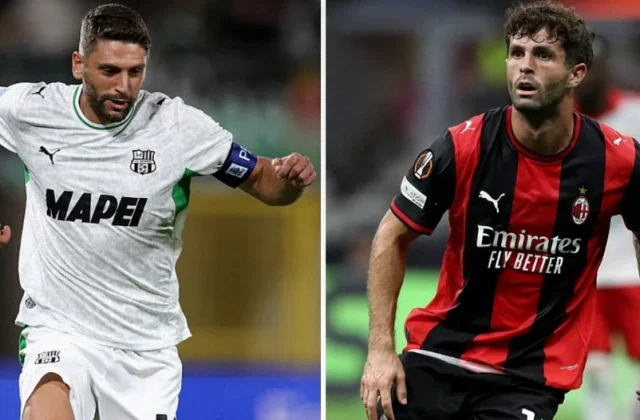
Milan are also bottom of the league for attempts from outside the penalty area, with only 14 in five fixtures. Sassuolo, the next opponents, have registered 35 and stand third in that category behind Como and Juventus.
Long-range shooting is less central to the modern game than it was in the eras of Frank Lampard, Steven Gerrard, Alessandro Del Piero, Andrea Pirlo or Paul Pogba. Even so, Milan’s return is especially low. They do not appear to have a regular specialist from distance, and their problems in the final 30 metres have been wider than that single statistic.
There have been technical mistakes with the last pass or final touch, as well as difficulty putting combinations together near goal. Ramos’ missed opportunities against Venezia were part of that picture: promising possession has too often ended before Milan can test the goalkeeper.
Signs to build upon
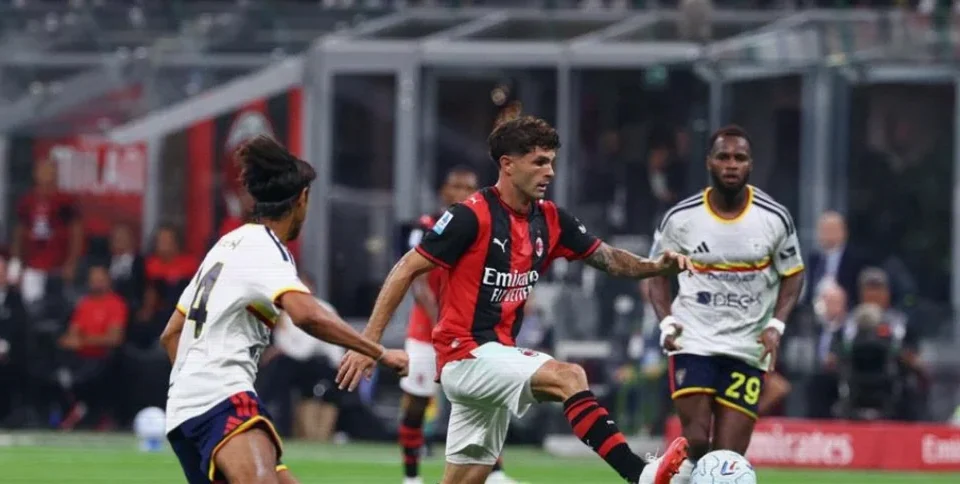
The season has not been without encouraging moments. Diego Moreira has shown an ability to create something unexpected, Cissé has offered useful passages of play, and Adrien Rabiot has maintained his usual influence. Milan’s collective work against Lecce also suggested that Amorim’s ideas can produce more coherent attacking sequences.
The most important development may be Christian Pulisic returning to his highest level. His runs beyond the defence give Milan a dimension they otherwise lack. With Pulisic stretching the pitch, the side can become far less predictable; without that threat, much of their possession has remained in front of the opposition rather than behind it.
The meeting with Sassuolo therefore arrives as more than another early-season fixture. Milan have established control in matches, but the next chapter is about making that control count: more entries into dangerous areas, more shots, and a clearer route from Amorim’s possession game to the scoreline.