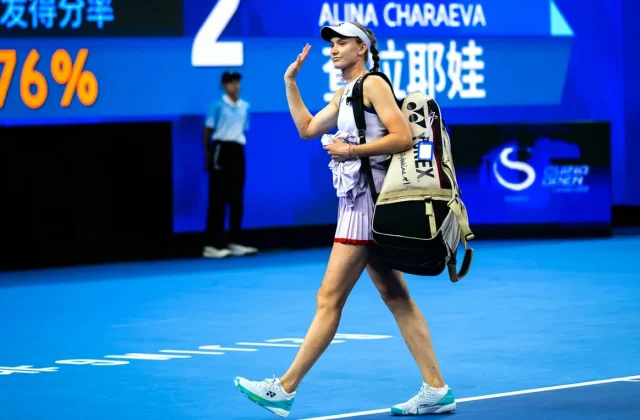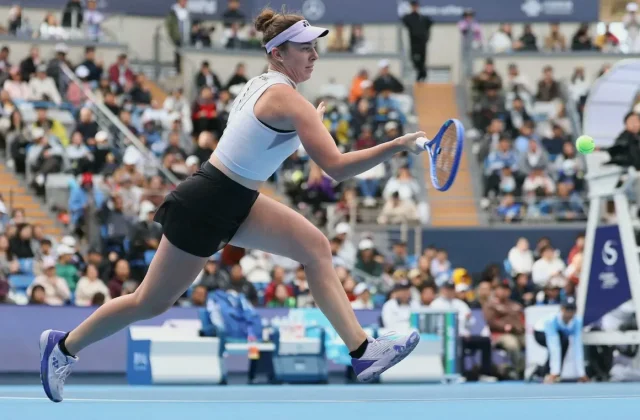
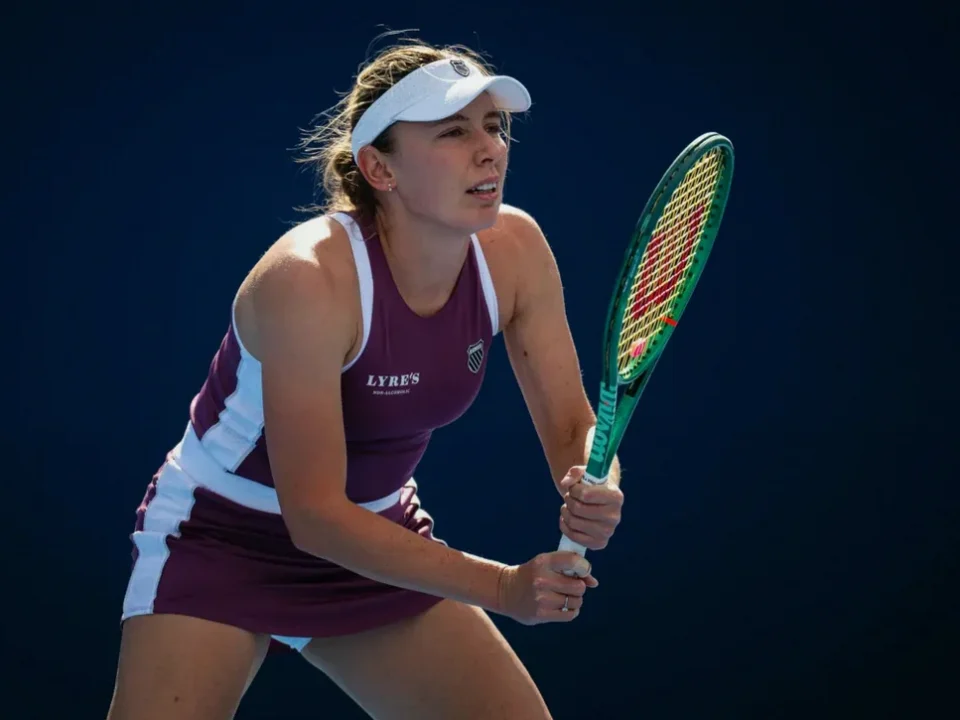
Mirra Andreeva moved smoothly into the China Open last 16 on Sunday, beating Polina Kudermetova 6-4, 6-1 in Beijing, and the fourth seed will next meet Daria Snigur on Tuesday. The 19-year-old Roland Garros champion, already a six-time WTA title winner, has found an off-court pursuit to match the calculation required by the Beijing draw: chess.
Andreeva said her interest in the board game returned during her title run in Paris in May and June. She had first learned to play in kindergarten, before tennis and school took priority, but watching her fitness coach play online before matches at Roland Garros prompted her to take it up again.
“I wanted to remember it and learn it again,” Andreeva said after dismissing Kudermetova. “Around Roland Garros, in May and June, I began playing chess again.”
She now studies tactics daily on Duolingo and plays online games against opponents who are unaware that they have been paired with one of the tour’s leading players. Andreeva said she uses a deliberately unrecognisable screen name and intends to keep it private, joking that revealing it would be embarrassing.
Chess is not unfamiliar territory on the WTA Tour. Yulia Putintseva has brought her attacking instincts to online play, while Ekaterina Alexandrova learned the game from her father when she was young. Alexandrova, however, admits the need to see several moves ahead remains its greatest challenge for her.
“It is a very hard game for me because you have to think three, maybe five moves ahead,” Alexandrova said. “I am usually trying to get through the situation I have at that moment rather than thinking that far ahead.”
She added that chess becomes enjoyable when a player begins to understand the possibilities, even if mastering the game is far more demanding than simply knowing how each piece moves.
Alexandrova finds her rhythm again in Beijing
Alexandrova has also played her way into Tuesday’s fourth round, where she faces Wimbledon champion Linda Noskova. Her place in the final 16 came through a three-set recovery against Diana Shnaider, a result that has ended a difficult recent sequence at the China Open.
Before this week, Alexandrova’s previous Beijing victory had come seven years earlier, when she reached the round of 16. She exited after her opening match in each of the 2023, 2024 and 2025 editions, but has now returned to that stage of the hard-court event.
The Russian could not identify one decisive reason for the turnaround, though she said the Yonex Tour Platinum balls have better suited her game this year. She also welcomed greater consistency in the balls used across the calendar, saying it reduces the adjustment players must make when moving between surfaces and tournament conditions.
“These balls suit my game better,” Alexandrova said. “I was quite unlucky in Beijing over the last few years, but I hope this year is going much better. Playing several tournaments in a row with the same ball helps because you become used to it. When it changes every week, you have to adapt to the court, the surface and the balls, and sometimes there is not much time.”